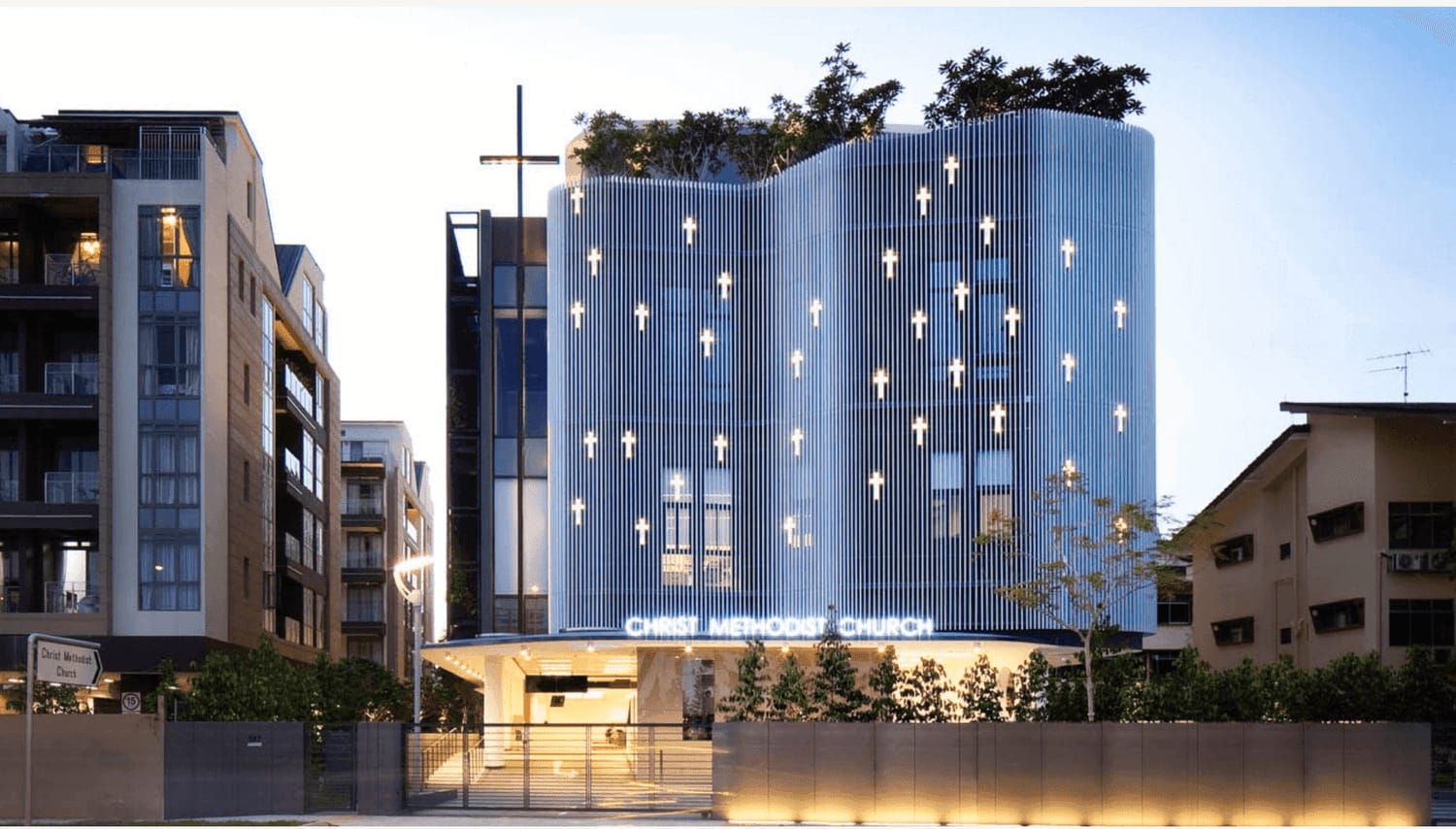
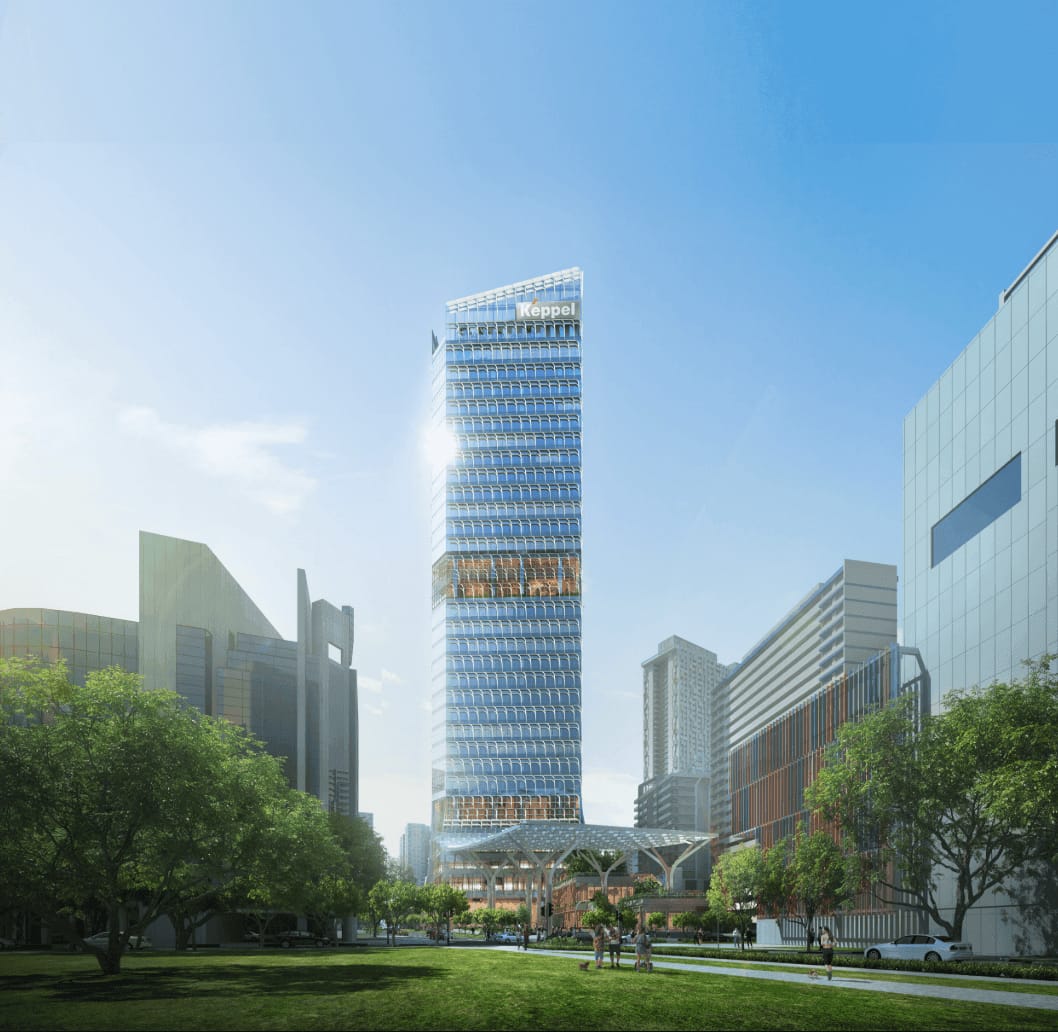
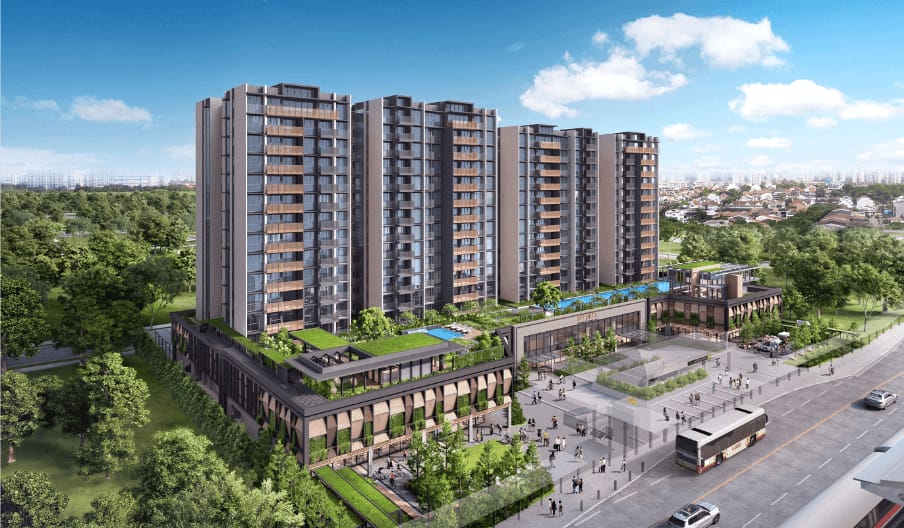
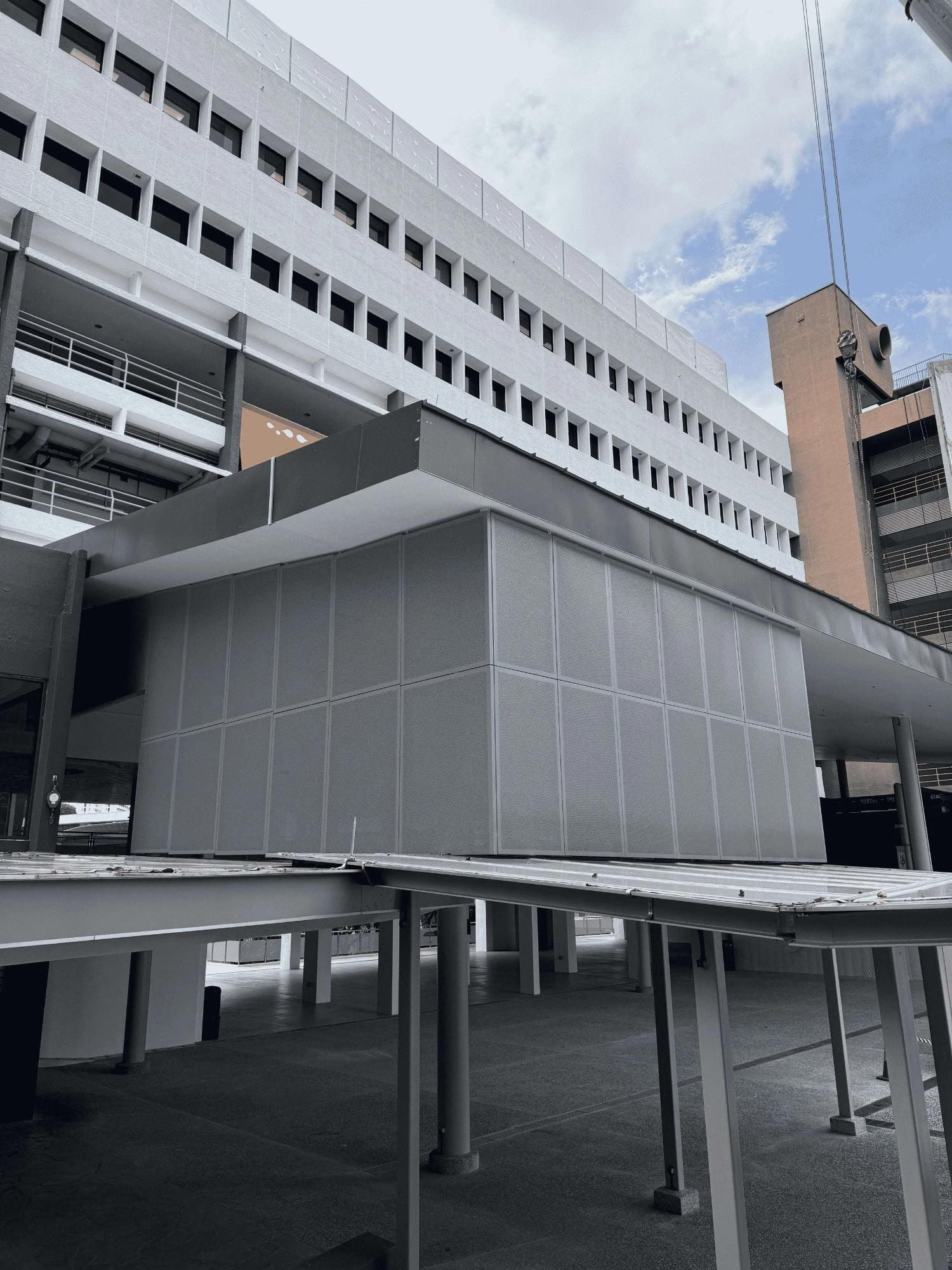
Expanded mesh, perforated and laser cut panels for facade screens, cladding, sunshades, car park screens and green wall supports. Chosen for light, air and privacy, cut to your facade grid and finished in powder coat or PVDF.
| Panel | What it does best | Watch for |
|---|---|---|
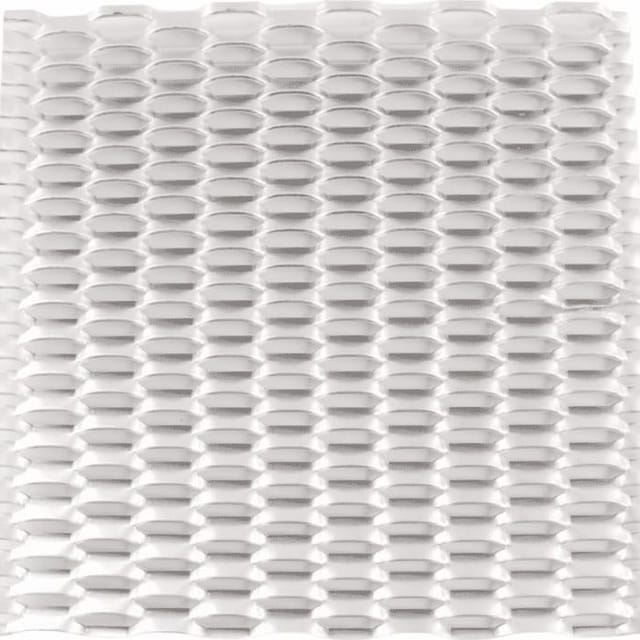
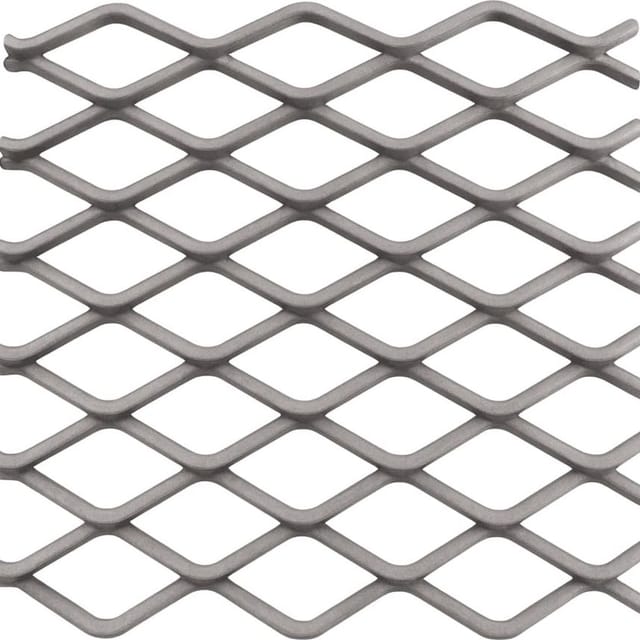
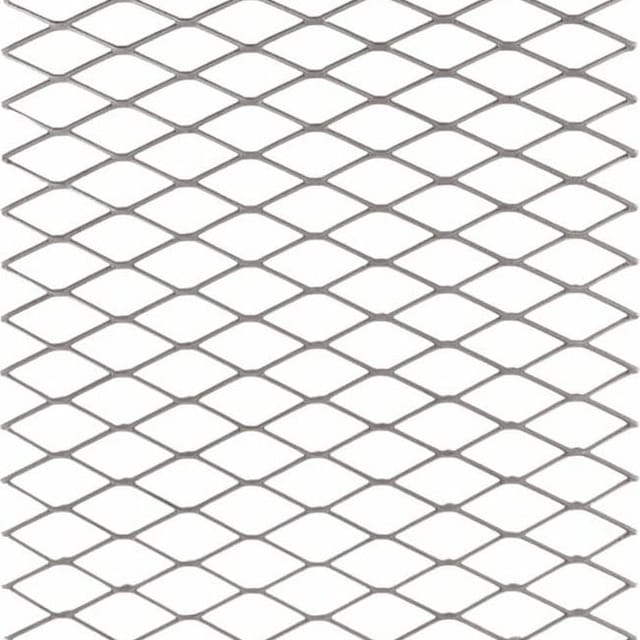
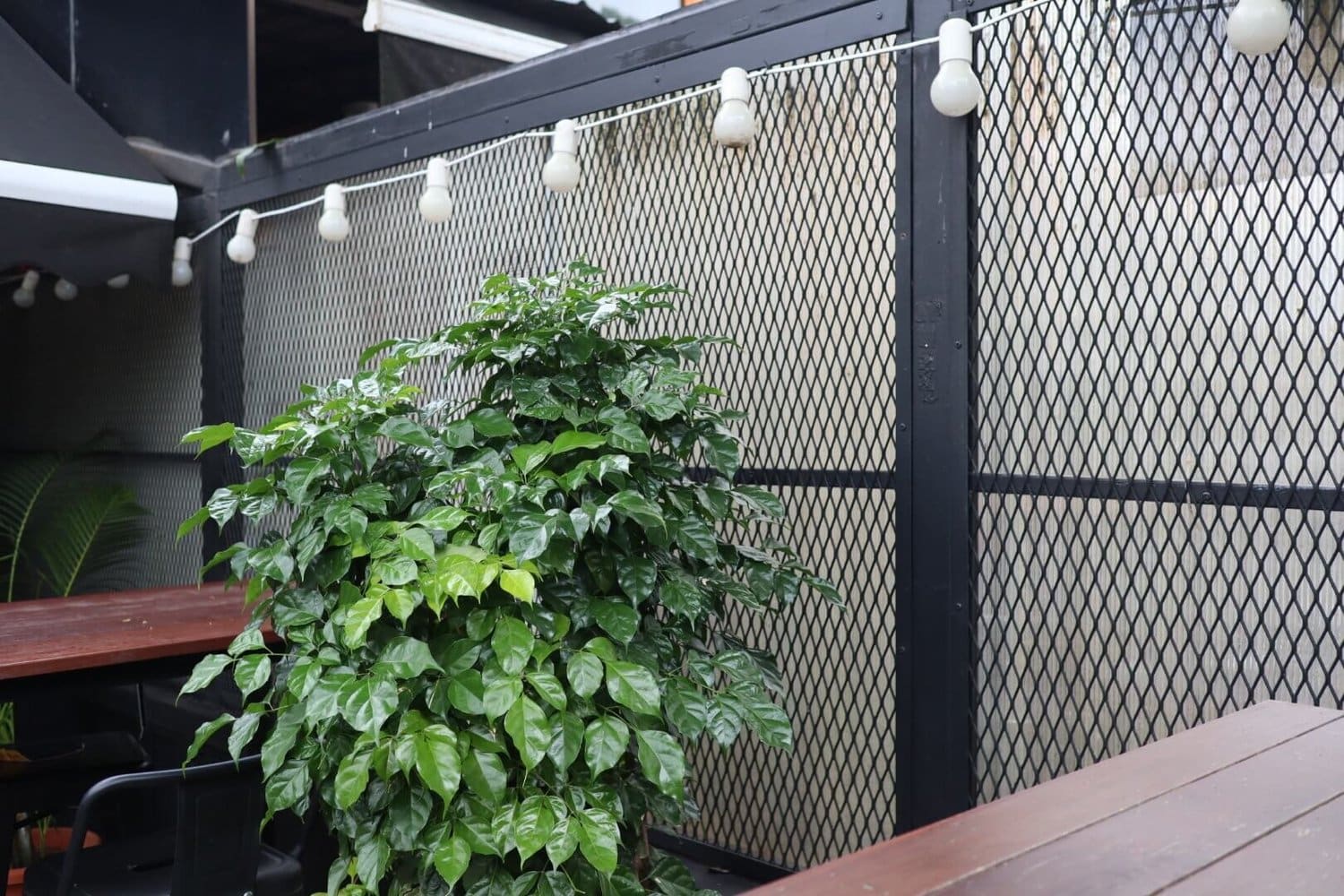
| Expanded mesh | One continuous piece of metal, rigid for its weight, so panels span between fixings. A textured diamond face for screens, rain screens, sunshades and green walls. | Not flat. The relief depth needs clearance in the framing. |
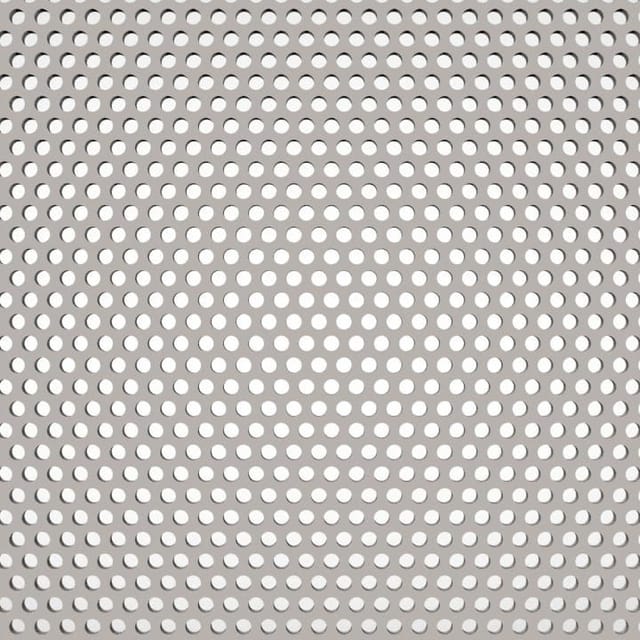
| Perforated sheet | A flat face with exact control of hole size, pattern and open area. Privacy screens, solar screens, link bridges and car park cladding. | Very high open area reduces stiffness, so thickness goes up with panel size. |
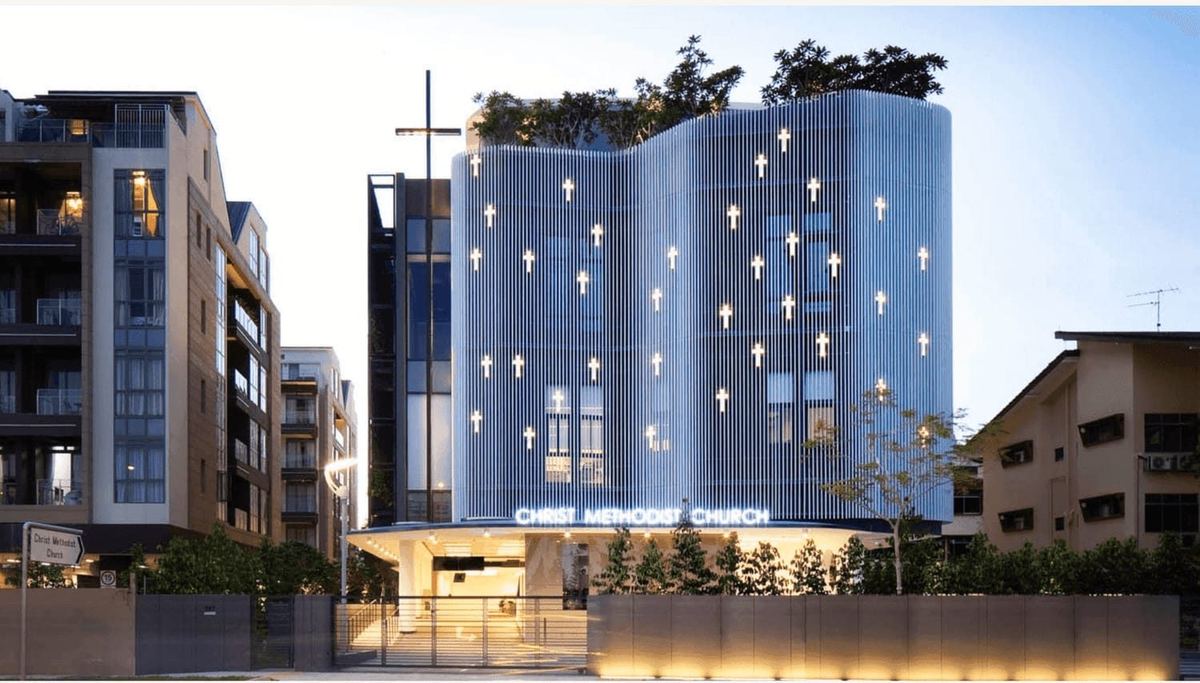
| Laser cut panel | Any pattern from a vector file, including logos and artwork. Feature screens and branded panels. | Costs more and takes longer than standard perforated sheet. |
Open area is the share of the panel that is hole. It sets how much light, air and view passes through.
Standard sheets are 1220mm x 2440mm, cut to any size your facade grid needs, with folded edge returns for framing. The largest practical panel depends on the metal, thickness and pattern, so tell us the size and we advise on the largest panel that will stay flat under Singapore wind and heat. Perforated cladding can also be fixed to an existing building as a second screen layer, without structural changes to the original wall.
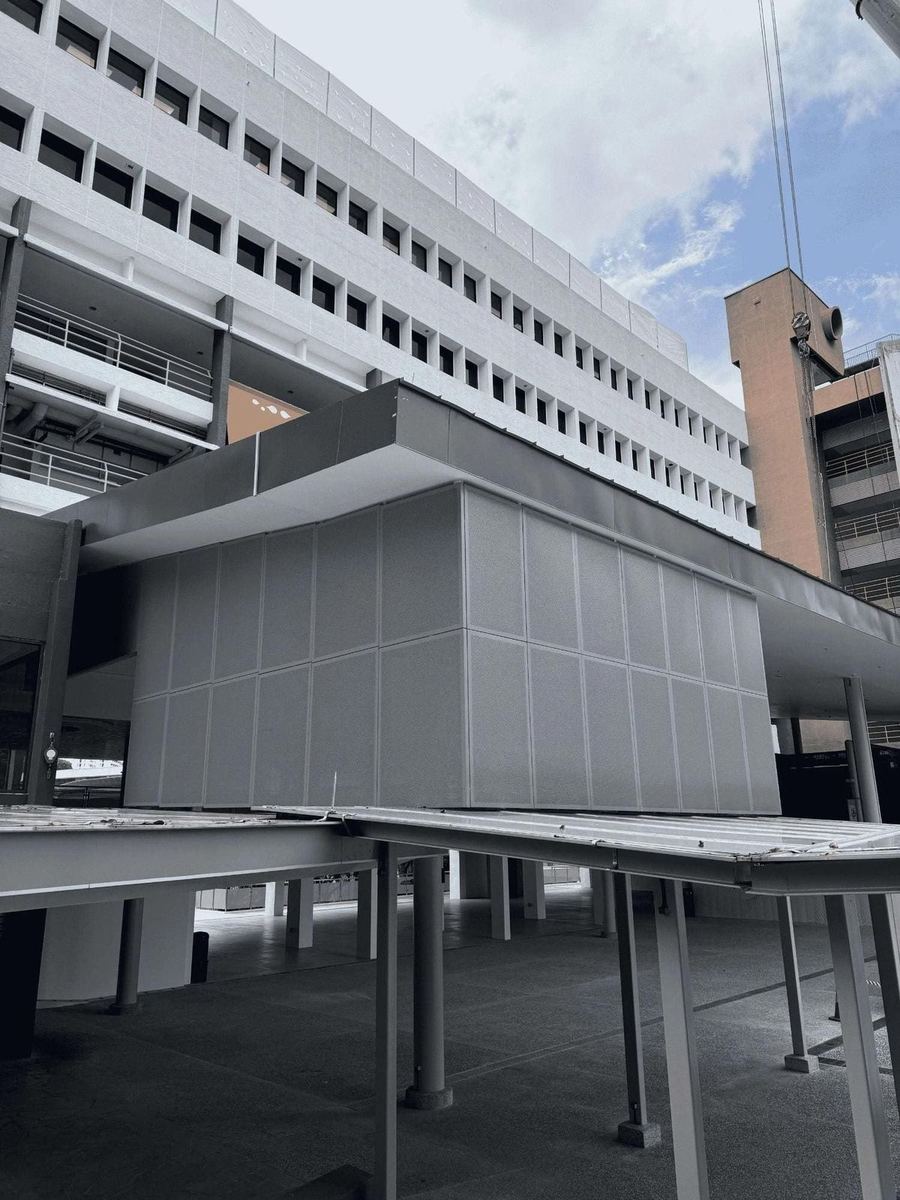
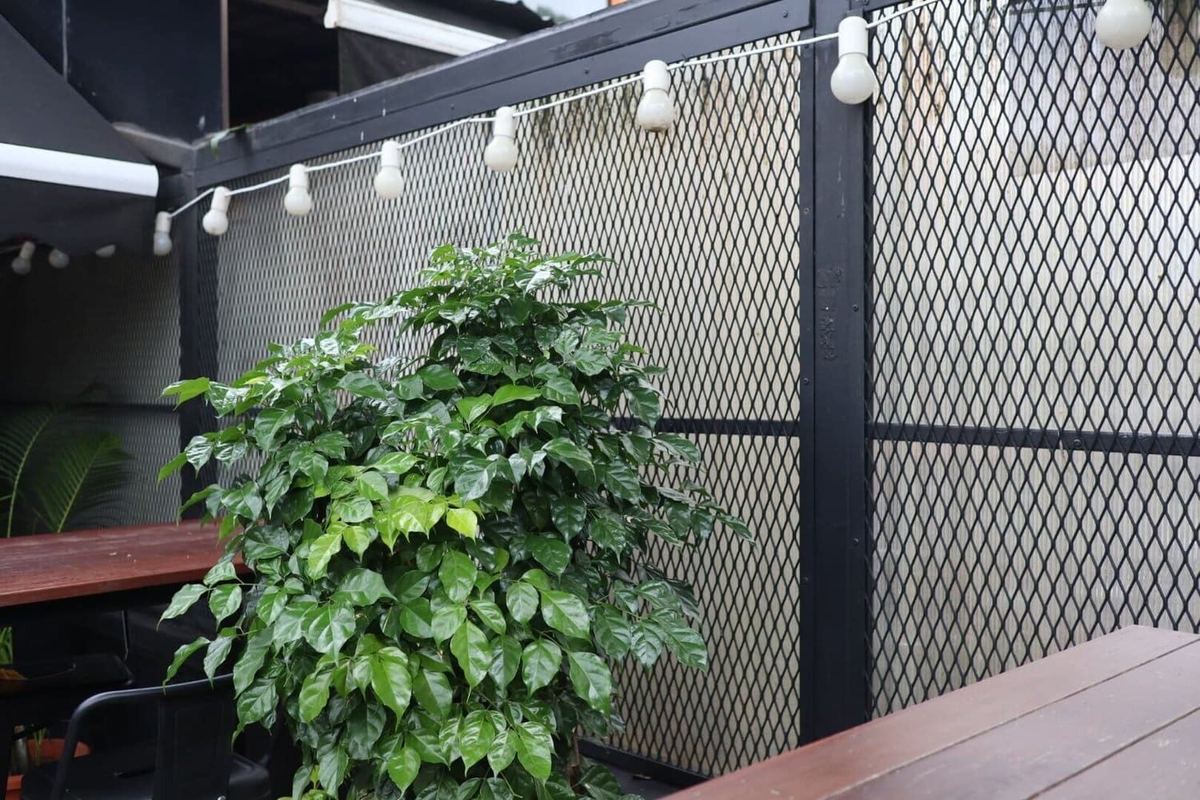
Expanded mesh is one continuous piece of metal, rigid for its weight, so it suits large screens, rain screens and sunshades that span between fixings. Perforated sheet gives a flat face and exact control of hole pattern and open area, so it suits privacy and solar screens. For a custom pattern or artwork, use laser cut panels.
Below 30% open area is the usual starting point for privacy, such as residential frontages and gate panels. Car park facades, industrial screens and ventilation critical facades are typically above 35%.
Aluminium suits most Singapore facades because it is light and resists corrosion naturally. Use SS316 stainless for coastal and waterfront sites and SS304 for inland buildings. Galvanised steel with powder coat suits industrial facades and plant room screens.
Yes. Perforated metal cladding can be fixed to an existing facade as a secondary screen layer without structural alterations to the primary wall.
Standard sheets are 1220mm x 2440mm and we cut to any size your facade grid needs. The maximum practical size depends on the material, thickness and pattern, so we advise on it for each project.
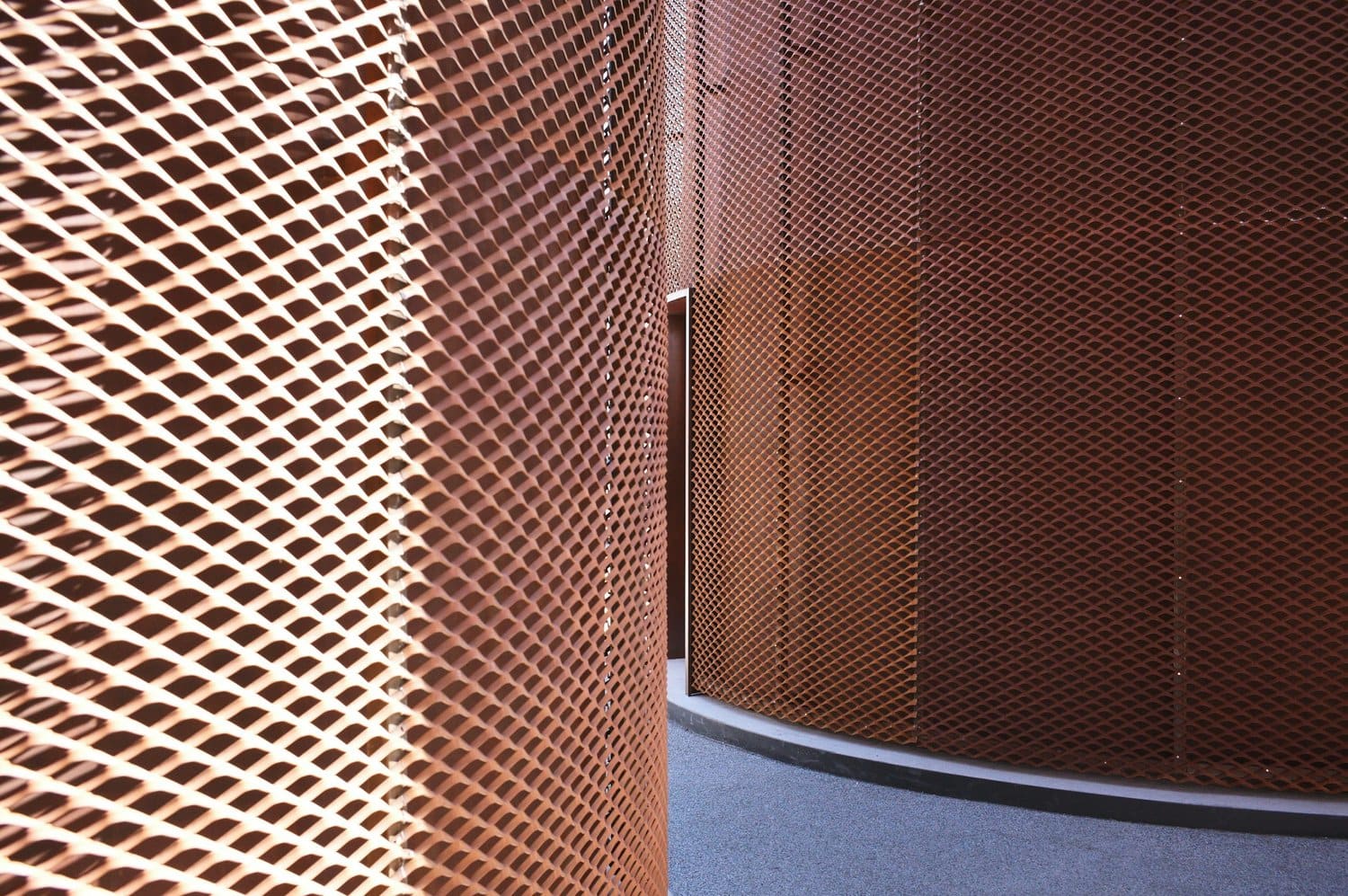 GuideExpanded Metal Facade Panels Singapore: Specifier's Guide for Architects and Contractors
Expanded metal mesh for building facades in Singapore, material grades, open area selection, surface finishes, and...
View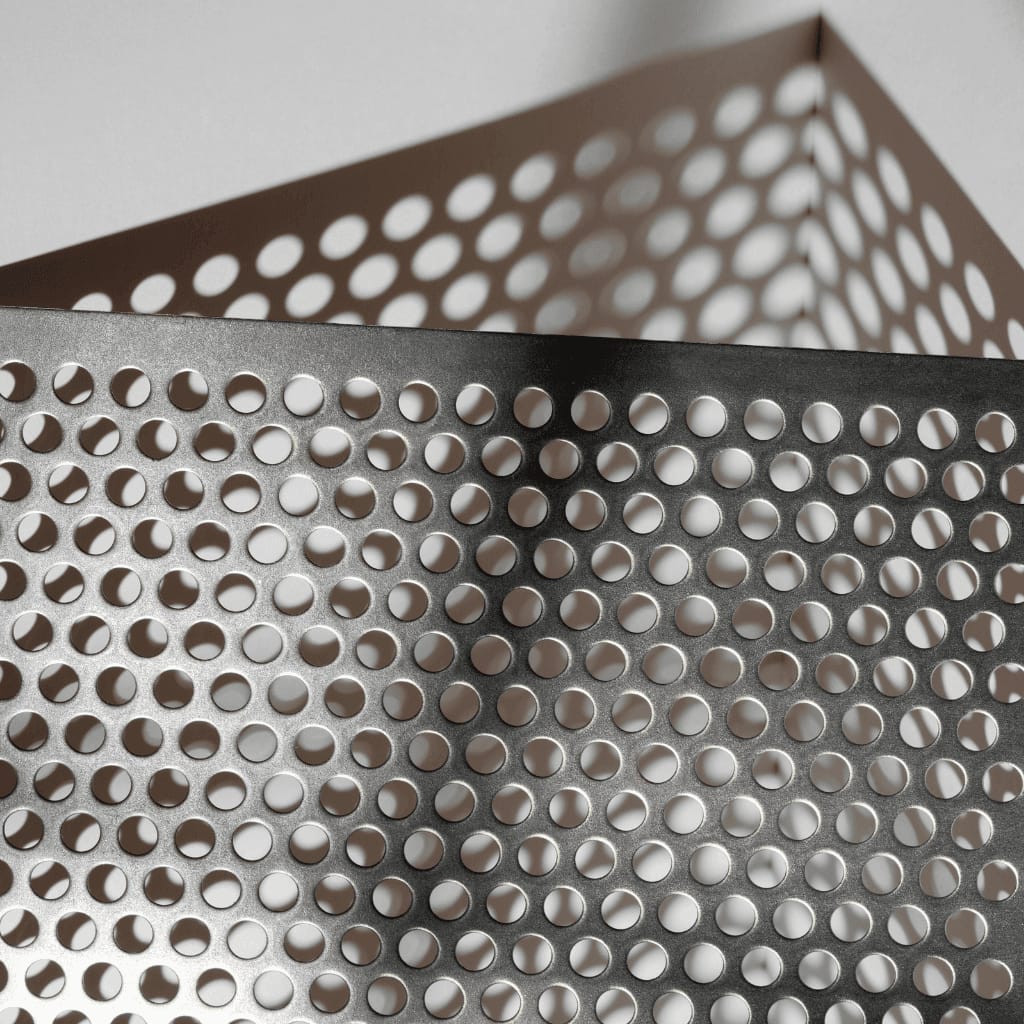 GuidePerforated Metal Facades Singapore: Specification Guide for Architects and Designers
Perforated metal facades in Singapore, how to specify open area, panel dimensions, material grades, and finishes for...
View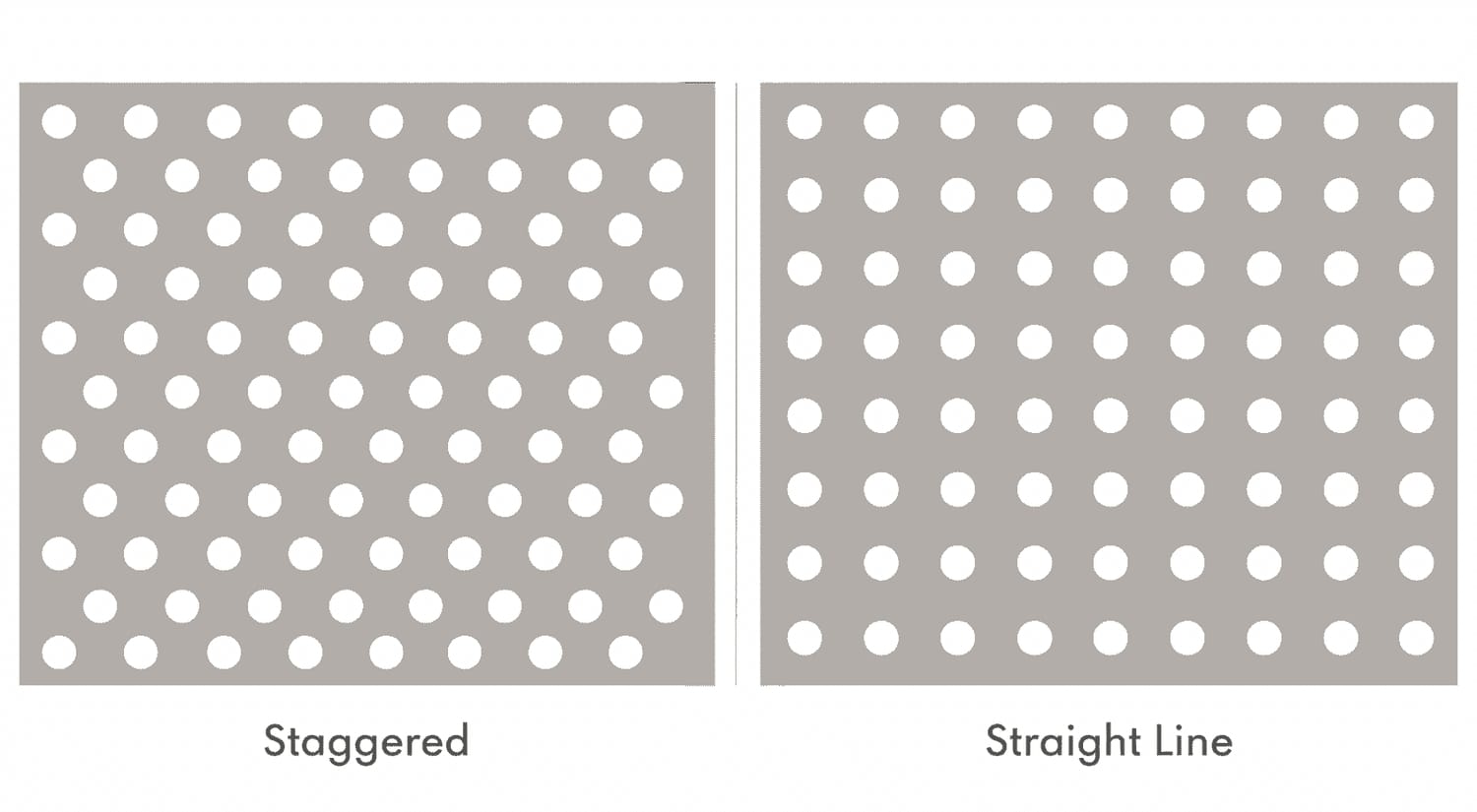 GuidePerforated Metal Facade Singapore: Hole Patterns Explained
Round, square, slot, hexagonal, explaining different hole patterns for perforated metal facades.
View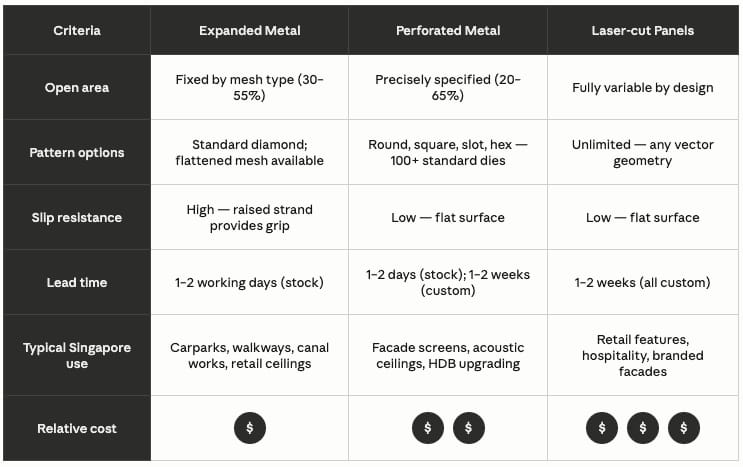 GuideExpanded Metal vs Perforated Metal vs Laser-Cut Panels: Which Should You Use for Architectural Projects in Singapore?
Expanded metal, perforated metal, and laser-cut panels each suit different applications. This guide compares all three...
View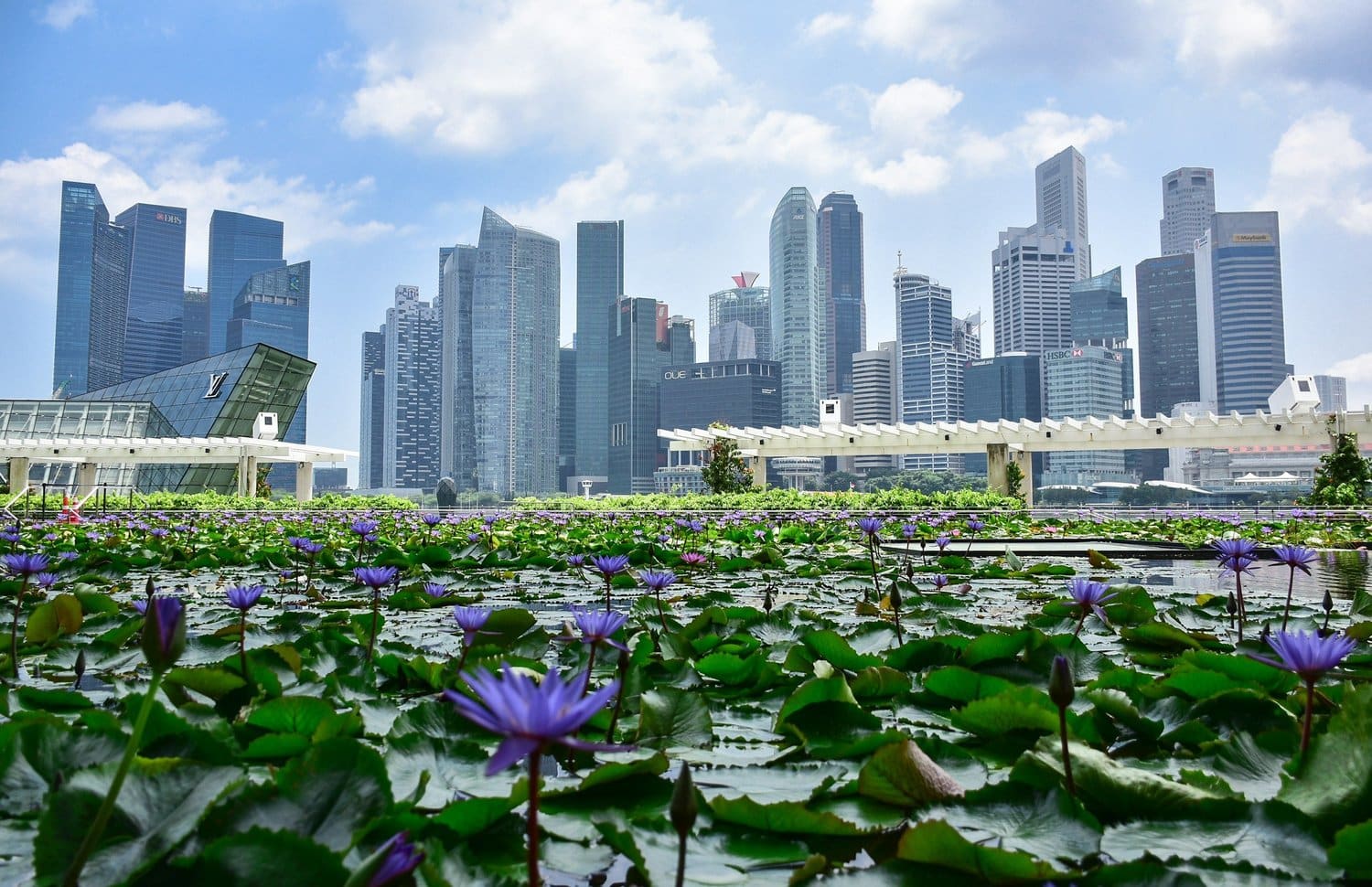 GuideSingapore's 80-80-80 Green Building Masterplan: What It Means for Facade Materials
Singapore's 80-80-80 Green Building Masterplan tightens ETTV requirements and introduces whole-life carbon scoring...
View GuideMetal Finishes: Guide to Powder Coating, PVDF, Galvanising, and More
Metal finishes for architectural metalwork in Singapore: powder coating, PVDF, hot-dip galvanising, and stainless steel...
View