
Laser Cut Metal Panels Singapore: Custom Screens and Decorative Panels
Custom laser cut metal panels for architecture, interiors, and industry. Any pattern — geometric, organic, logo-based, or bespoke — to your exact CAD file. We work with a wide range of materials — mild steel, stainless steel, galvanised steel (GI) and aluminium. Used for decorative screens, facade cladding, partition walls, sun-screens, and ventilation grilles across Singapore commercial, hospitality, and industrial projects.
We can produce almost any custom shape based on your drawings (DXF, DWG, AI, EPS). If you're searching for a custom perforated sheet, a decorative metal screen, or a metal panel with a specific hole pattern — laser cutting is the process that makes it.
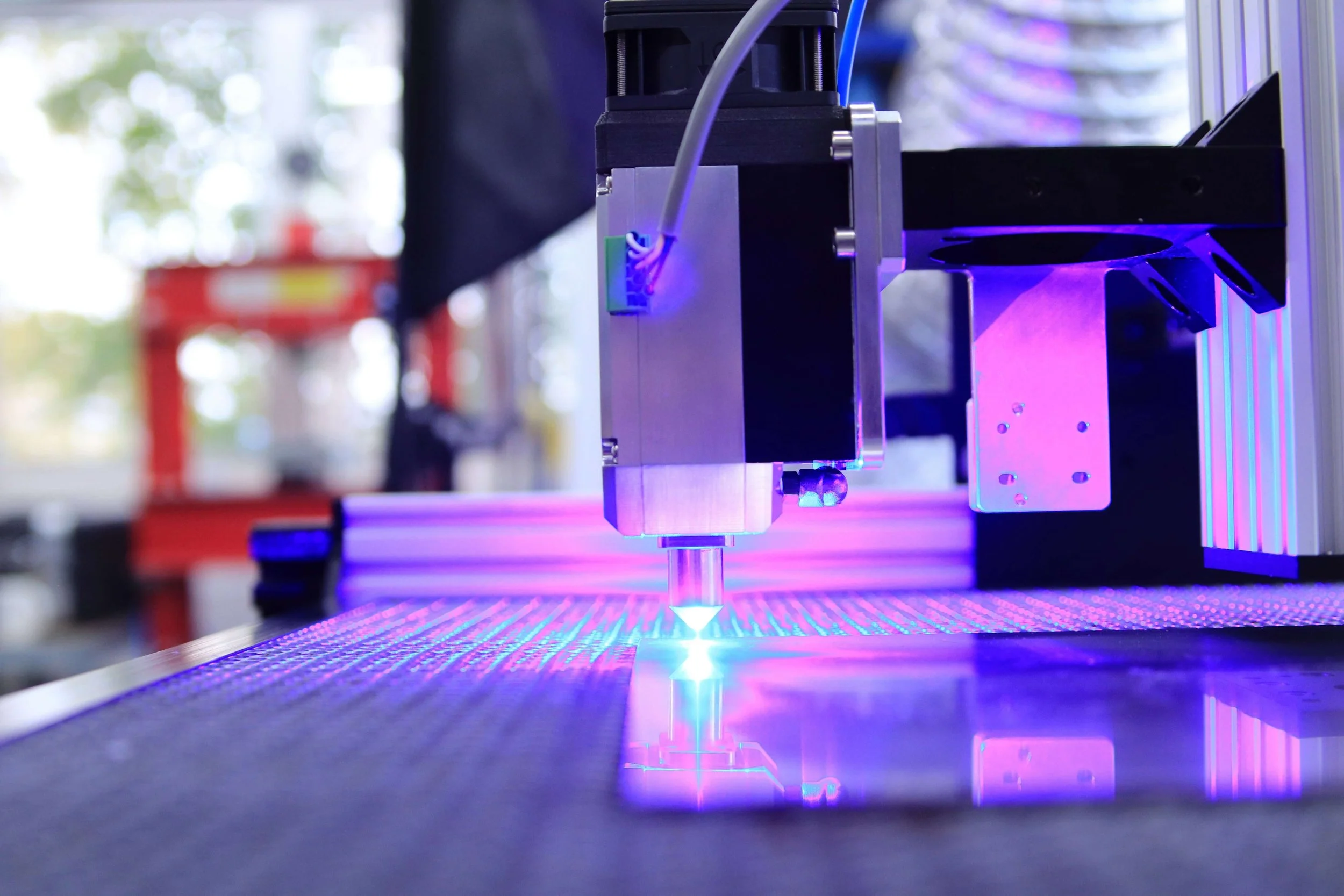
The Supply Bay Standard
4FT x 8FT (1.22m W x 2.44m L) standard sized sheets or custom sizes (maximum dimensions 1.5m W x 3m L)
Materials: Aluminium (max. thickness: 12mm) Mild Steel (max. thickness 25mm), Galvanised Steel (GI) (max. thickness 25mm) , Stainless Steel (SS304, SS316) (max. thickness 20mm)
Accuracy: ±0.1–0.2mm
Edge finishing: clean-cut, burr-free
Add-Ons
Additional protective finishes for exterior applications
Additional powder coating or PVDF coating finishes
What Is a Laser Cut Metal Panel?
A laser cut panel is produced by directing a high-energy laser beam across a flat metal sheet to cut a precise pattern from a DXF or DWG file. Unlike standard perforated metal — which is punched using fixed factory tooling in set hole sizes and pitches — laser cutting places no restrictions on pattern geometry. Any shape, any aperture size, any spacing, including custom logos, nature motifs, or complex geometric tessellations, can be cut to ±0.1 mm accuracy.
This is why laser cut panels are the correct specification wherever the project requires a unique pattern: a shopfront identity screen, a branded reception wall, a parametric facade, or a feature ceiling with a non-repeating motif. Where a standard round-hole pattern at standard pitch is sufficient, standard perforated sheet is more cost-efficient. Where the pattern itself is highly customised, laser cutting is the best choice.
Custom Patterns: What Can Be Laser Cut?
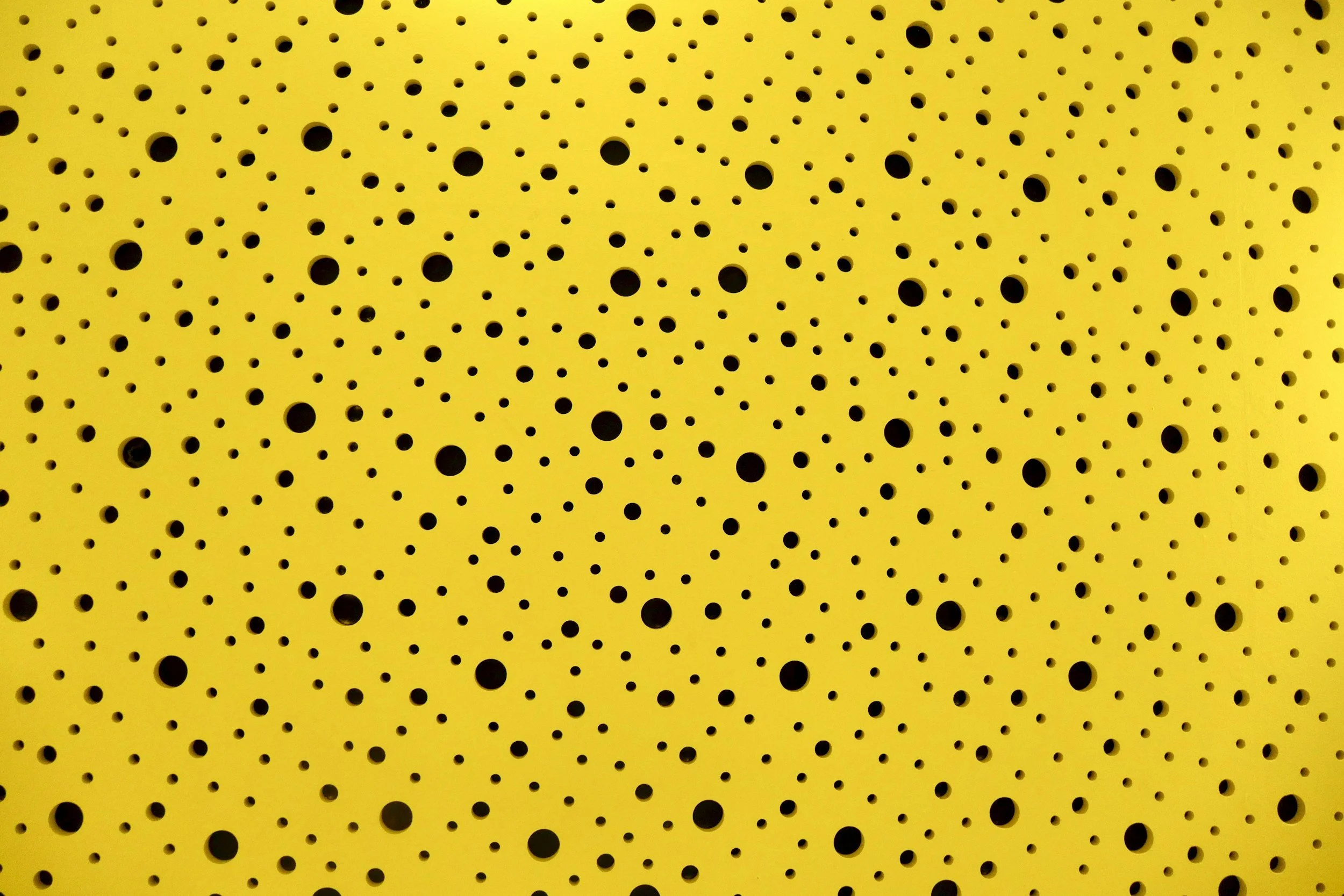
Non-Standard Hole Arrangement
For specifications outside standard perforated patterns — oversized holes, irregular spacing, diffused or randomised arrangements, or gradient density patterns — laser cutting produces the panel without tooling cost or minimum order quantities.
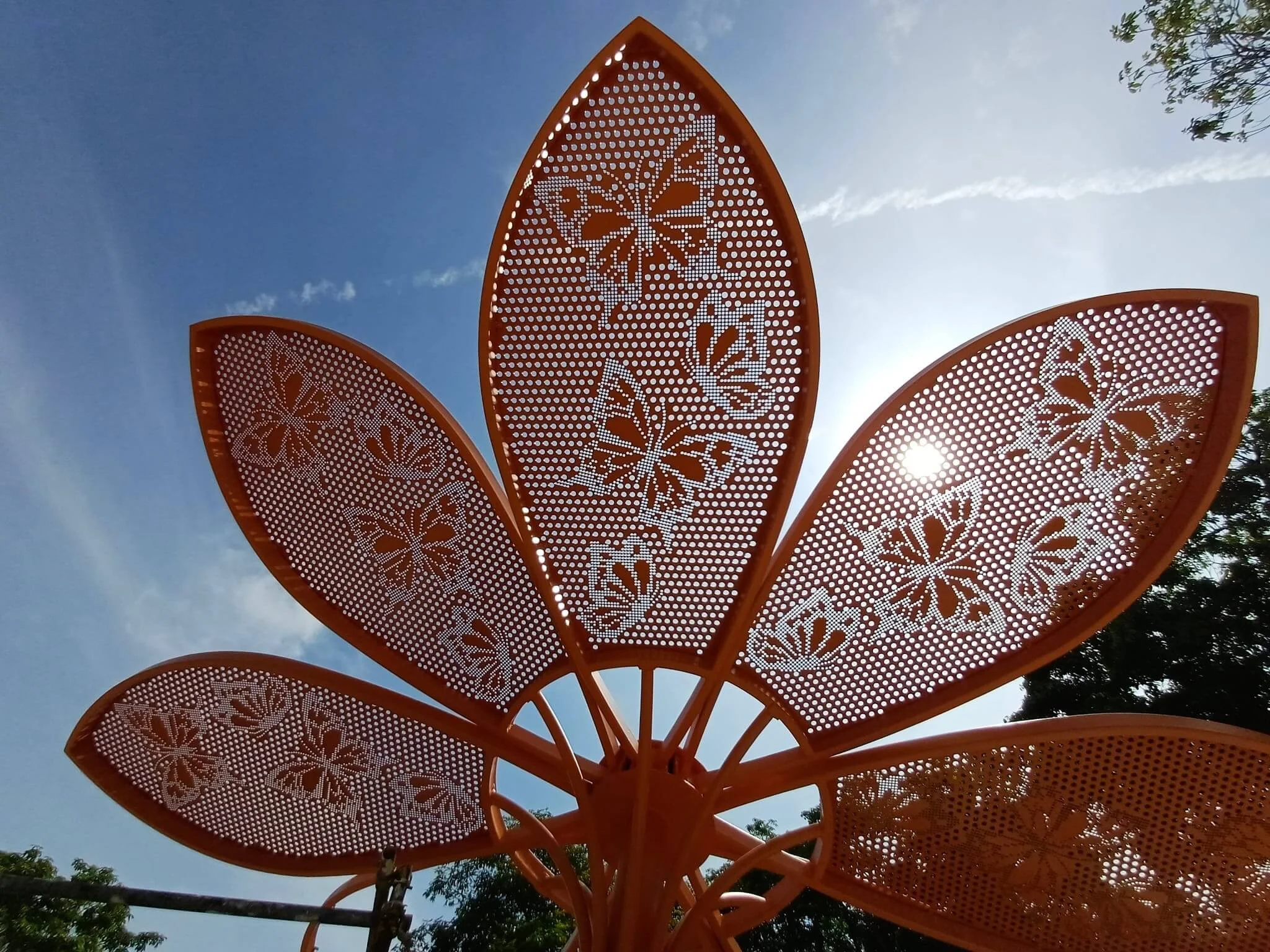
Decorative Motifs
Floral forms, geometric abstractions, and cultural references can be cut directly from a vector file. Supply Bay manufactured custom floral and animal patterns for the Sun Plaza Park project.
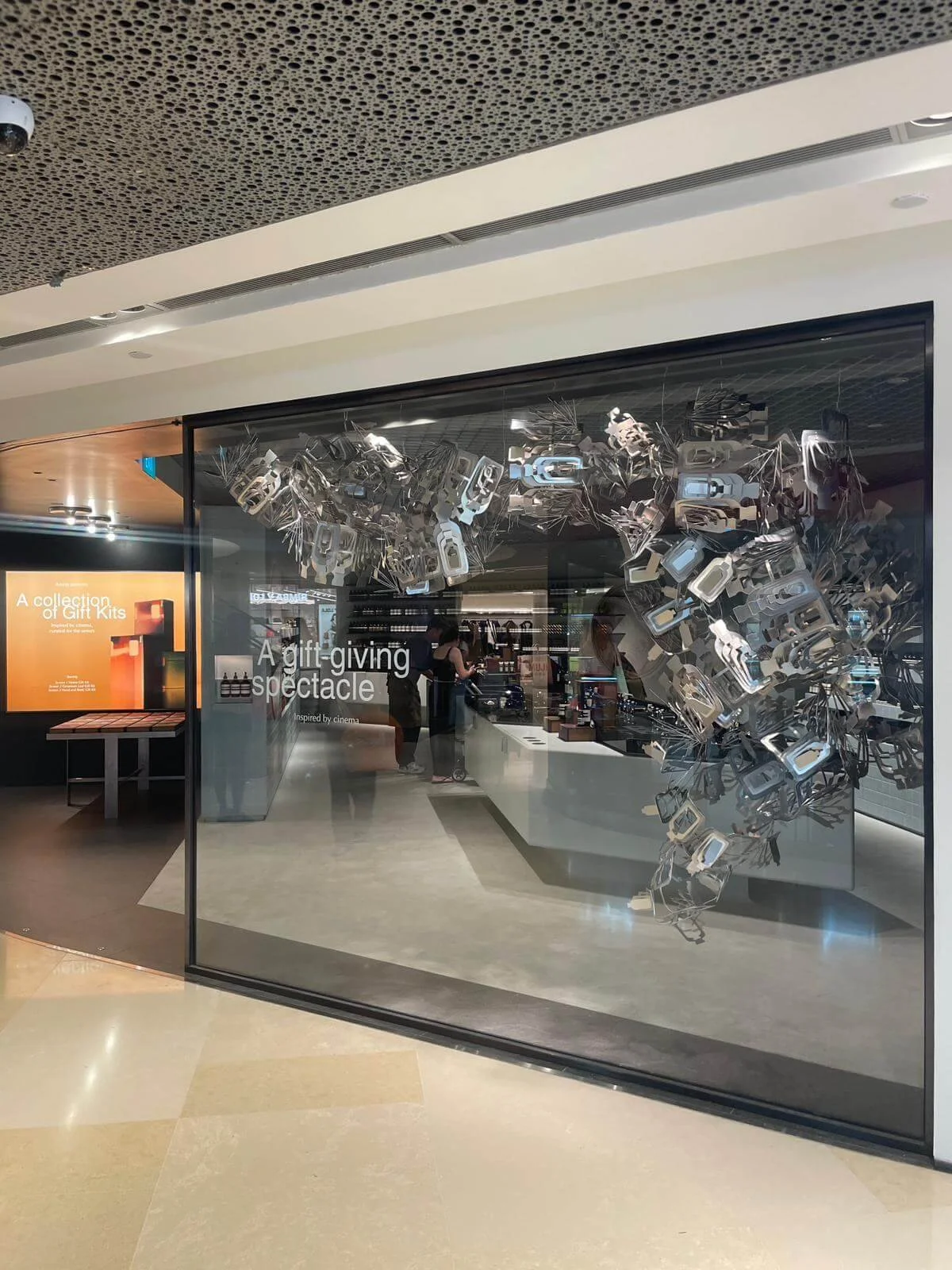
Brand and Retail Feature Panels
Shopfront screens, reception backdrops, and lobby feature walls incorporating a company logo, wordmark, or brand pattern cut into the panel. Supply Bay manufactured precision decorative cutting for the Aesop festive installation.
Applications
Decorative Interior Screens and Feature Walls
Laser cut mild steel and stainless panels are used as restaurant dividers, hotel lobby backdrops, retail partitions, and office feature walls across Singapore's Keong Saik, Robertson Quay, Marina Bay, and Orchard Road precincts.
Facade Sun-Screening and Architectural Cladding
Laser cut aluminium panels with PVDF coating are specified as external sun-screens on commercial facades targeting BCA Green Mark certification. Unlike standard perforated sheet, laser cut panels allow the architect to specify exact open area percentage and pattern geometry to hit the ETTV shading coefficient required in the Green Mark submission.
Signage Backing and Wayfinding Panels
Laser cut stainless or aluminium panels are used behind illuminated signage as a structured backing that allows light bleed through the apertures. Civic wayfinding panels along Singapore's park connectors and waterfront promenades frequently use corten or powder-coated mild steel with laser cut directional patterns.
Retail Shopfronts and Brand Identity Screens
Laser cut panels at shopfront level to create a recognisable brand screen in the landlord's shell-and-core facade. A branded panel in 2.0 mm aluminium with PVDF in brand colour, carrying a custom logo aperture or house pattern, is a one-time cost that delivers sustained visual identity.
Materials Available
| Material | Available Grades | Thickness(mm) | Finishing Options | Best For |
|---|---|---|---|---|
| Mild steel | Black / GI | 1.0 – 6.0 | Powder coat (full RAL range) | Interior screens, feature walls, F&B fit-outs, sheltered external |
| Stainless steel | SS304 / SS316 | 1.0 – 4.0 | 2B mill, No. 4 brushed, hairline (HL), powder coat | Commercial lobbies, F&B, wet areas, coastal facades (SS316) |
| Aluminium | 3003 / 5052 | 1.0 – 4.0 | Powder coat, PVDF | Lightweight facade panels, high-rise, ceiling features |
Surface Finishings
| Finish | Suitable materials | Application | Notes |
|---|---|---|---|
| Mill finish (bare) | All | Interior; primed and painted on site | Lowest cost; requires site finishing for exterior use |
| Hot-dip galvanising | Mild steel | Industrial exterior, sheltered screens | - |
| Powder coating | Mild steel, GI, aluminium | Architectural facades, ceiling panels, interior fit-out | RAL or custom colour; UV and impact resistant |
| PVDF coating | Aluminium | High-exposure exterior facade | Superior UV resistance; specified for BCA compliant building envelopes with long service life requirements |
How to Order
The process is straightforward:
Supply your CAD file: DXF or DWG format, clean closed polylines, no duplicate lines. If you have a PDF or image, Supply Bay can arrange file conversion — but fabrication accuracy is best guaranteed from a proper vector file.
Specify the material, thickness, and finish: If you're unsure, describe your application and Supply Bay's team will advise on the correct specification.
Review the quote. Simpler patterns on standard sheet sizes are quoted fastest. Complex organic patterns with very fine bridging require a brief review by our technical team before pricing.
Approve and fabricate. Lead time is typically 5–7 working days for mild steel and stainless with powder coat; 2–3 weeks for PVDF-coated aluminium.
If your requirement is a standard round-hole pattern at a standard pitch in a standard sheet size, perforated metal sheet will be faster and less expensive. If you need a custom pattern, laser cutting is the right process.
| Laser cut panels | Standard perforated sheet | |
|---|---|---|
| Pattern options | Unlimited — any pattern from DXF/DWG file | Fixed tooling: round, square, slotted in standard pitches |
| Minimum order | 1 panel | 1 sheet (stock); custom tooling requires larger runs |
| Lead time | 5-7 working days | 1–3 days (stock); 1-2 weeks (custom pattern) |
| Cost per m² | Higher due to 100% customisability and complex patterns | Lower as standard patterns |
| Edge quality | Clean laser edge, minimal burr (stainless and aluminium) | Clean punch edge; slight burr on mild steel |
| Best for | Custom designs, branding, non-standard apertures | Standard patterns, cost-sensitive applications |
Laser Cut Metal Panels vs Standard Perforated Sheet: Which Do You Need?
Laser Cut Metals FAQ
-
We provide laser cutting for a wide range of metals, including mild steel, stainless steel (SS304 / SS316), aluminium, and galvanised steel.
If you are unsure whether your material is suitable, our team can advise based on your drawings.
-
Yes. CNC laser cutting is ideal for producing intricate patterns, fine details, tight tolerances, and smooth edges. This makes it suitable for decorative panels, facade screens, precision components, signage, and ventilation grilles. The laser can cut almost any shape provided in a vector drawing.
-
Cutting capacity depends on material:
Mild Steel: up to 25 mm
Stainless Steel: up to 20mm
Aluminium: up to 12 mm
If you require thicker plates or specialised cuts, contact us for feasibility.
-
Standard laser cutting takes 3–7 working days, depending on material type, thickness, and job complexity.
Projects requiring powder coating, bending, or additional fabrication may require slightly more time. -
Pricing depends on material, sheet thickness, pattern complexity, and finish. Complex patterns, stainless steel, or PVDF-coated aluminium panels are priced higher. Contact Supply Bay for a project-specific quote — most enquiries are quoted within 24 hours.
-
DXF or DWG (AutoCAD) is preferred. Adobe Illustrator (.AI) and Corel .CDR files are also accepted. If you only have a PDF or JPG of your design, Supply Bay can arrange file conversion, though fabrication accuracy is better guaranteed with a native vector file. All geometry must be clean closed polylines with no duplicated or overlapping lines.
-
No. Laser cutting uses a focused light beam and produces a finer, cleaner edge than plasma cutting — particularly important for thin sheet (below 4 mm) and complex patterns. Plasma cutting is faster and lower cost for thick plate (6 mm and above) where edge precision is less critical. For architectural and decorative panels, laser cutting is the standard process.
Supply Bay Metals
Supply Bay is a leading supplier of laser cut (custom perforated pattern sheets) based in Singapore. We offer a wide range of products in various materials and finishes. Our flexible fabrication capabilities allow us to customise products to meet specific requirements, including different materials (aluminum, stainless steel (SS304, SS316), mild steel, and galvanized steel), and powder coating or fluorocarbon (PVDF) finishes.