Singapore's 80-80-80 Green Building Masterplan: What It Means for Facade Materials
Singapore's Green Building Masterplan (SGBMP) sets three binding targets for 2030: 80% of buildings green by gross floor area, 80% of new developments achieving Super Low Energy (SLE) standard, and 80% improvement in energy efficiency for best-in-class buildings against 2005 levels.
For architects, the practical consequence is tighter ETTV compliance, mandatory whole-life carbon assessment under Green Mark 2021, and increasing scrutiny of facade material choices across new builds and major retrofits. This guide sets out what the targets require and how metal facade products — expanded mesh, perforated sheet, and laser-cut panels — can support compliant envelope design.
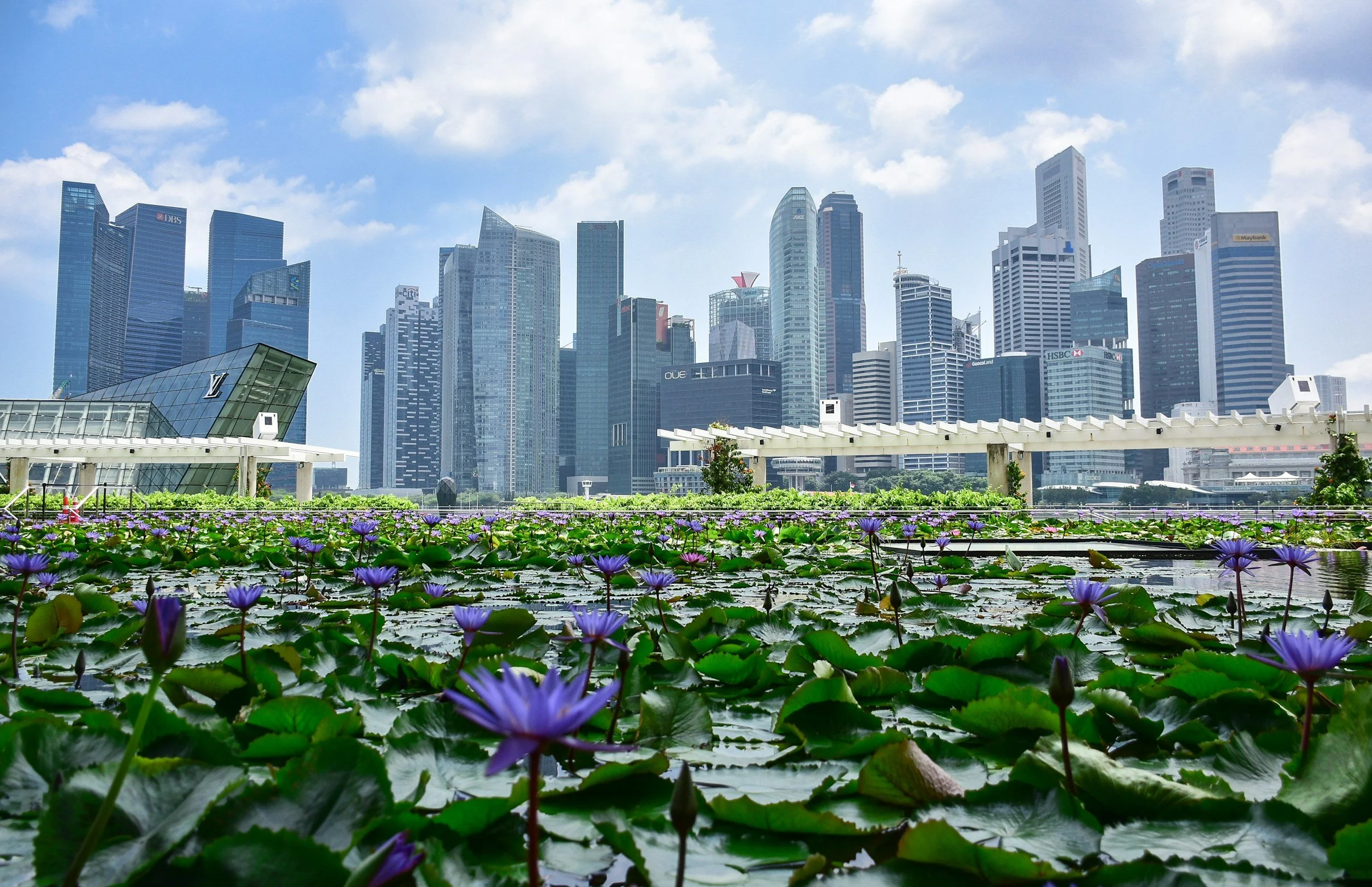
What the 80-80-80 Targets Actually Require
The SGBMP's fourth edition was jointly developed by the Building and Construction Authority (BCA) and the Singapore Green Building Council (SGBC), launched in March 2021 as part of the Singapore Green Plan 2030. Its three 2030 targets drive distinct obligations across the project lifecycle.
Target 1: 80% of Buildings Green by GFA
Any building meeting BCA's minimum energy performance standards or holding Green Mark certification counts toward this target. Since 2008, minimum standards have applied to new buildings; since 2013, they have extended to existing buildings undergoing major retrofitting. The bar has continued to rise — existing buildings undergoing major retrofit are now required to be at least 40% more energy-efficient than 2005 levels, up from the previous 25% threshold.
Target 2: 80% of New Developments as Super Low Energy from 2030
Super Low Energy (SLE) buildings achieve at least 60% improvement in energy efficiency over 2005 benchmarks. Under the GreenGov.SG initiative, all new and substantially retrofitted public sector buildings are required to achieve Green Mark Platinum SLE or equivalent. In Jurong Lake District, SLE is mandatory for all new developments. From 2022, new private developments on strategic Government Land Sales (GLS) sites are also required to deliver SLE-equivalent energy performance. SLE is no longer a premium aspiration — for public and GLS projects, it is the baseline.
Target 3: 80% Improvement in Energy Efficiency for Best-in-Class Buildings
Best-in-class buildings currently achieve above 70% improvement over 2005 levels. BCA is targeting 80% through the Green Buildings Innovation Cluster (GBIC 2.0) programme, which focuses on alternative cooling technologies, data-driven smart building systems, and advanced ventilation. The practical implication for specifiers is that high-performance envelope design — including facade solar control — directly contributes to this target.
Green Mark 2021: What Changed for Facade Specification
Green Mark 2021 (GM:2021), launched in September 2021, restructured the rating system into two categories: Energy Efficiency and Sustainability Sections. The Sustainability Sections cover Whole Life Carbon, Health and Wellbeing, Intelligence, Maintainability, and Resilience. For facade specification, two areas carry direct material implications.
ETTV Requirements Under GM:2021
Envelope Thermal Transfer Value (ETTV) remains a prerequisite for non-residential buildings. For standard compliance pathways, ETTV must not exceed 45 W/m² for the weighted average of all facade areas enclosing air-conditioned spaces. Green Mark Platinum targets typically require ETTV at or below 40 W/m². The ETTV formula accounts for opaque wall areas, glazing areas, U-values of wall and glazing systems, and the contribution of external shading elements to solar heat gain reduction.
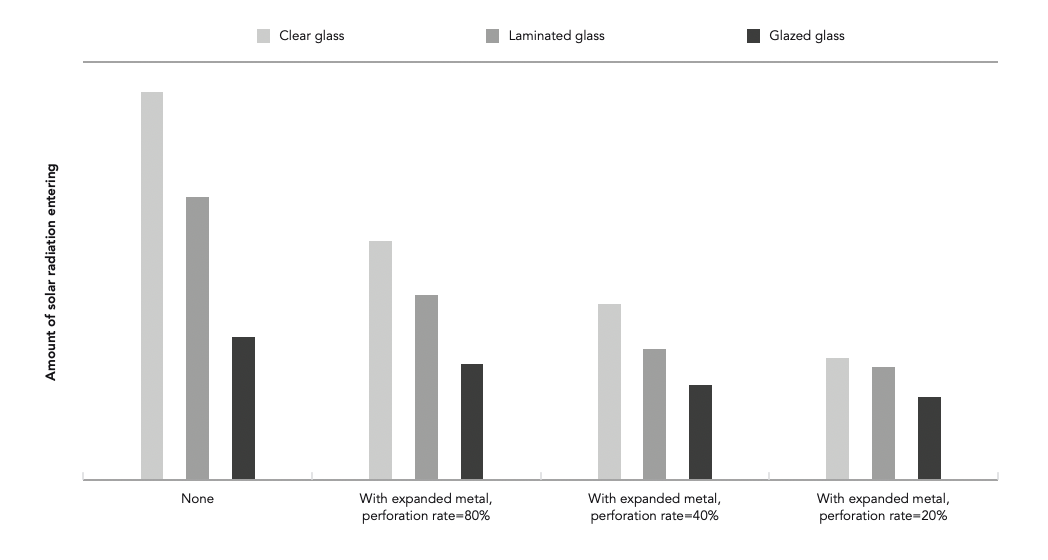
External facade screens — including expanded metal mesh and perforated panels — function as shading devices that reduce the solar component of ETTV calculations when positioned correctly relative to the primary glazed envelope.
Whole Life Carbon Assessment
GM:2021 introduced a formal Whole Life Carbon (WLC) section, which scores buildings on embodied carbon across construction materials (A1–A3 phases), construction activity (A5), operational maintenance and replacement (B phases), and end-of-life treatment including recycling benefits (C and D phases). The BCA Building Embodied Carbon Calculator (BECC) and the SGBC Embodied Carbon in Buildings Calculation Guidance provide the calculation framework.
For facade materials, this means the recycled content, durability, and recyclability of specified products contribute directly to the building's WLC score. Steel and aluminium products carry embedded recyclability advantages: both materials are fully recyclable at end of life, and recycled-content variants are available from suppliers operating ISO 14001-accredited supply chains.
How Metal Facade Products Support ETTV Compliance
External metal screens reduce solar heat gain on glazed facades by intercepting direct solar radiation before it reaches the primary glazing. The ETTV formula treats shading devices as reducing the effective solar component of the heat gain calculation — the denser the screen relative to the incident angle of solar radiation, the greater the reduction in effective solar heat gain coefficient (SHGC) for the glazed system behind.
Expanded Metal Mesh as a Secondary Facade Screen
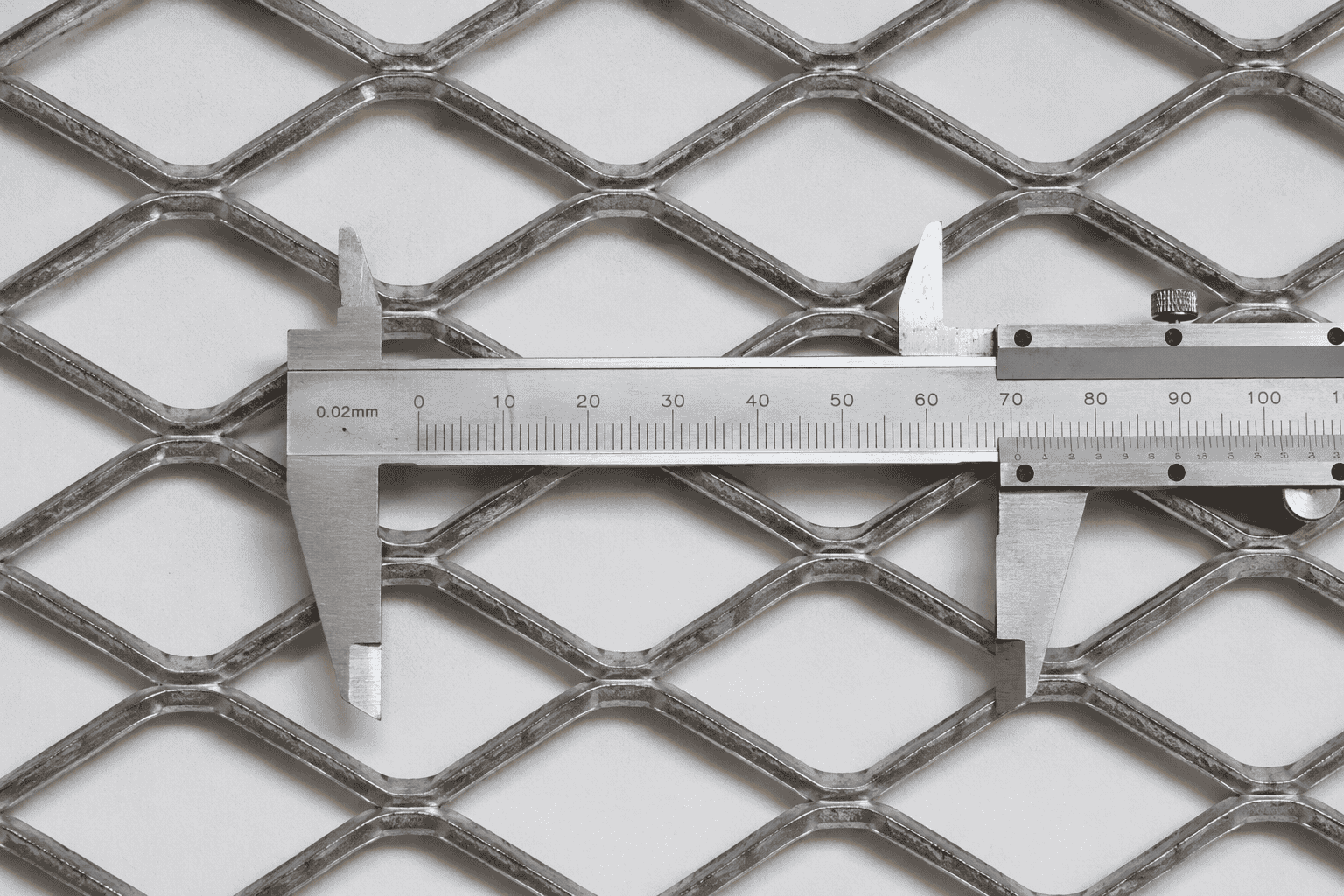
Expanded metal mesh is specified as a rainscreen or secondary facade layer over curtain wall or punched-window systems. The open area percentage — typically 30% to 60% depending on SWM/LWM dimensions — determines the degree of solar interception. West-facing facades in Singapore receive the highest afternoon solar load and benefit most from screen shading.
Mesh specified in galvanised steel or aluminium with a reflective or light-coloured powder coat finish also reduces the surface absorptance of the outer facade layer, contributing to lower wall heat transfer in the ETTV calculation.
Case Study: Keppel South Central project gallery and detailed expanded mesh application.
For full specification parameters and material grades, see the expanded metal mesh product page.
Perforated Metal Sheet for Controlled Solar Screening
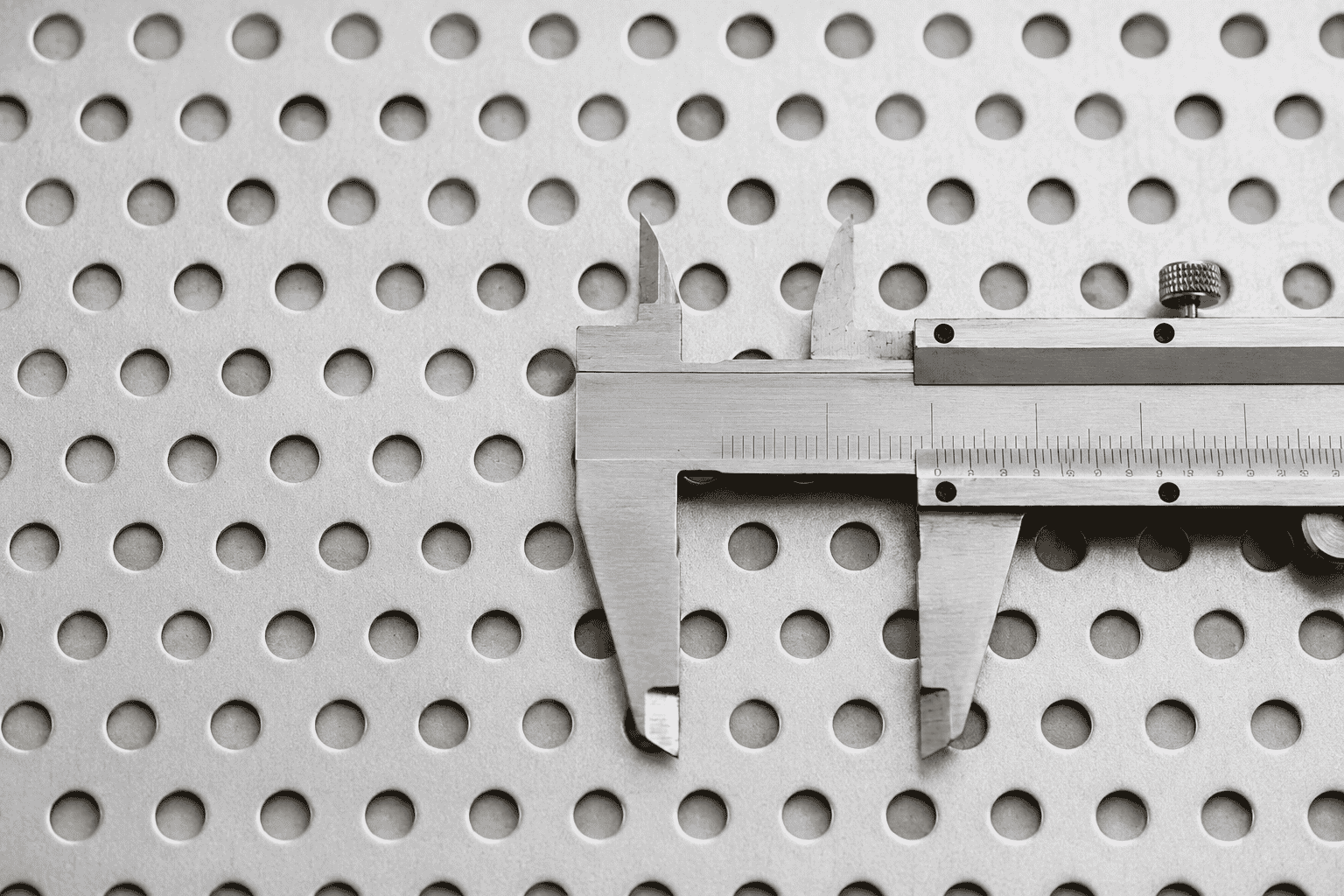
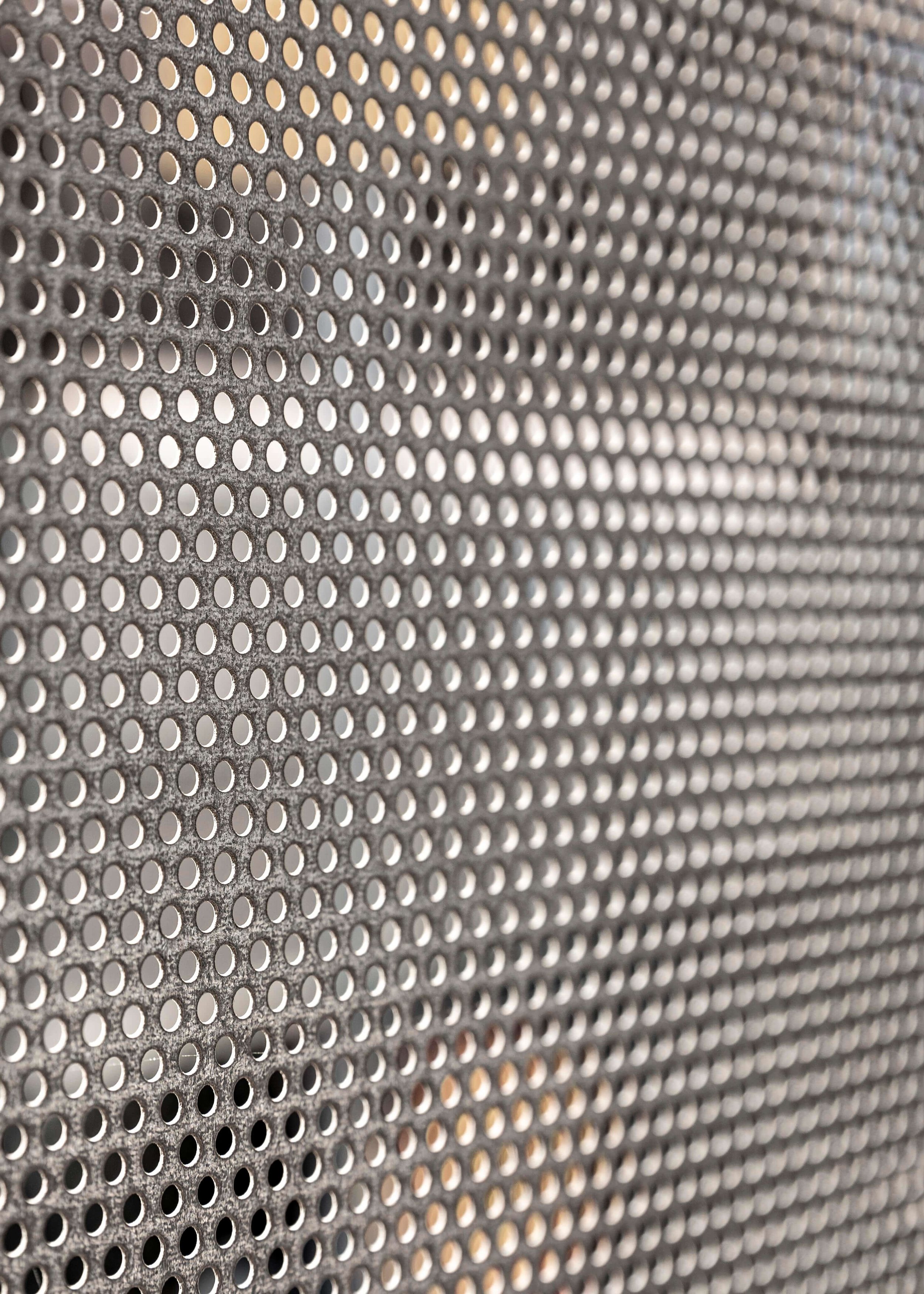
Perforated metal sheet allows precise control of open area percentage and hole pattern geometry, making it suitable for facade applications where the solar shading requirement varies by elevation. A perforated panel with 25–35% open area on a west-facing elevation can reduce direct solar radiation reaching the glazing significantly, while still admitting diffused daylight. Panels can be fabricated in aluminium, mild steel, or SS304 to suit the coastal exposure rating of the project.
For full specification parameters and material grades, see the perforated metal sheet product page.
Laser-Cut Panels for Shading Elements
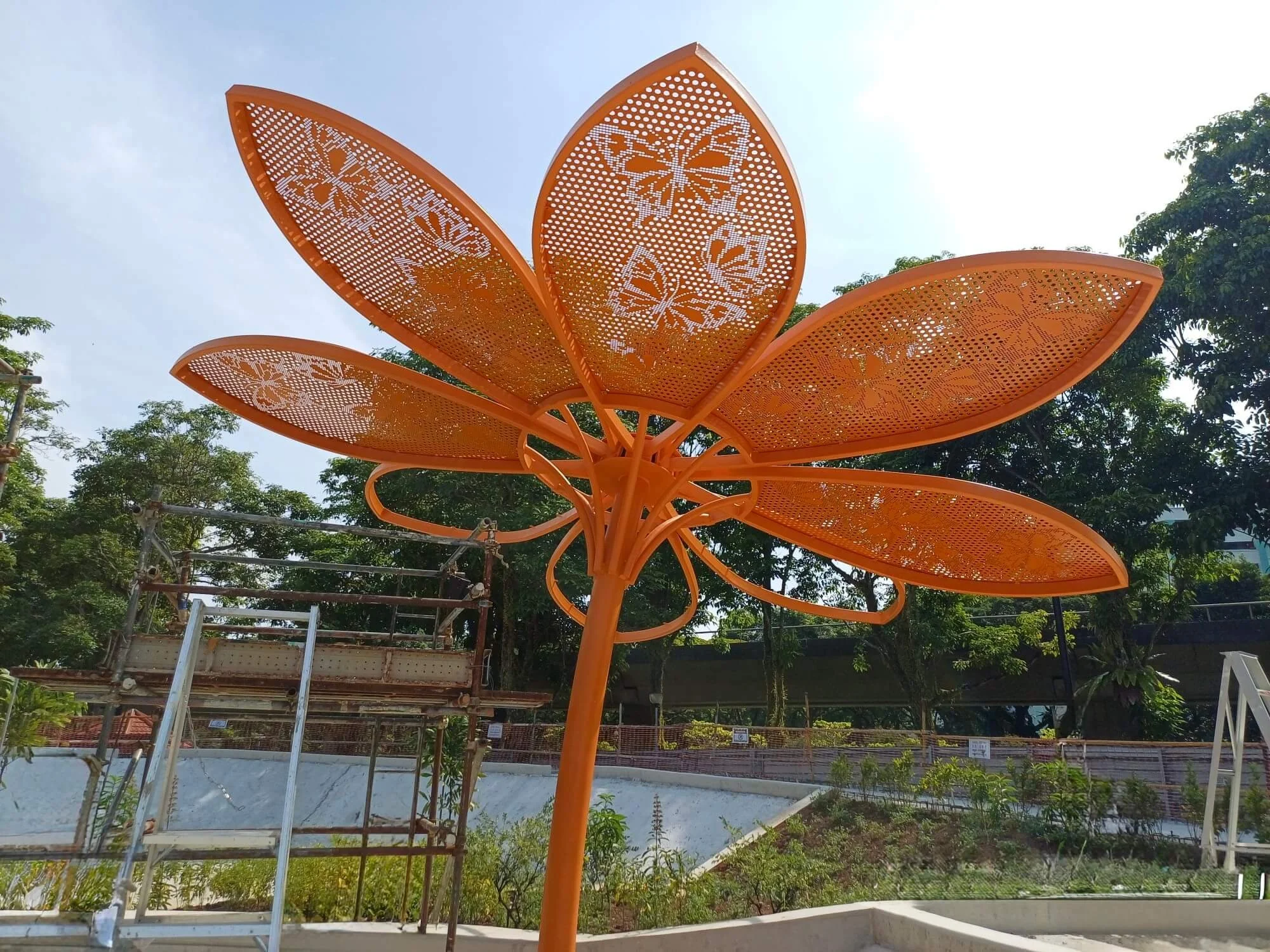
Laser-cut panels in mild steel or aluminium are used where the facade screen serves both a solar shading function and a visual identity role — for example, feature screens on Grade-A commercial lobbies, retail frontages, or mixed-use podiums. Custom cut patterns can be engineered to specific open-area percentages that satisfy the shading device parameters required in ETTV submissions.
Supply Bay’s laser cutting capability accommodates sheet sizes up to 1500mm x 30000mm with ±0.1 mm tolerance, suitable for large-format facade panels requiring precision pattern repetition. Full buying guidance is in the laser cut buyer’s guide.
For full details, see the laser cut metals page.
Louver and Corrugated Screens
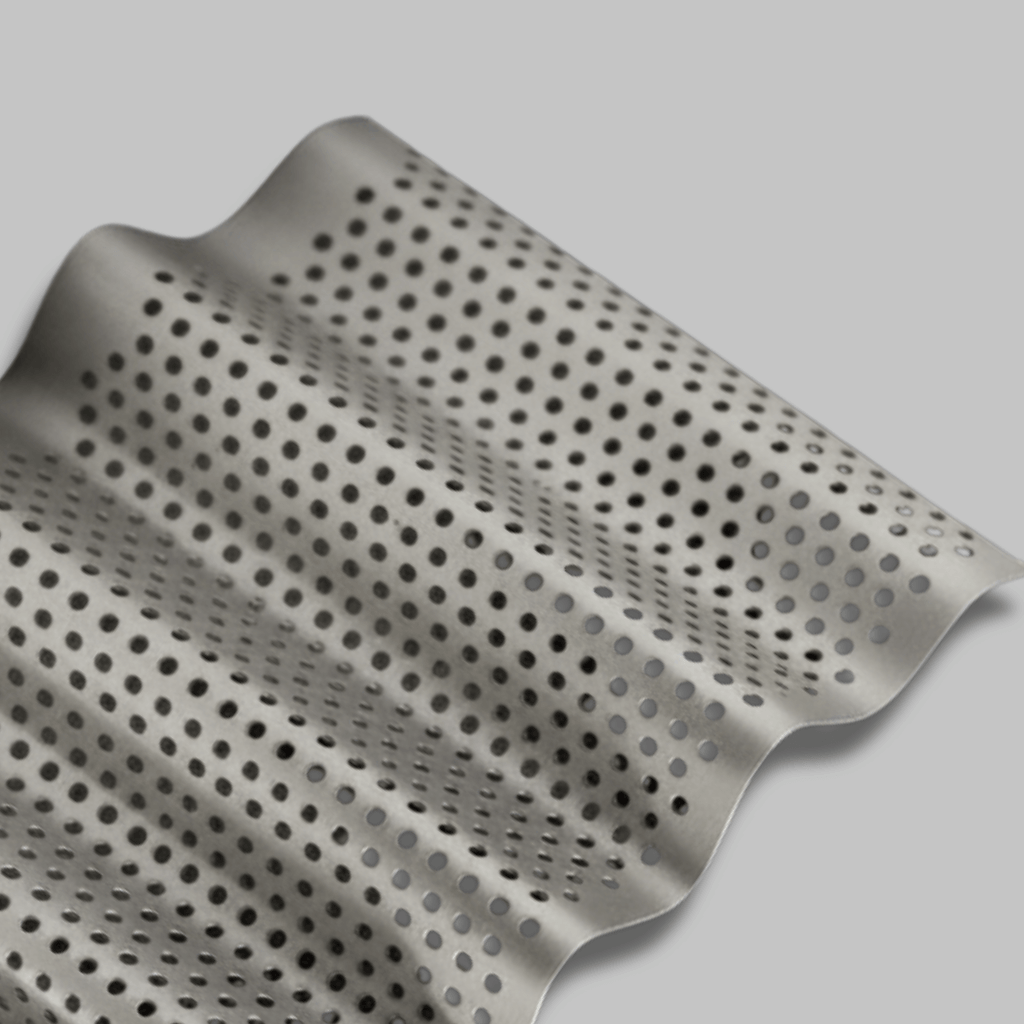
Fixed louver mesh and corrugated metal sheets are used as horizontal or vertical shading blades on multi-residential and industrial facades. Their geometry — the blade pitch, angle, and depth — determines the cut-off angle for direct solar incidence.
For NRP and HIP upgrading projects where BCA Green Mark compliance is being retrofitted onto existing residential blocks, louvre screens are a cost-effective shading strategy that can be installed without structural modification to the primary envelope.

Material Grade Selection for Green Mark Projects
| Material | Typical Finish | Solar Absorptance (light colour) | Corrosion Suitability | Recyclability | Typical Application |
|---|---|---|---|---|---|
| Aluminium (mill or anodised) | Anodised / PVDF powder coat | Low (reflective) | Coastal and marine zones | High — fully recyclable | Curtain wall screens, louvre blades |
| Mild steel (hot-dip galvanised) | GI + powder coat | Low–medium (colour dependent) | Sheltered / inland locations | High — steel recycling infrastructure mature | Secondary rainscreens, perforated cladding |
| SS304 stainless steel | Brushed / powder coat | Low–medium | General external use | High — high recycled content available | Grade-A commercial, civic facades |
| SS316 stainless steel | Brushed / mill | Low–medium | Marine and waterfront zones | High | Waterfront developments, Marina Bay precinct |
Documentation Parameters for Metal Facade Screens in ETTV Submissions
| Parameter | What to Specify | Notes |
|---|---|---|
| Screen open area (%) | Percentage of open area relative to panel face area | Determines effective solar interception; lower open area = higher shading |
| Screen standoff distance | Distance between screen face and primary glazing or wall (mm) | Affects ventilation cavity performance and cleaning access |
| Surface finish / colour | Finish type (powder coat, anodised) and colour reference | Affects solar absorptance value used in wall U-value calculation |
| Material grade | Alloy and specification (e.g. AA1100 aluminium, SS304 to ASTM A240) | Required for structural check and durability assessment |
| Panel dimensions | Width × height per panel (mm), module grid | Maximum fabricated size for laser-cut: 1500mm x 3000mm |
Applications in Singapore Construction: Sectors Driving Demand
GLS and Government Sites (SLE Mandatory)
New private developments on strategic GLS sites are required to deliver SLE-equivalent energy performance. This has driven uptake of high-performance facade screening on commercial towers and mixed-use developments in precincts including Jurong Lake District, Woodlands Regional Centre, and Punggol Digital District.
Public Sector Buildings (Green Mark Platinum SLE Required)
Under GreenGov.SG, all new and substantially retrofitted public sector buildings must meet Green Mark Platinum SLE or equivalent. JTC industrial developments, HDB community facilities, and public agency headquarters are all within scope.
The JTC CleanTech 3 development used perforated metal screens and louvre mesh across its facade and sun-shading elements — see the JTC CleanTech 3 case study for specification detail.
HDB Upgrading and NRP Projects
HDB Green Towns Programme targets a 15% reduction in estate energy consumption by 2030 from 2020 levels. For existing HDB residential blocks undergoing NRP or HIP works, facade upgrades — including louver screens and corrugated metal shading elements — are a practical retrofit strategy that can contribute toward Green Mark compliance without structural reconfiguration of the primary envelope.
Grade-A Commercial and Waterfront Developments
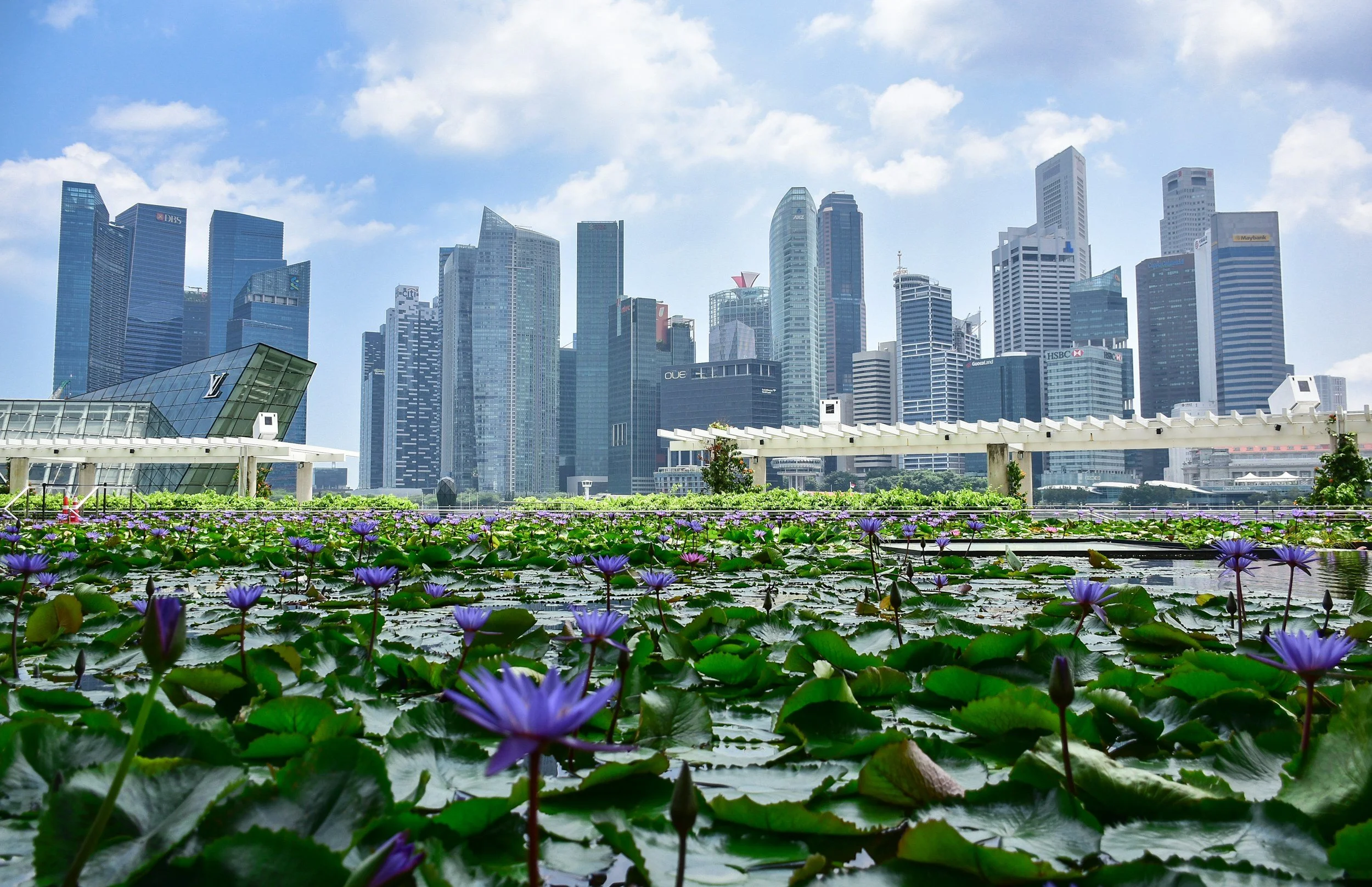
High-specification commercial projects targeting Green Mark Platinum in the Marina Bay, Tanjong Pagar, and Jurong Lake District precincts routinely specify custom laser-cut or perforated metal screens as part of a composite facade strategy. These screens serve both an ETTV reduction function and an architectural expression role, and are typically fabricated in SS304 or aluminium with PVDF powder coat finish.
Frequently Asked Questions
-
Under GM:2021, Green Mark Platinum certification for non-residential buildings typically requires ETTV at or below 40 W/m² for projects using standard compliance pathways. The baseline maximum for general compliance is 45 W/m².
-
A screen positioned in front of the primary glazed facade reduces the solar heat gain contribution from that glazed area in the ETTV calculation, provided it creates genuine shading of the glass. The effective reduction depends on the screen's open area percentage, the angle of solar incidence on that elevation, and the standoff distance from the glazing. Screens with very high open area (above 70%) on equatorial north–south-facing elevations provide limited ETTV benefit. The calculation should be confirmed with your M&E or facade consultant using the BCA Code on Envelope Thermal Performance.
-
BCA requires architectural elevation drawings showing the composition of the facade system, and material schedules stating the salient data for each facade material including the shading device. For metal screens, this covers panel dimensions, open area percentage, standoff distance, material grade, and surface finish. Supply Bay can provide product data sheets and fabrication drawings to support specification documentation.
Supply Bay Pte Ltd supplies expanded metal mesh, perforated metal sheet, laser-cut panels, louvre mesh, and corrugated sheets for Singapore construction and architectural projects. Contact us at info@supplybaystore.com or +65 6524 3913.
Supply Bay is Singapore's leading supplier of architectural sheet metal — expanded mesh, perforated panels, laser-cut screens, and solid sheets in aluminum, stainless steel (SS304, SS316), mild steel, and galvanized steel.