CNC laser cutting produces custom-pattern metal panels from flat sheet to tight tolerances, with no tooling dies and no geometric constraints. For architects, interior designers, and contractors in Singapore, it is the most flexible fabrication method available for decorative screens, facade cladding, acoustic panels, signage, and retail fitout. This guide covers material selection, sheet sizes, file requirements, finishes, lead times, and typical Singapore applications.
What Is CNC Laser Cutting?
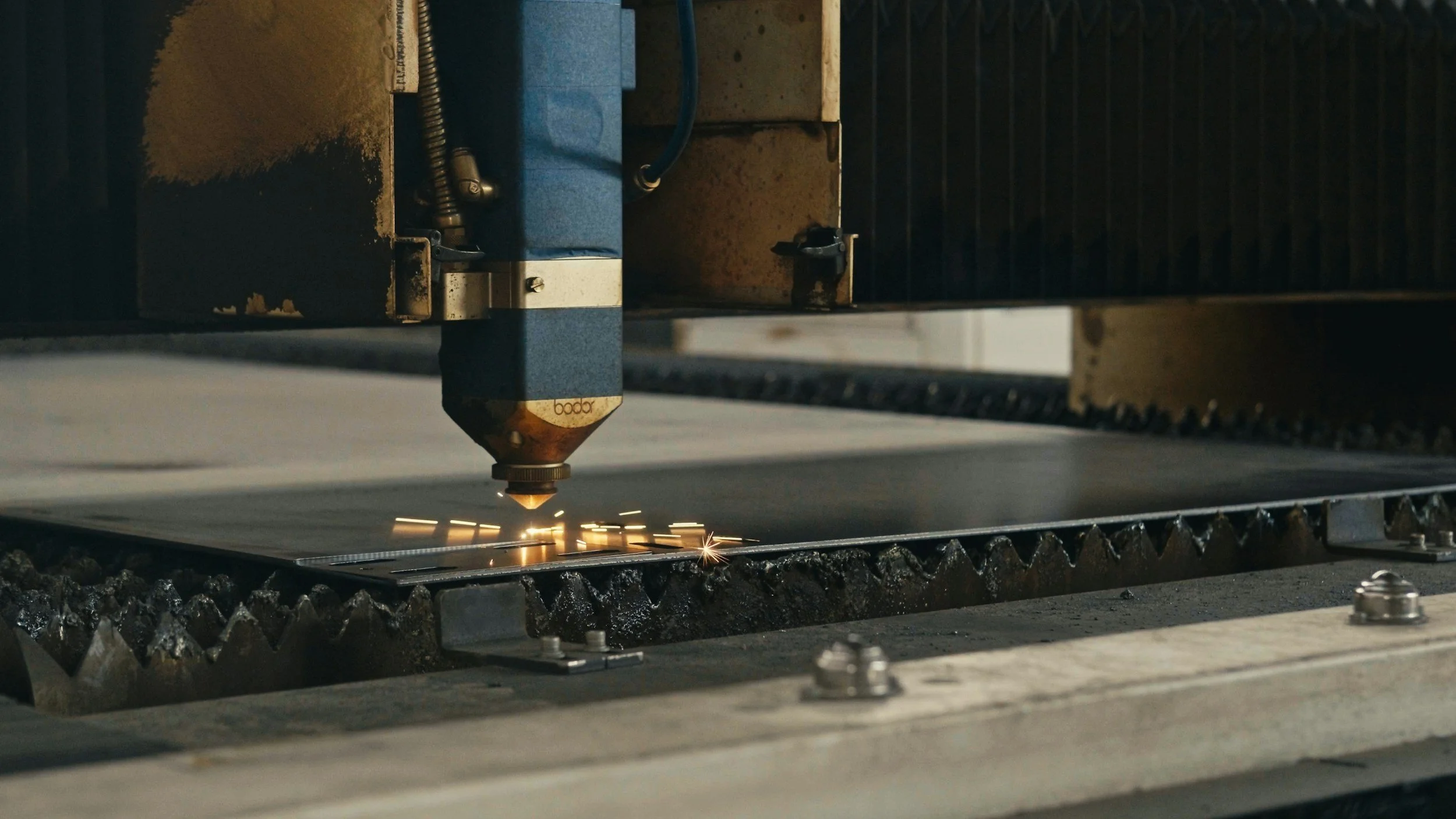
CNC (Computer Numerical Control) laser cutting uses a high-powered laser beam, guided by a computer-controlled cutting head, to cut precise shapes and patterns from flat metal sheet. The laser melts or vaporises material along a programmed path, leaving a clean, burr-free edge with no mechanical force on the sheet.
Because the cutting path is entirely software-driven, the process can reproduce virtually any geometry: straight lines, curves, intricate patterns, fine perforations, lettering, and custom shapes — all from a standard DXF or DWG vector file. There are no tooling dies to produce and no minimum order quantities tied to tooling costs.
Laser-Cut Panels vs Perforated Metal vs Expanded Metal
Specifiers choosing between these three product categories are often trading off design freedom against unit cost and lead time. The table below summarises the key differences.
| Factor | Laser-Cut Panels | Perforated Metal | Expanded Metal |
|---|---|---|---|
| Pattern flexibility | Unlimited — any vector geometry | Standard punch patterns (round, square, slot); custom dies available at cost | Diamond mesh only; limited by strand width and pitch |
| Minimum order | Single panel; no tooling cost | Standard patterns: low MOQ. Custom dies: higher MOQ to amortise tooling | Standard mesh: low MOQ. Cut-to-size from stock |
| Edge quality | Clean, burr-free laser edge | Punched edge; minor burring on reverse face | Expanded edge; strand ends may be sharp |
| Max sheet thickness | Up to 25mm (mild steel) | Typically up to 6mm for architectural use | Typically up to 5mm strand thickness |
| Lead time | 5–7 working days from approved file | From stock (standard); 2–4 weeks (custom) | From stock (standard patterns) |
| Typical Singapore use | Custom facades, decorative screens, signage, retail fitout | Ventilation, acoustic panels, sun shading, HDB upgrading works | Industrial flooring, facade mesh, balustrade infill |
| Unit cost | Moderate to high (depends on complexity) | Low (standard) to moderate (custom) | Low |
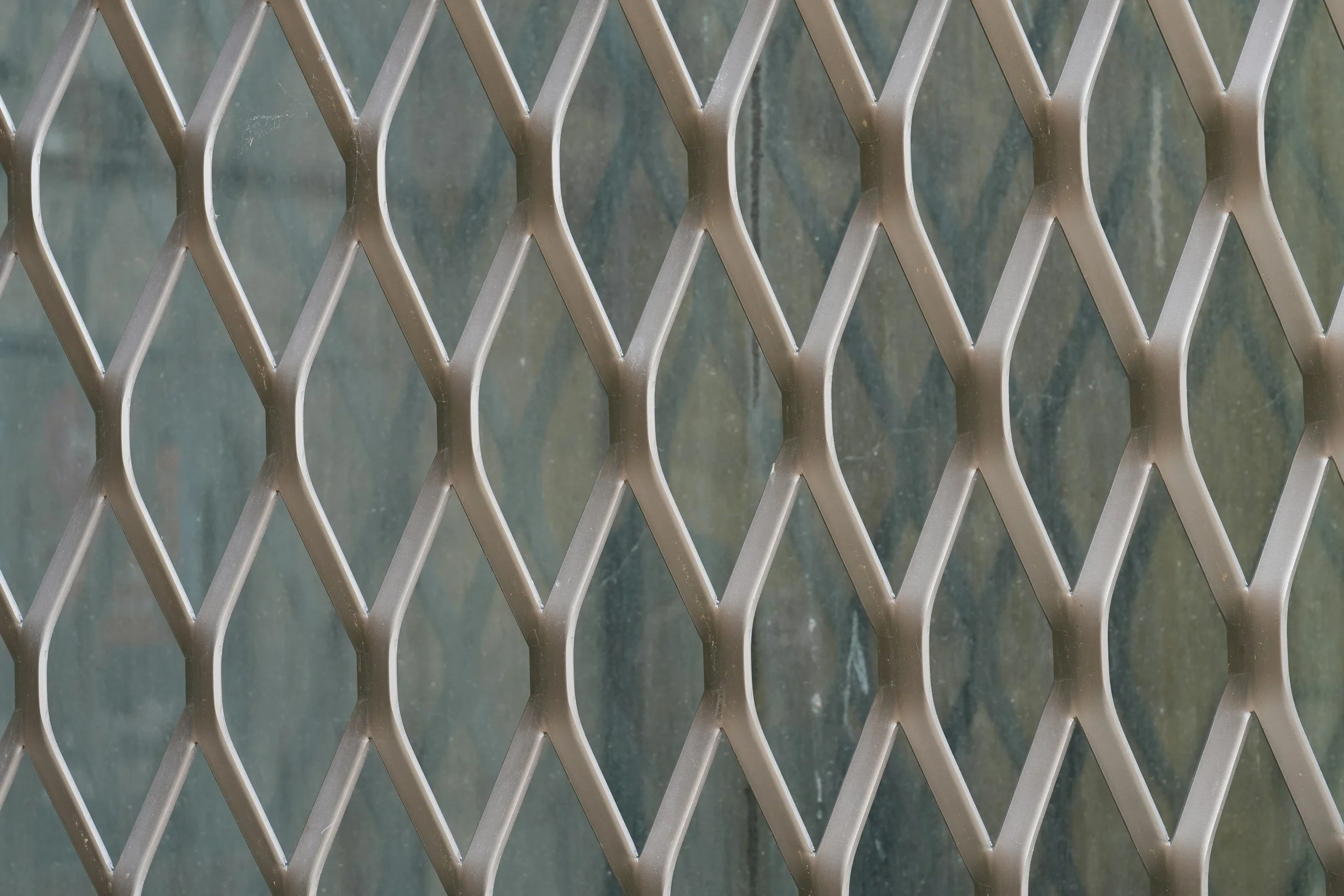
For projects where a standard perforation pattern is adequate, perforated metal sheet will typically be more cost-effective. Where design requires a custom geometry, logo, or fine organic pattern, laser cutting is the right process. For facade mesh and walkway applications, expanded metal mesh is usually the more appropriate and cost-effective choice.
Materials Available for Laser Cutting in Singapore
Supply Bay's laser cutting service covers four material groups. Maximum thickness varies by material due to differences in density and thermal conductivity.
| Material | Max Thickness | Corrosion Resistance | Typical Applications | Notes |
|---|---|---|---|---|
| Aluminium | 12mm | Excellent (naturally oxidising) | Facade cladding, canopy soffits, suspended ceiling systems | Lightweight; suitable where structural weight loading is a concern. Accepts powder coat and PVDF well. |
| Mild Steel | 25mm | Low — must be coated for exterior use | Interior screens, sheltered exterior, structural components | Most cost-effective option. Requires powder coating or galvanising for Singapore's outdoor humidity. |
| Galvanised Steel (GI) | 25mm | Good (zinc coating) | Industrial screening, plant enclosures, semi-exposed functional components | Lower cost than stainless. Less common for decorative architectural use due to spangled surface texture. |
| Stainless Steel SS304 | 20mm | Very good | Sheltered and semi-exposed architectural panels, commercial interiors | Standard specification for most Singapore architectural applications not in coastal zones. |
| Stainless Steel SS316 | 20mm | Excellent (molybdenum-enhanced) | Coastal facades, waterfront projects, areas exposed to salt-laden air | Recommended for projects within 5km of the coast or where salt air exposure is a factor. |
Specifier's tip: For Singapore projects in the southern waterfront, Sentosa, or Jurong Island industrial zone, specify SS316 rather than SS304. The additional molybdenum content significantly improves resistance to chloride-induced pitting corrosion in coastal air.
Sheet Sizes and Tolerances
Supply Bay's laser cutting achieves a positional accuracy of ±0.1mm — adequate for the vast majority of architectural, joinery, and engineering applications in Singapore.
Maximum sheet size is 1500mm W x 3000mm L. Panels larger than this can be produced by joining sections through fabrication — contact Supply Bay to discuss feasibility for oversized requirements.
For large continuous facades, panels are typically designed with expressed joint lines that align with standard sheet dimensions. This approach avoids waste and simplifies site fixing.
File Requirements
Laser cutting is a file-driven process. Supply Bay accepts the following vector formats:
DXF — most common; compatible with AutoCAD, Rhino, SolidWorks, and most CAD platforms
DWG — accepted; confirm version compatibility if using an older CAD release
Before submitting your file, check the following:
All cutting lines must be vector paths. Bitmap images (JPEG, PNG) cannot be used directly and must be traced to vector before submission.
Submit at 1:1 full scale. If the file is at a reduced scale, note the ratio clearly.
Label each part with material, thickness, and quantity if the drawing contains multiple panel types.
For panels to be bent or folded after cutting, submit the flat-cut (unfolded) DXF, not the 3D finished geometry.
Surface Finishes for Laser-Cut Metal Panels
| Finish | Suitable Materials | Environment Suitability | Notes |
|---|---|---|---|
| Mill finish (natural) | Stainless steel, aluminium | Interior | Clean, contemporary appearance. Not recommended for exterior mild steel in Singapore's humidity. |
| Powder coating | Mild steel, aluminium, stainless steel | Interior and exterior | Most common finish for architectural panels. Durable UV-resistant colour in a wide palette. Standard for Singapore commercial and institutional projects. |
| PVDF coating | Aluminium (primary), stainless steel | Exterior; high-rise facades | Fluoropolymer coating with superior fade and chemical resistance vs standard powder coat. Typically specified for Grade-A commercial facades and projects with long maintenance intervals. |
| Hot-dip galvanising | Mild steel | Industrial and semi-exposed exterior | Applied before or after cutting. Zinc coating provides robust corrosion resistance. Surface texture (spangling) limits decorative use. |
| Brushed No. 4 finish | Stainless steel | Interior; commercial retail | Linear brushed texture. Popular in Singapore F&B and retail fitout for its directional, refined appearance. Specified prior to laser cutting. |
| 2B mill finish | Stainless steel | Interior; light exterior | Smooth, slightly reflective cold-rolled surface. Lower cost than No. 4 brushed. Suitable where a plain stainless appearance is acceptable. |
For further guidance on finish selection, refer to the metal finishes guide for Singapore projects.
Common Applications in Singapore
Architectural Facades and Cladding
Custom-pattern laser-cut panels are used as rain screens, decorative cladding layers, and solar shading elements on commercial and mixed-use buildings across Singapore. Because the pattern is software-defined rather than die-constrained, architects can integrate bespoke geometries — brand motifs, abstract textures, or calibrated perforation densities for solar heat gain control — directly into the facade specification.
For Singapore's Green Mark-rated buildings, ETTV compliance may influence perforation density and panel placement; laser cutting allows precise calibration of open area percentage to meet these targets.
Interior Screens and Room Dividers
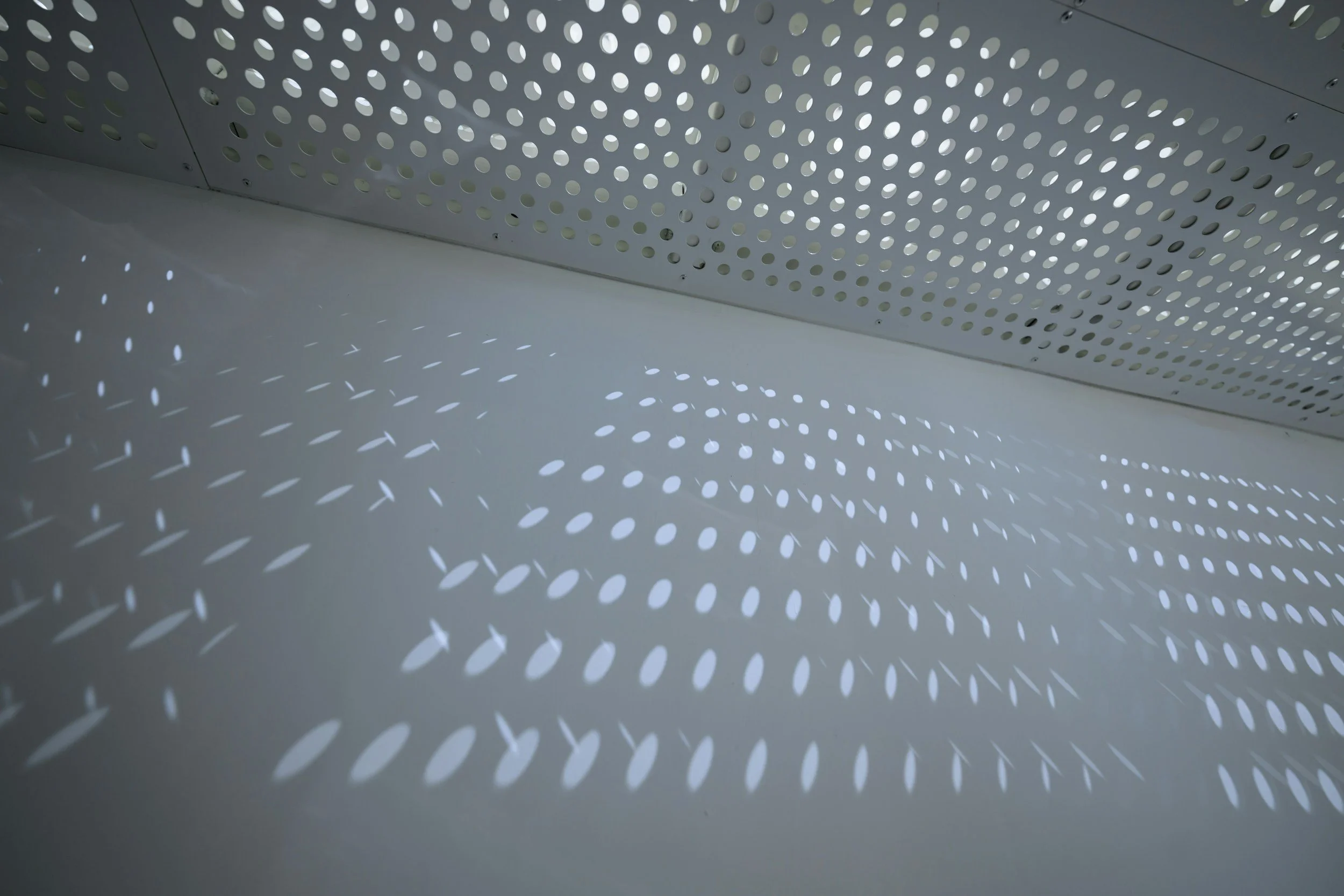
Laser-cut panels are widely used in Singapore F&B, hospitality, and corporate fitout as decorative screens, partitions, and feature walls. The material allows light transmission without full visual openness, and can be backlit to amplify the pattern effect. Stainless steel and mild steel (powder coated) are the most common specifications for this application.
Retail and Shopfront Displays
Custom cut-out lettering, logo panels, and decorative shopfront elements are a regular application in Singapore's retail sector. High-traffic environments favour stainless steel or powder-coated aluminium for their durability and resistance to cleaning agents. Supply Bay supplied custom laser-cut ornaments and in-store installations for Aesop's festive campaign — read the Aesop laser-cut retail case study for full project details.
Signage and Wayfinding
Precision-cut stainless and aluminium lettering and wayfinding elements for building lobbies, commercial spaces, and public infrastructure. Laser cutting produces clean letter forms with consistent edge quality across all characters — critical where signage will be viewed at close range.
Acoustic Panels
Pattern-based laser cutting can produce perforated metal acoustic panels where open area percentage is calibrated to achieve target absorption coefficients. Used in offices, conference rooms, and hospitality interiors. Typically specified in aluminium or mild steel with a powder coat finish, mounted over acoustic backing material.
Ceiling Grilles and Soffit Panels
Lightweight aluminium laser-cut panels for suspended ceiling systems, HVAC grilles, and soffit cladding — particularly in commercial and institutional projects.
Public Infrastructure and Landscape
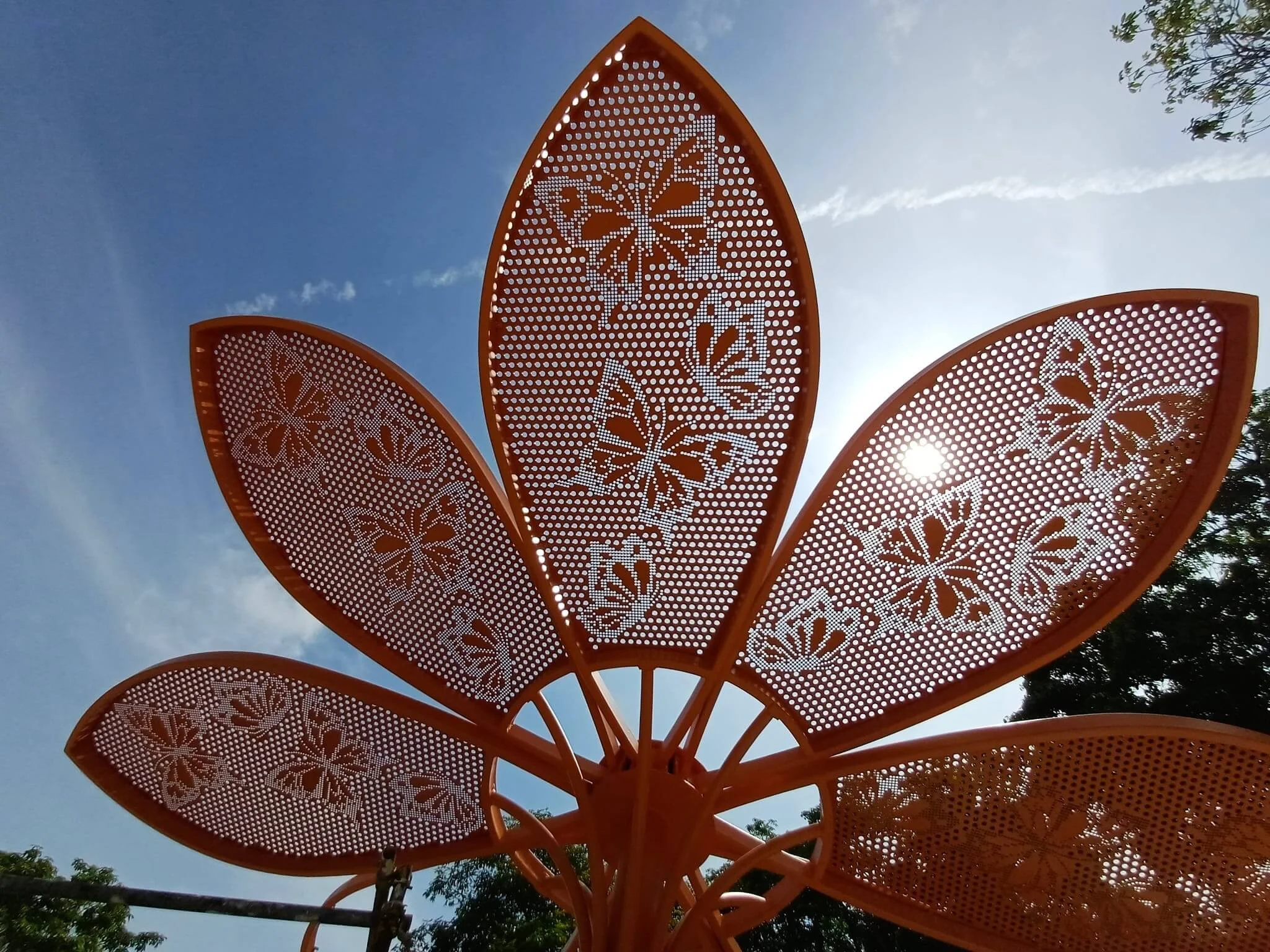
Supply Bay supplied custom laser-cut panels for Sun Plaza Park in Tampines — a National Parks Board inclusive playground project. The brief required panels carrying butterfly, wave, plant, and leaf motifs across multiple panel sizes, with a special-grade powder coat finish suited to Singapore's outdoor UV and humidity conditions. The panels provide visual enclosure and patterned shadow without obstructing sightlines, and meet the durability requirements of a high-traffic public outdoor environment.
Lead Times and Ordering
Standard laser cutting takes 5–7 working days from approved file, depending on material type, thickness, and job complexity.
| Process | Indicative Lead Time | Notes |
|---|---|---|
| Laser cutting (standard) | 5–7 working days | From approved DXF/DWG file. Clock starts on file approval, not order date. |
| Powder coating / PVDF | +3–5 working days | Added after cutting. Colour confirmation required before production starts. |
| Bending / folding | Quoted individually | Depends on geometry complexity and number of bends. Submit flat DXF for quote. |
| Large-volume or multi-part jobs | Quoted individually | Contact Supply Bay for programme planning on large Singapore construction projects. |
Frequently Asked Questions
-
DXF is the preferred format, compatible with AutoCAD, Rhino, SolidWorks, and most CAD platforms. DWG is also accepted. Bitmap images (JPEG, PNG) cannot be used directly and must be converted to vector paths before submission.
-
Supply Bay's maximum sheet size is 1500mm W x 3000mm L. Panels exceeding this dimension can be produced by joining sections through fabrication. Contact Supply Bay to discuss feasibility and joint detailing for oversized panels.
-
Stainless steel and aluminium panels can be left in natural mill finish for exterior use. Mild steel must be powder coated, galvanised, or otherwise protected — bare mild steel will corrode rapidly in Singapore's high humidity. For Grade-A commercial facades with long maintenance cycles, PVDF coating on aluminium is the standard specification.
-
Laser cutting is custom. Any geometry that can be drawn as a vector file can be cut. Supply Bay does not limit customers to catalogue patterns — submit a DXF and the pattern will be cut as drawn, subject to minimum feature size constraints for the material and thickness specified.
-
Laser-cut panel pricing depends on material, thickness, sheet area, and cutting time — which is driven by the total cut length in the pattern. Dense, intricate patterns with long cumulative cut paths cost more per panel than simple geometric patterns. Contact Supply Bay with your DXF and project quantity for a firm quotation.
Supply Bay Pte Ltd supplies laser-cut metal panels and architectural metal products for Singapore construction and architectural projects. Contact us at info@supplybaystore.com or +65 6524 3913.
Supply Bay is Singapore's leading supplier of architectural sheet metal — expanded mesh, perforated panels, laser-cut screens, and solid sheets in aluminum, stainless steel (SS304, SS316), mild steel, and galvanized steel.