Case Study: Green by Design - Expanded Metal Mesh at Keppel South Central
Case Study
Supply Bay supplied expanded metal walkway mesh for Keppel South Central's structural wall screening and facade system — a 33-storey Grade-A commercial tower in Tanjong Pagar that received BCA Green Mark Platinum Super Low Energy certification, Singapore's highest sustainability rating for buildings. This case study covers the project background, the material specification rationale, and how expanded metal mesh contributes to passive design performance in a super low energy building.
About Keppel South Central
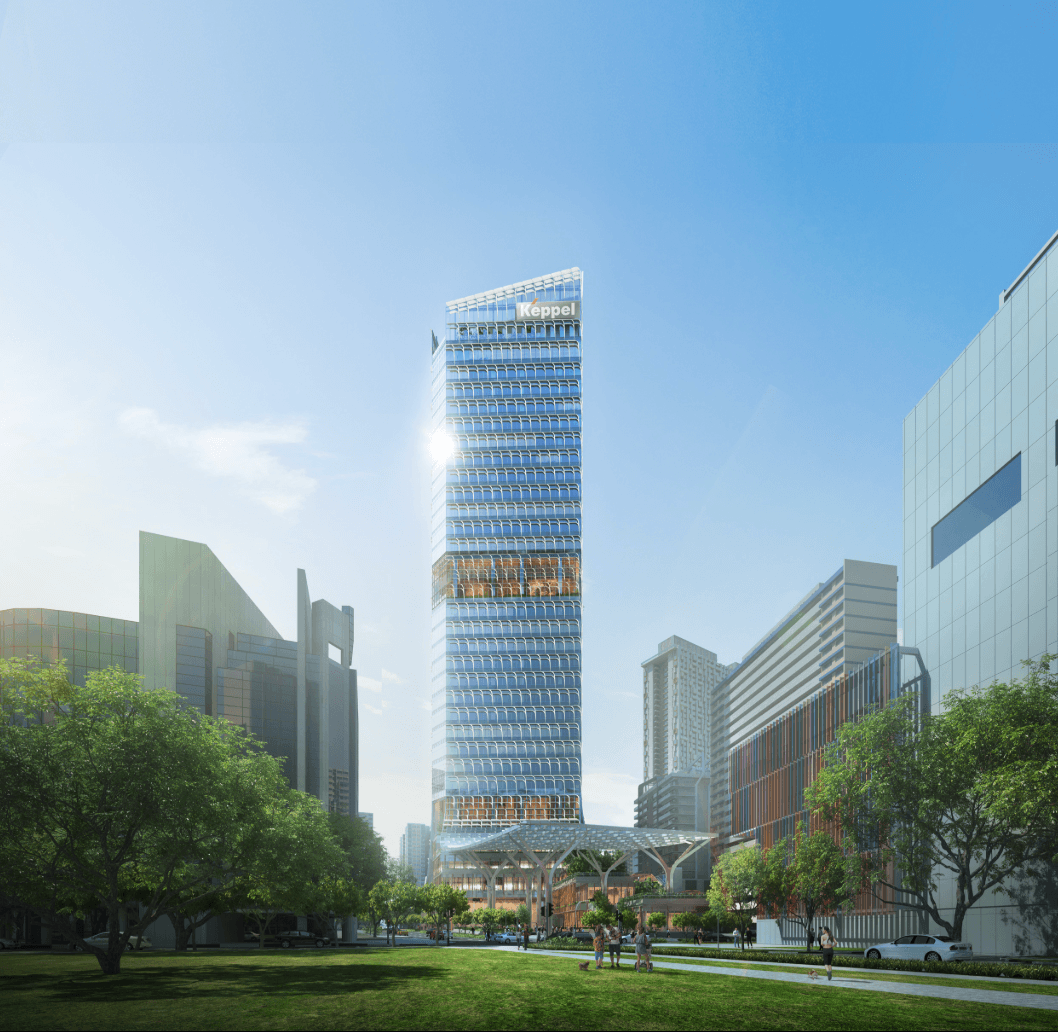
Keppel South Central occupies the former Keppel Towers site along Hoe Chiang Road in Singapore's Central Business District. Completed in 2024 and designed by global architecture firm NBBJ, the development delivers approximately 650,000 square feet of Grade-A office space, flexible workspaces, retail, and event facilities. The tower is positioned as a gateway development to Singapore's Greater Southern Waterfront and forms part of the broader rejuvenation of the Tanjong Pagar corridor.
The project holds the following certifications: BCA Green Mark Platinum Super Low Energy, WiredScore Platinum, SmartScore Platinum, and WELL Core Pre-certification for occupant health and wellness. The BCA Green Mark Platinum Super Low Energy rating — the highest tier under Singapore's national green building framework — requires a projected energy use intensity (EUI) of no more than 110 kWh/m² per year, a threshold that demands integrated design decisions across the building envelope, MEP systems, and building management.
Keppel South Central's projected annual energy savings amount to approximately 6.2 million kWh compared to a code-compliant commercial building of equivalent size — the equivalent of powering around 1,300 Singaporean homes for a year.
Application: Expanded Metal Walkway Mesh for Structural Wall Screening
Supply Bay supplied expanded metal walkway mesh adapted for structural in-wall screening applications across the building. The material was selected for its combination of structural rigidity, open-area permeability, and long-term durability in Singapore's tropical climate.
Why Expanded Metal and Not Perforated Sheet or Solid Panel
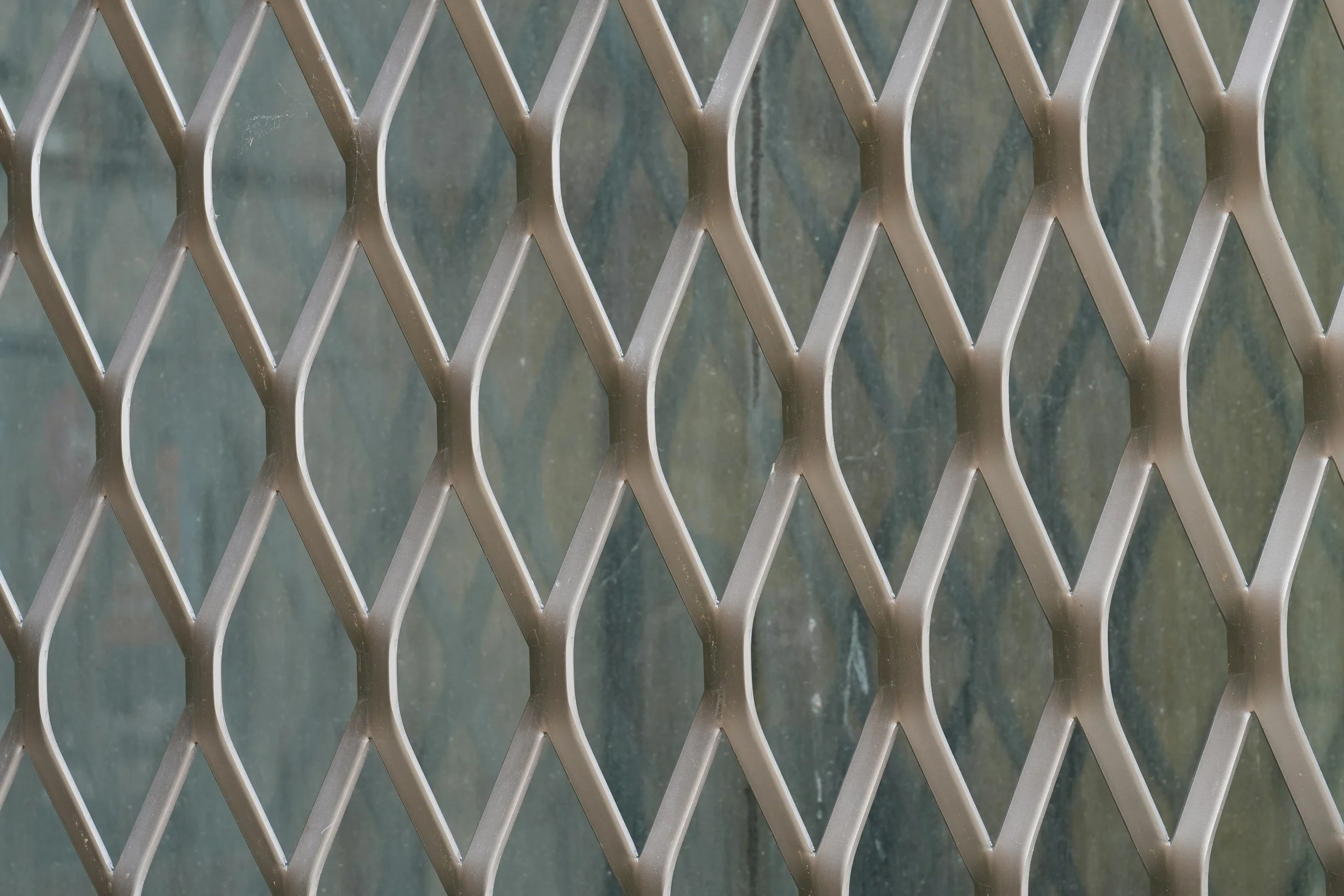
Expanded metal is produced by slitting and stretching a solid metal sheet, creating a rigid diamond-pattern mesh without removing any material. Unlike perforated sheet, where metal is punched out as waste, expanded metal achieves its open area entirely through deformation of the base sheet. The result is a product that is structurally stiffer per unit of weight than perforated sheet at equivalent gauge, and more material-efficient in production — zero manufacturing offcut.
Solid panel alternatives provide no passive ventilation. Perforated sheet provides controlled open area but lacks the inherent three-dimensional rigidity of expanded mesh. For a structural in-wall screening application that also needed to support the building's passive ventilation strategy, expanded metal was the specification that satisfied all three criteria simultaneously: structural performance, airflow, and material efficiency.
Mesh Specification Parameters
| Parameter | Specification |
|---|---|
| Product type | Expanded metal walkway mesh |
| Application | Structural in-wall screening; facade system |
| Surface profile | Three-dimensional raised strand — continuous diamond pattern |
| Manufacturing process | Slit and stretch — zero material offcut |
| Structural performance | High inherent rigidity — strand geometry adds stiffness without welds or joints |
| Open area | Sufficient for passive ventilation through the building envelope |
| Recyclability | 100% at end of life |
How Expanded Metal Mesh Contributes to BCA Green Mark Performance
BCA Green Mark Platinum Super Low Energy certification requires performance across energy efficiency, indoor environmental quality, whole life carbon, and maintainability. The expanded metal mesh specification at Keppel South Central contributes across several of these assessed criteria.
ETTV Reduction Through Facade Screening
When expanded metal mesh is installed as a secondary facade screen layer set out from the primary wall or glazing surface, it intercepts direct solar radiation before it reaches the primary envelope. The shaded cavity between screen and wall reduces surface temperatures on the primary cladding, cutting the solar heat gain component of the ETTV calculation that all non-residential buildings must satisfy under BCA's Code for Environmental Sustainability. For Keppel South Central's facade strategy, this passive solar interception contributed to the building achieving its EUI target without relying exclusively on active cooling systems.
Passive Ventilation in a Super Low Energy Strategy
Expanded metal's open-area geometry allows air to move through the building envelope without mechanical assistance. In a super low energy building where reducing active cooling loads is the primary energy performance lever, passive ventilation through transitional and semi-open spaces directly reduces the mechanical system's operating hours. A solid cladding panel cannot contribute to this. Expanded mesh provides solar shading and structural screening while maintaining the airflow that Singapore's prevailing winds can deliver.
Embodied Carbon and Whole Life Carbon
The slit-and-stretch manufacturing process produces zero offcut waste — all input material becomes finished product. This gives expanded metal a lower embodied carbon profile than perforated sheet (which generates significant punching offcuts) or laser-cut panels (which produce a skeleton offcut frame). For BCA Green Mark 2021's Whole Life Carbon section, the zero-waste manufacturing process is documentable as a genuine differentiator against alternative open-area products.
Steel expanded metal mesh is 100% recyclable at end of life. At building demolition or facade replacement, mesh panels are recovered and reprocessed through Singapore's scrap metal facilities without specialist handling. Over a 50-year building lifespan, this circular economy potential reduces the whole life carbon cost associated with eventual material replacement.
Durability and Maintainability
Correctly specified expanded metal mesh performs reliably in Singapore's tropical climate for decades. The continuous-strand construction eliminates the joint failure modes that affect welded mesh under cyclic thermal loading. The open-area geometry prevents water pooling and biological fouling that accelerates corrosion on solid surfaces. For in-wall structural applications where maintenance access is limited over the building's service life, a material that does not need replacement does not need to be re-manufactured, re-transported, or re-installed.
The table below summarises the BCA Green Mark 2021 assessment sections to which the Keppel South Central expanded metal mesh specification is relevant.
| Green Mark 2021 Section | Relevant Attribute | How Expanded Metal Contributes |
|---|---|---|
| Energy Efficiency: ETTV | Secondary facade screen layer | Solar interception reduces heat gain on primary envelope; supports EUI target |
| Indoor Environment: Natural Ventilation | Open area (30–55%) | Allows passive airflow through transitional and semi-open spaces without mechanical assistance |
| Whole Life Carbon: Embodied Carbon | Zero manufacturing waste | Lower embodied carbon per m² vs alternatives with production offcuts |
| Whole Life Carbon: End of Life | 100% recyclability | Steel panels fully recoverable and reprocessable at demolition |
| Maintainability | Long service life; no weld joints | Continuous-strand construction; resists thermal cycling failure; low maintenance requirement |
Note: Green Mark credit applicability depends on the specific project type, assessment pathway, and how the material is documented in the submission.
Supply Bay can provide product data sheets, open area specifications, and material certificates to support Green Mark documentation packages.
Expanded Metal Mesh Grade Selection for Singapore Green Building Projects
The material grade for expanded metal mesh in facade and structural screening applications is determined by exposure condition and maintenance expectation.
| Grade | Corrosion Resistance | Recommended Use |
|---|---|---|
| Mild steel, hot-dip galvanised | High — sacrificial zinc | Civil infrastructure, outdoor industrial, sheltered external |
| Aluminium | High — natural oxide layer | Facade screening, ceiling mesh, weight-constrained applications |
| SS304 stainless steel | High — passive chromium oxide | Architectural facades, balustrade infill, civic and institutional |
| SS316 stainless steel | Very high — molybdenum addition | Coastal, waterfront, high-humidity, marine-adjacent applications |
For detailed grade selection guidance, refer to the Stainless Steel vs Galvanised Steel guide for Singapore projects.
Other Singapore Projects: Supply Bay Expanded Metal Portfolio
Supply Bay has supplied expanded metal mesh across commercial, civic, infrastructure, and industrial projects in Singapore. The Keppel South Central specification is one of four distinct application types in the current portfolio.
Family Justice Courts — Civic Institution, Havelock Square
Security-grade expanded metal mesh panels for the renovated civic facility at 3 Havelock Square. The specification required a mesh functioning as a physical security barrier while preserving cross-ventilation — ruling out solid cladding and standard security grating. The diamond-pattern strand geometry met both the structural security requirement and the architectural brief for an open, welcoming institutional environment. See the Family Justice Courts case study for full details.
Bukit Timah Canal Widening — Civil Infrastructure
Hot-dip galvanised expanded metal mesh for a civil drainage infrastructure project, specified for long-term outdoor performance in a permanently exposed water-adjacent environment with minimal future maintenance access. Selected for a service life measured in decades under full outdoor exposure conditions.
JTC CleanTech 3 — Industrial Development, Jurong Innovation District
Fine expanded mesh M12-30 (9 mm SWM × 29 mm LWM, 3 mm base thickness) for stair railing infill panels across a BCA Green Mark Platinum certified industrial and research development. The specification balanced BCA balustrade infill gap requirements with the panel rigidity needed to span between railing posts under lateral load. See the JTC CleanTech 3 case study for full details.
Frequently Asked Questions
-
BCA Green Mark Platinum Super Low Energy is the highest tier of Singapore's national green building certification scheme. Buildings at this tier must demonstrate a projected energy use intensity (EUI) of no more than 110 kWh/m² per year. Achieving this threshold requires integrated passive design strategies across the building envelope — including facade screening, natural ventilation, and solar shading — in addition to high-efficiency active MEP systems.
-
When installed as a secondary facade screen set out from the primary wall or glazing surface, expanded metal mesh intercepts direct solar radiation before it reaches the primary envelope. The resulting shaded cavity reduces surface temperatures on the primary cladding, cutting the solar heat gain component of the ETTV calculation. This is a passive design approach with no moving parts, no energy input, and no maintenance requirement.
-
Yes. Supply Bay provides product data sheets with open area percentages and mesh geometry, material certificates for steel and aluminium grades, coating test reports, and ETTV-relevant facade performance data on request. Documentation is available to support Green Mark submissions and contractor material approval packages.
-
Walkway mesh is specified with heavier strand widths and larger base material thickness to carry pedestrian load, and span between structural supports without deflection. Architectural mesh uses finer strands and smaller apertures for a more refined visual texture at close range, suited to facade screening, ceiling systems, and decorative applications where load-bearing capacity is secondary.
-
Yes. Expanded metal mesh is applicable across BCA Green Mark commercial, industrial, institutional, and residential (condominium) project types — for facade screening (ETTV), natural ventilation (sky terraces, covered linkways, semi-open lobbies), and maintainability. The specific Green Mark credits applicable depend on the project type and assessment pathway.
Supply Bay Pte Ltd supplies expanded metal mesh for Singapore construction, architectural, and infrastructure projects. Contact us at info@supplybaystore.com or +65 6524 3913.
Supply Bay is Singapore's leading supplier of architectural sheet metal — expanded mesh, perforated panels, laser-cut screens, and solid sheets in aluminum, stainless steel (SS304, SS316), mild steel, and galvanized steel.