
Green by Design: Expanded Metal Mesh at Keppel South Central
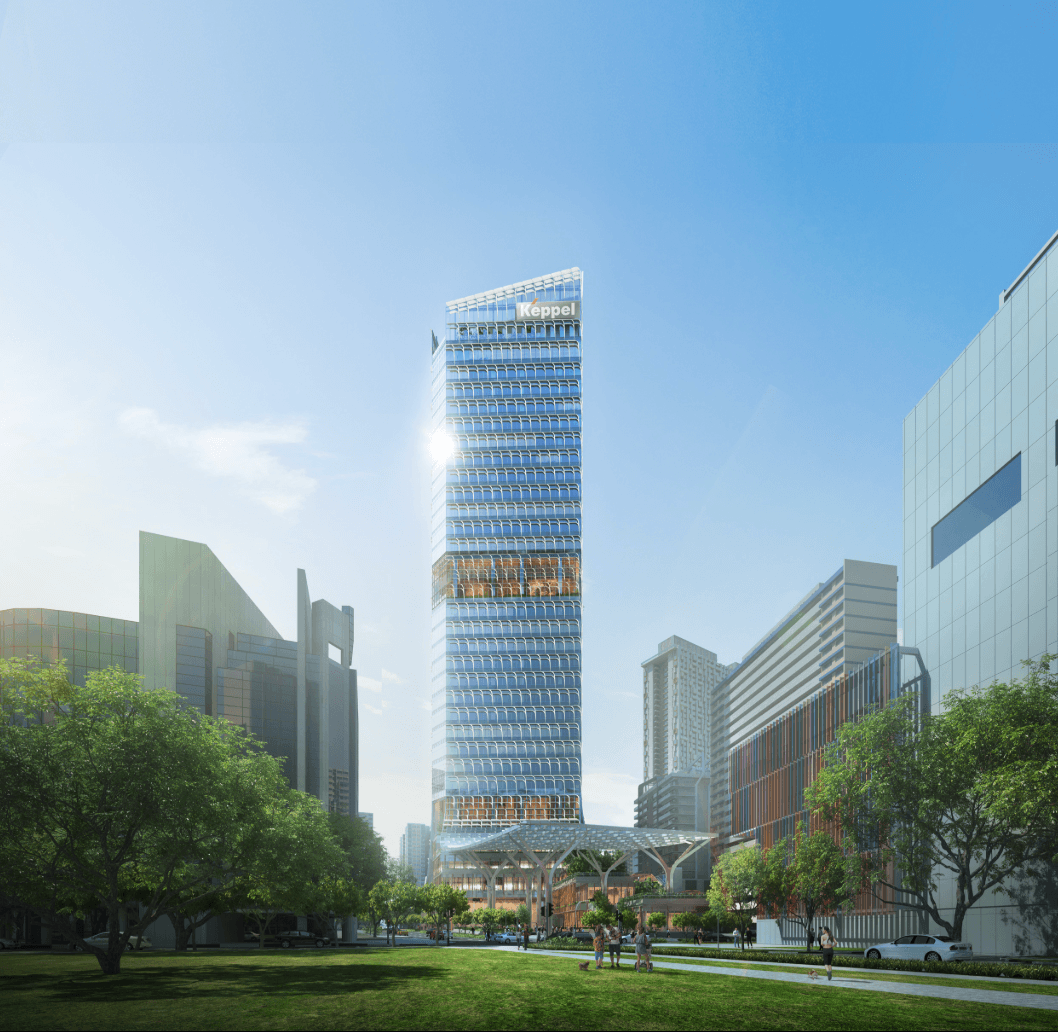
Keppel South Central: A Green Mark case study
When Keppel's 33-storey commercial tower at Tanjong Pagar set out to earn Singapore's highest sustainability rating — the BCA Green Mark Platinum Super Low Energy Award — every element of the building envelope had to earn its place. We are proud to share that Supply Bay was part of that story.
We supplied expanded metal walkway mesh for Keppel South Central's structural wall screening and facade system, a specification chosen not just for its aesthetic appeal, but for the way its open, continuous-strand structure actively supports passive ventilation, reduces overall material mass, and aligns with the project's broader ESG objectives.
This is a look at the project, the material rationale, and what it means to specify architectural metal for a super low energy building in Singapore.
About Keppel South Central
Keppel South Central occupies the former site of Keppel Towers along Hoe Chiang Road, in the heart of Singapore's Central Business District. The redevelopment, completed in 2024 and designed by global architecture firm NBBJ, delivers approximately 650,000 square feet of Grade-A offices, flexible workspaces, retail and event spaces, and a wide range of indoor and outdoor amenities.
The tower is positioned as a gateway to the Greater Southern Waterfront and is intended to become a landmark in the rejuvenation of Tanjong Pagar, one of Singapore's most significant urban transformation corridors.
In recognition of its sustainability design, Keppel South Central received the BCA Green Mark Platinum Super Low Energy certification — the highest tier available under Singapore's national green building scheme. It also holds WiredScore Platinum and SmartScore Platinum certifications for digital infrastructure, and WELL Core Pre-certification for occupant health and wellness.
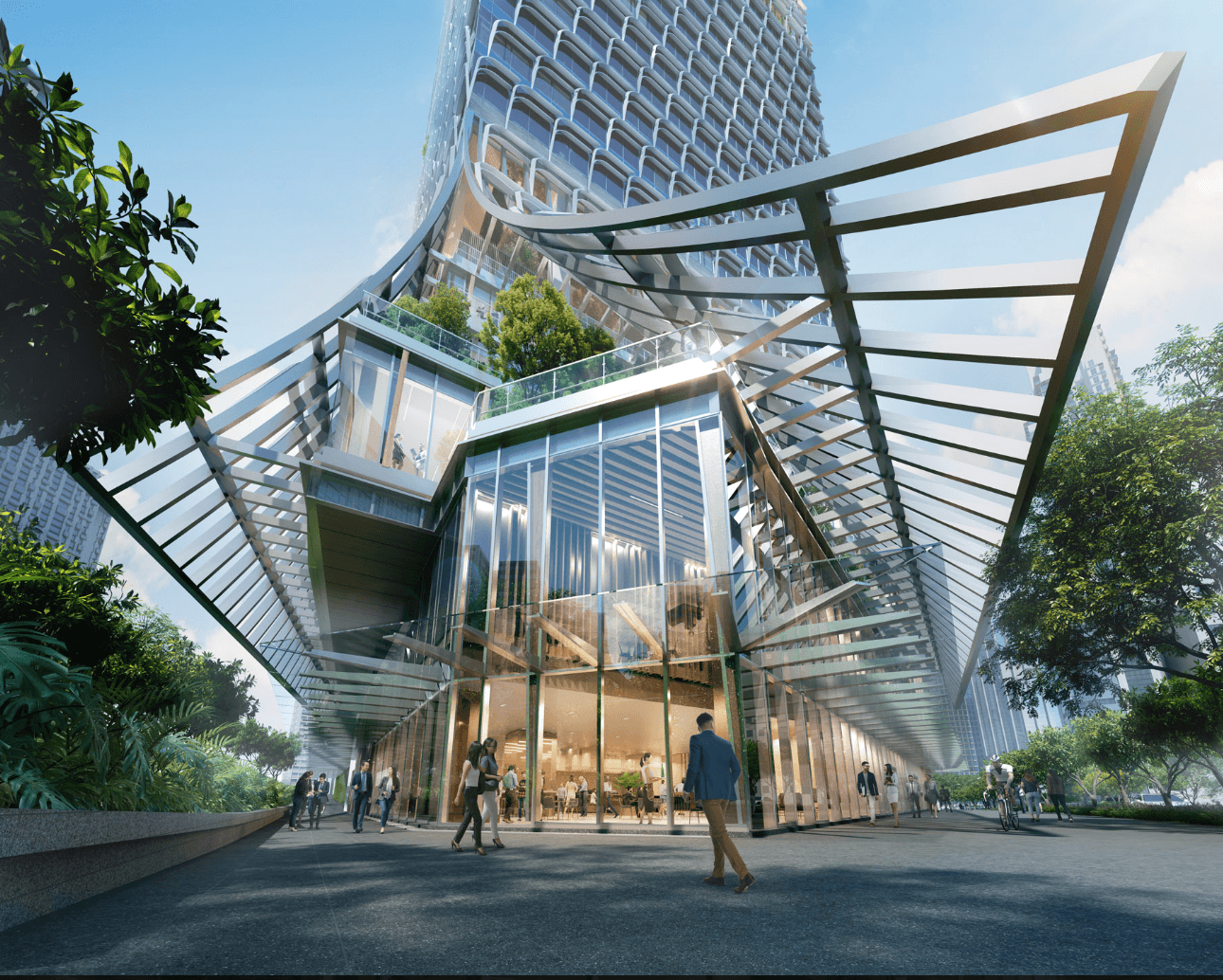
Keppel South Central: A sustainable development by Keppel and Obayashi Singapore
What 'Super Low Energy' Actually Means for a Singapore Building
The BCA Green Mark Super Low Energy (SLE) tier goes significantly beyond standard green certification. Buildings at this tier must demonstrate an energy use intensity (EUI) of no more than 110 kWh/m² per year, a threshold that demands holistic design decisions across the building envelope, MEP systems, and building management.
For Keppel South Central, projected annual energy savings amount to approximately 6.2 million kWh compared to a code-compliant commercial building, the equivalent of powering around 1,300 Singaporean homes for a year. It is within this context — where every material decision carries energy, carbon, and comfort implications — that the specification of Supply Bay's expanded walkway mesh becomes most meaningful.
Expanded Walkway Mesh for Structural Wall Screening
Supply Bay supplied expanded metal walkway mesh adapted for structural in-wall screening applications across the building. The material was selected for its combination of structural rigidity, open-area permeability, and long-term durability in Singapore's tropical climate.
Why expanded metal — and not perforated sheet or solid panel?
Expanded metal is produced by slitting and stretching a solid metal sheet, which creates a rigid diamond-pattern mesh without removing any material. Unlike perforated sheets, where metal is punched out and discarded, expanded metal achieves its open area entirely through deformation of the base sheet. The result is a product that is inherently stronger per unit of weight, and more material-efficient.
Expanded Metal Mesh in Green Building Design: A Growing Role
As Singapore continues its push toward a greener built environment, with BCA's target for 80% of buildings to be green-certified by 2030, materials available to architects and facade engineers are being reassessed through a sustainability lens. Expanded metal mesh is increasingly appearing in Green Mark projects across Singapore because it addresses several design criteria simultaneously:
Passive ventilation support: Expanded metal has continuous strand structure allows air to move through the building envelope without mechanical assistance. In a super low energy building where passive ventilation strategies directly reduce cooling loads, the open area of the mesh is a functional performance specification, not just an aesthetic choice.
Structural rigidity: Expanded walkway mesh is designed to carry load. Its use in in-wall structural applications means it contributes to the building fabric rather than simply cladding it. Strand width and aperture size can be adapted to the structural demands of different zones within the same project.
Thermal performance: By allowing air and light to pass through, the mesh reduces surface heat accumulation compared to a solid panel. In Singapore's equatorial climate, where facades are exposed to intense solar radiation year-round, this directly supports the building's energy performance targets.
Recyclability and low embodied impact: Steel expanded mesh is fully recyclable at end of life. For a project with Green Mark sustainability commitments, the material's recyclability contributes positively to lifecycle assessment and aligns with Keppel's broader commitments to halve Scope 1 and 2 carbon emissions by 2030 and achieve net zero by 2050.
Durability in Singapore's climate: Galvanised or stainless steel expanded mesh performs reliably in high-humidity, high-temperature environments without the corrosion vulnerabilities of less treated materials, critical for applications embedded within the building envelope where maintenance access is limited.
This combination of properties makes expanded metal a particularly strong candidate for projects where a single material needs to serve structural, environmental, and architectural roles simultaneously — exactly the brief that complex commercial developments like Keppel South Central demand.
Expanded Metal Mesh: A Quick Specification Guide
For architects, interior designers, and contractors in Singapore considering expanded metal mesh for an upcoming project, here is a brief overview of the key specification variables.
Material grade
Mild steel: Most cost-effective option for interior or sheltered applications.
Hot-Dip Galvanised: Most commonly specified option for corrosion protection; appropriate for most Singapore interior and semi-sheltered exterior applications.
Aluminium: Lightweight, naturally corrosion-resistant, ideal for facades where weight loading is a constraint.
SS304 stainless steel: Appropriate for most Singapore interior and semi-sheltered exterior applications.
SS316 stainless steel: Recommended for coastal locations, high-humidity environments, or any application requiring maximum corrosion resistance.
Aperture size and strand width
The aperture (opening size) and strand width determine the mesh's open area percentage, visual transparency, and structural capacity. Walkway mesh — as used at Keppel South Central — typically features a larger aperture and heavier strand width to carry pedestrian loads. Architectural facade mesh can be specified with finer strands and smaller apertures for a more refined visual texture.
Surface finish
Natural mill finish is suitable for most interior applications. For exterior use in Singapore, hot-dip galvanising provides excellent corrosion protection; powder coating adds colour and an additional protection layer; stainless steel grades can be left in a natural 2B or No. 4 brushed finish depending on the aesthetic requirement.
→ Browse our full range of expanded metal products.
Expanded Metal Mesh Across Supply Bay's Singapore Portfolio
Keppel South Central is one of many significant Singapore projects where Supply Bay has contributed expanded metal mesh. Others include:
Family Justice Courts — Security-grade expanded mesh for the renovated civic facility at 3 Havelock Square, balancing security performance with natural light and ventilation. → Read the case study.
Bukit Timah Canal widening — Expanded mesh in a civil infrastructure context, demonstrating the material's applicability well beyond architectural and facade uses.
JTC CleanTech 3 — Industrial-grade specification for a sustainability-focused development in Singapore's clean technology hub.
Across these projects, the common thread is a need for a material that performs reliably under Singapore's demanding climate conditions while meeting the aesthetic and functional demands of each brief. → View the full project gallery.
Specifying Expanded Metal Mesh for Your Next Singapore Project?
Supply Bay is Singapore's trusted supplier of expanded metal mesh, perforated metal sheets, laser-cut panels, and solid sheet metals for architectural, commercial, and infrastructure applications. We serve architects, interior designers, contractors, and developers across Singapore and the Asia Pacific region.
Whether you are specifying for a Green Mark project, a conservation development, a public infrastructure brief, or a residential fitout, our team can help you navigate material grade, finish, aperture specification, and lead time requirements.