How to Read Perforated Metal Specifications: Hole Size, Pitch, Open Area, and What They Mean
Perforated metal specification sheets have specific terms — hole diameter, pitch, ligament, open area percentage, staggered vs inline arrangement. If you're receiving a spec from a consultant, comparing quotes from suppliers, or writing a spec for the first time, understanding what each term, refer to this guide.
This guide covers every parameter on a standard perforated metal spec sheet, how they relate to each other, and what they mean for facade, acoustic, and screening applications in Singapore.
Key Terms in Perforated Metal Spec Sheet
Hole Diameter (Ø)
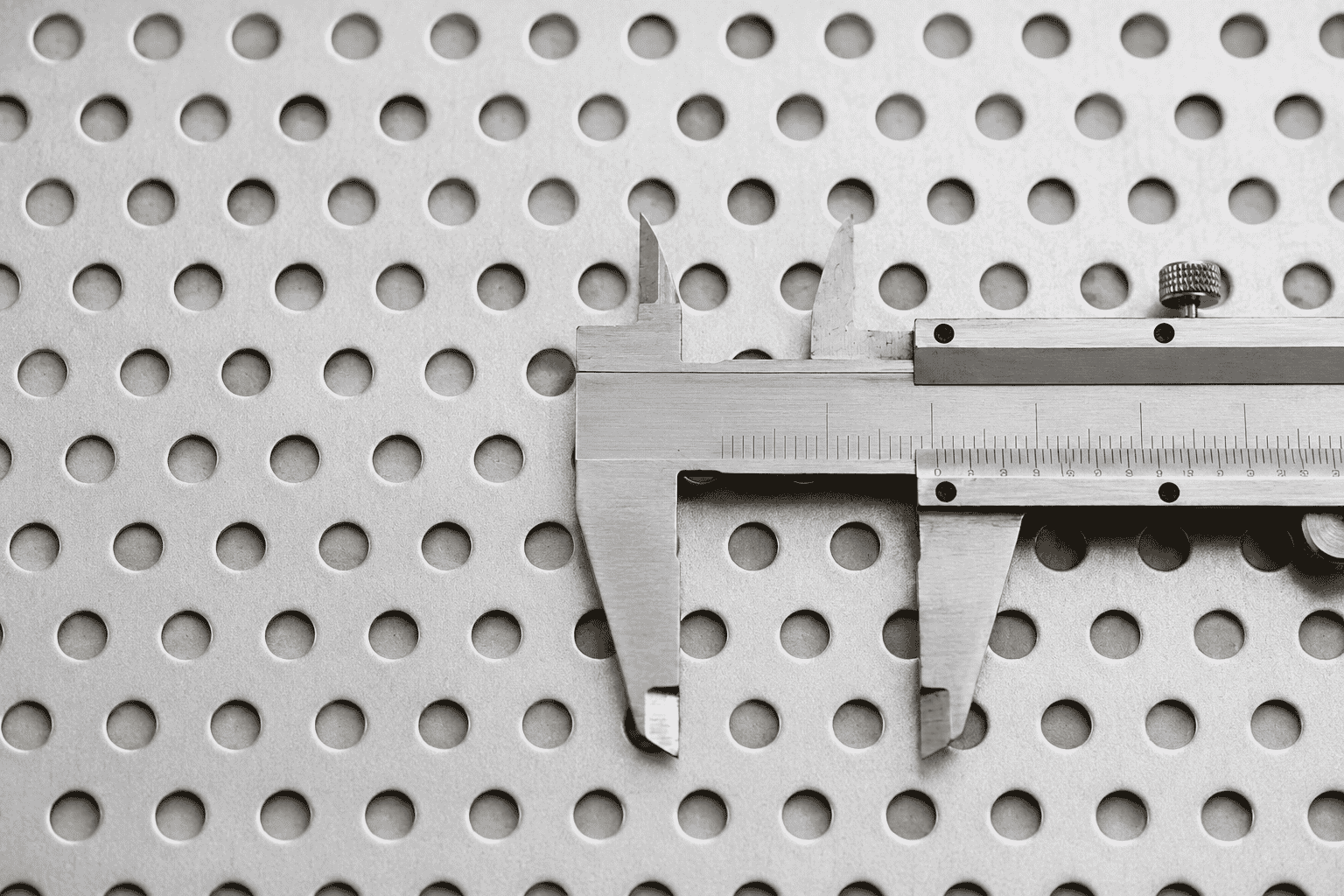
Hole diameter is the size of each individual perforation, measured in millimetres (mm) across the widest point. For round holes — the most common perforation type — this is straightforward. For square, slot, or custom shapes, the dimension may be expressed as width × height (e.g. 10×20mm slot).
Hole diameter directly controls visual transparency at close range and the minimum structural ligament between holes. Smaller holes produce a finer, denser pattern; larger holes produce a more open, coarser appearance.
For acoustic applications, hole diameter also affects the frequency range of sound absorption — this is specified separately by the acoustic consultant.
Pitch (P)
Pitch is the centre-to-centre distance between adjacent holes, measured in millimetres (mm). It is always measured from hole centre to hole centre.
Pitch is the most important term for open area calculation. Given the same hole diameter, a tighter pitch (smaller P) increases open area; a wider pitch decreases it. Two panels with identical hole diameter can have very different open areas depending on their pitch.
Pitch is specified in two directions for staggered patterns — the pitch along one axis and the pitch along the perpendicular axis. For inline (square) arrangements, a single pitch value applies to both directions.
Hole Pattern — Staggered vs 90 degree straight arrangement
Hole pattern describes the geometric arrangement of holes across the sheet. The two standard arrangements are:
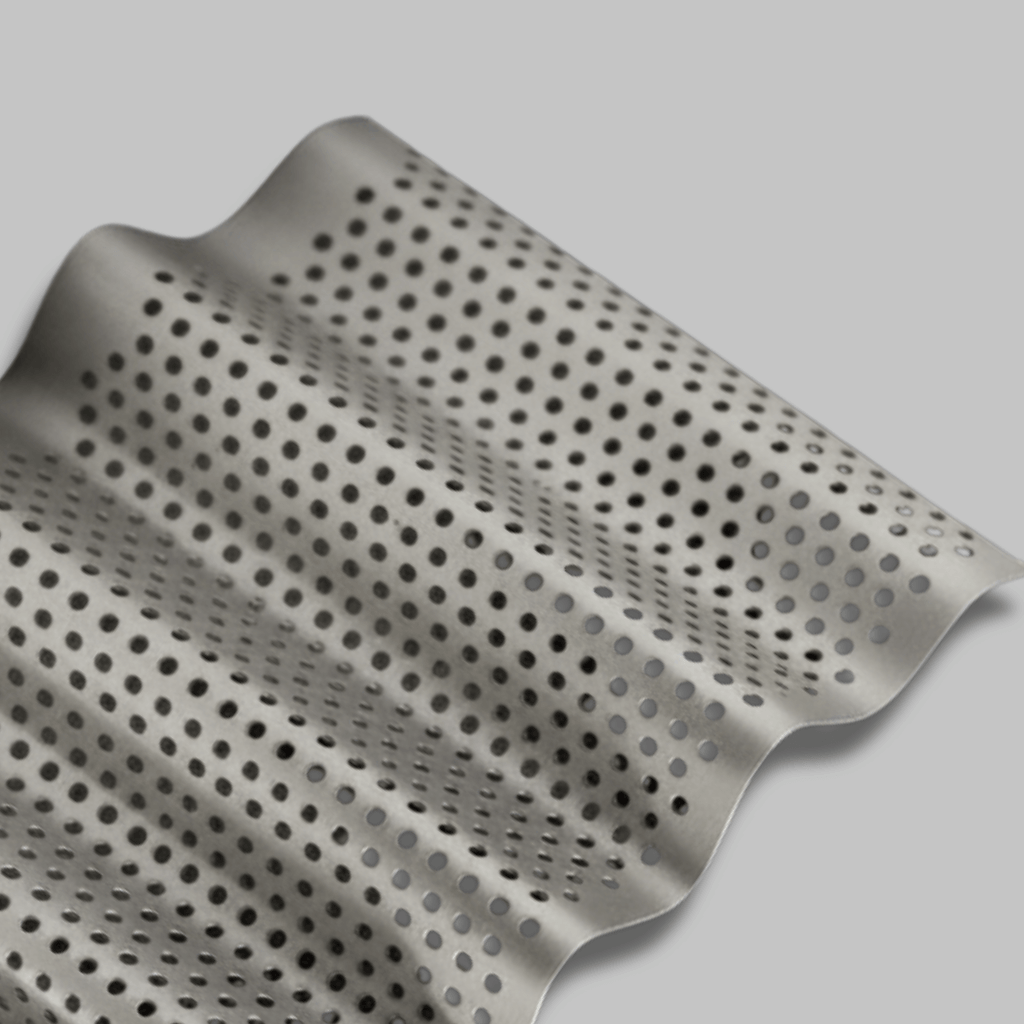
Staggered (60° pattern) — each row of holes is offset by half a pitch relative to the row above and below. This produces the characteristic diagonal grid pattern seen on most architectural perforated panels. Staggered patterns achieve higher open area percentages for a given hole diameter and pitch than inline arrangements, because the offset geometry packs holes more efficiently.
90° straight line pattern — holes are aligned in straight rows both horizontally and vertically. This produces a regular grid pattern. Inline arrangements have lower open area for the same hole size and pitch as staggered, but the visual regularity is preferred for some design applications — signage, feature panels, and grid-aligned cladding systems.
Other arrangements exist — diagonal 45°, hexagonal, random — but staggered 60° and 90° straight line pattern are the standard specifications for Singapore construction and architectural projects.
Sheet Thickness
Sheet thickness is the gauge of the base metal sheet before perforation, measured in millimetres. It affects structural performance, panel weight, and the minimum achievable hole diameter — most punch press operations require the hole diameter to be at least equal to the sheet thickness to avoid tooling damage.
For facade cladding, 1.5mm–2.0mm is the standard range for aluminium. For stainless steel and mild steel panels, 1.0mm–2.0mm is typical depending on span and load. Walkway or structural perforated panels are typically 3.0mm–6.0mm.
Open Area
Open area is the proportion of the panel's surface that is void — the holes rather than the metal. It is expressed as a percentage and depends on hole diameter, pitch, and hole pattern.
The standard formulas are:
Staggered 60° pattern: Open Area (%) = (π ÷ (2√3)) × (Ø ÷ P)² × 100
90° straight line pattern: Open Area (%) = (π ÷ 4) × (Ø ÷ P)² × 100
Where Ø = hole diameter and P = pitch, both in mm.
Use the calculator below to check open area for any combination of hole size, pitch, and pattern.
Perforated Metal Open Area Calculator
Common Perforated Metal Configurations in Singapore
| Application | Typical Ø (mm) | Typical Pitch (mm) | Pattern | Open Area | Material |
|---|---|---|---|---|---|
| Acoustic ceiling panel | 1.5 – 3.0 | 3.0 – 6.0 | Staggered 60° | 20 – 35% | Aluminium, mild steel |
| Exterior facade screen | 5.0 – 12.0 | 8.0 – 18.0 | Staggered 60° | 30 – 50% | Aluminium 5052, SS316 |
| Car park cladding | 8.0 – 15.0 | 12.0 – 20.0 | Staggered 60° | 35 – 50% | Aluminium, GI + powder coat |
| Ventilation grille / M&E screen | 10.0 – 20.0 | 14.0 – 25.0 | Staggered 60° or inline | 45 – 65% | Aluminium, mild steel |
| Privacy / balcony screen | 3.0 – 6.0 | 6.0 – 10.0 | Staggered 60° | 20 – 30% | Aluminium, SS304 |
What to Check When Comparing Quotes from Different Suppliers
Perforated metal is one of the most frequently mis-specified products in Singapore construction, not because the product is complex, but because small differences in hole diameter or pitch produce large differences in open area, appearance, and price. When comparing quotes, check:
Hole diameter
Pitch
Pattern
Sheet thickness
Margin / border — most perforated sheets have an unperforated margin around the edges; the width of this margin affects the visual appearance at panel joints and should be specified, not left to the supplier's default.
Frequently Asked Questions
-
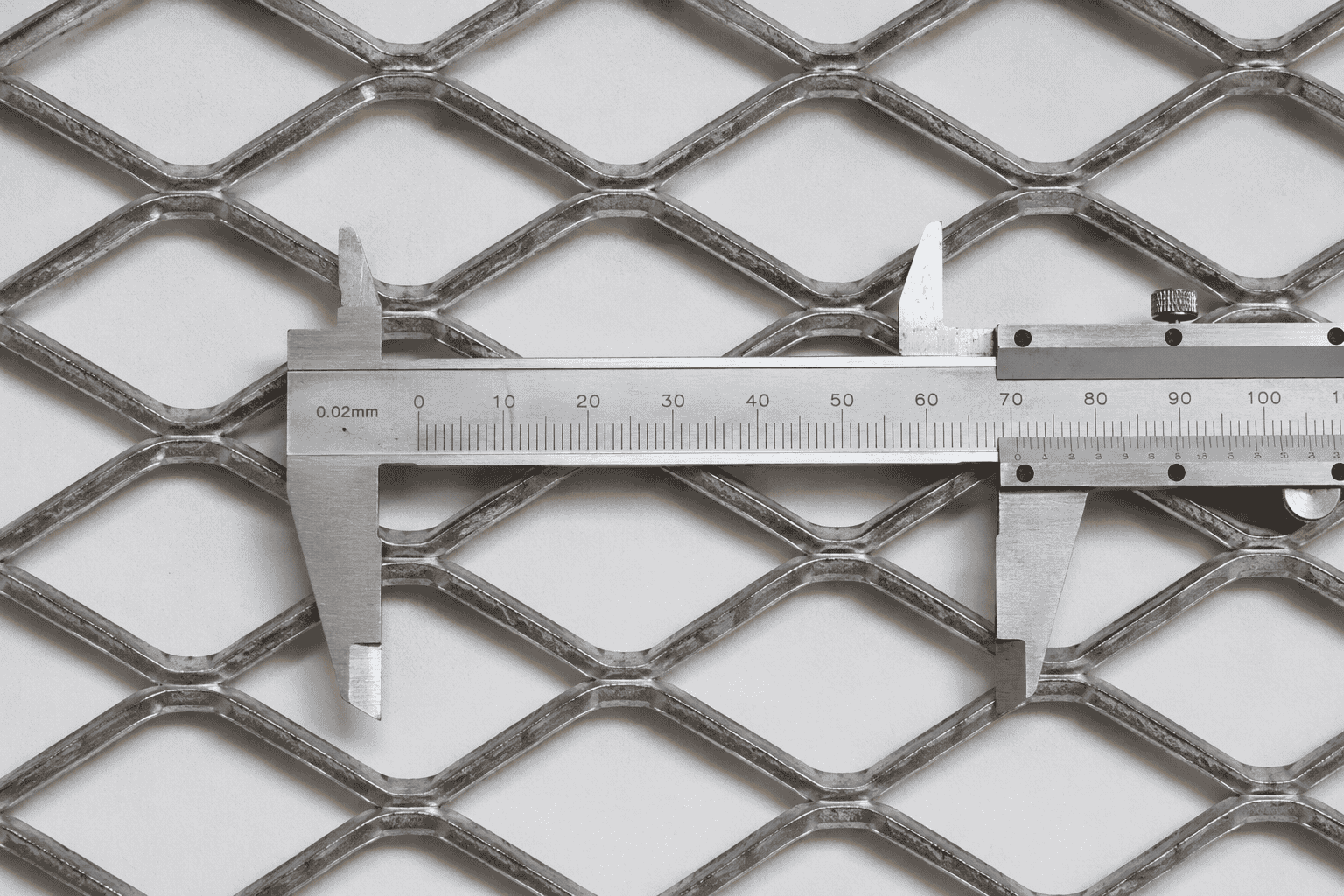
SWM (short way of mesh) is the width of the diamond aperture across the narrow axis. LWM (long way of mesh) is the length along the long axis, in the direction the sheet was stretched. LWM is always larger than SWM. Together they define the aperture size and shape, and determine the open area of the panel.
-
Expanded metal panels have a directional orientation — the long way of mesh runs in one direction. If panels are installed rotated 90° from the intended orientation, the visual pattern will look different even though the material is identical. On facade applications where visual alignment matters, confirm the panel orientation with the supplier before fabrication and mark the installation direction on delivery.
-
Item Supply Bay provides full technical data sheets for all expanded metal profiles, including SWM, LWM, SW, ST, weight per m², and open area percentage. Contact us at info@supplybaystore.com.
Supply Bay Pte Ltd supplies expanded metal mesh for facade, cladding, and structural applications across Singapore. Contact us at info@supplybaystore.com or +65 6524 3913.
Supply Bay is Singapore's leading supplier of architectural sheet metal — expanded mesh, perforated panels, laser-cut screens, and solid sheets in aluminum, stainless steel (SS304, SS316), mild steel, and galvanized steel.