Perforated Metal vs Mineral Fibre Tiles: Acoustic Ceiling Guide for Singapore Projects
Both perforated metal panels and mineral fibre tiles are used for acoustic ceilings in Singapore commercial and institutional construction. They target the same acoustic function — reducing reverberation in occupied spaces — but differ significantly in durability, humidity performance, integration with mechanical services, and life cycle cost.
This guide compares the two systems across each of these dimensions and sets out which applications favour each material, covering Noise Reduction Coefficient (NRC) performance, material grades, open area specification, and suspension systems for Singapore office, school, F&B, and healthcare projects.
How Both Systems Work Acoustically
Both perforated metal ceilings and mineral fibre tiles absorb sound energy rather than reflecting it back into the room. The mechanism differs between the two.
Mineral fibre tiles are porous absorbers. The fibrous matrix of the tile itself dissipates sound energy through friction as sound waves pass through the material. Absorption is broadband and effective across mid and high frequencies — the range relevant to speech intelligibility. Thicker tiles and higher-density products improve low-frequency absorption, but the gains are incremental.
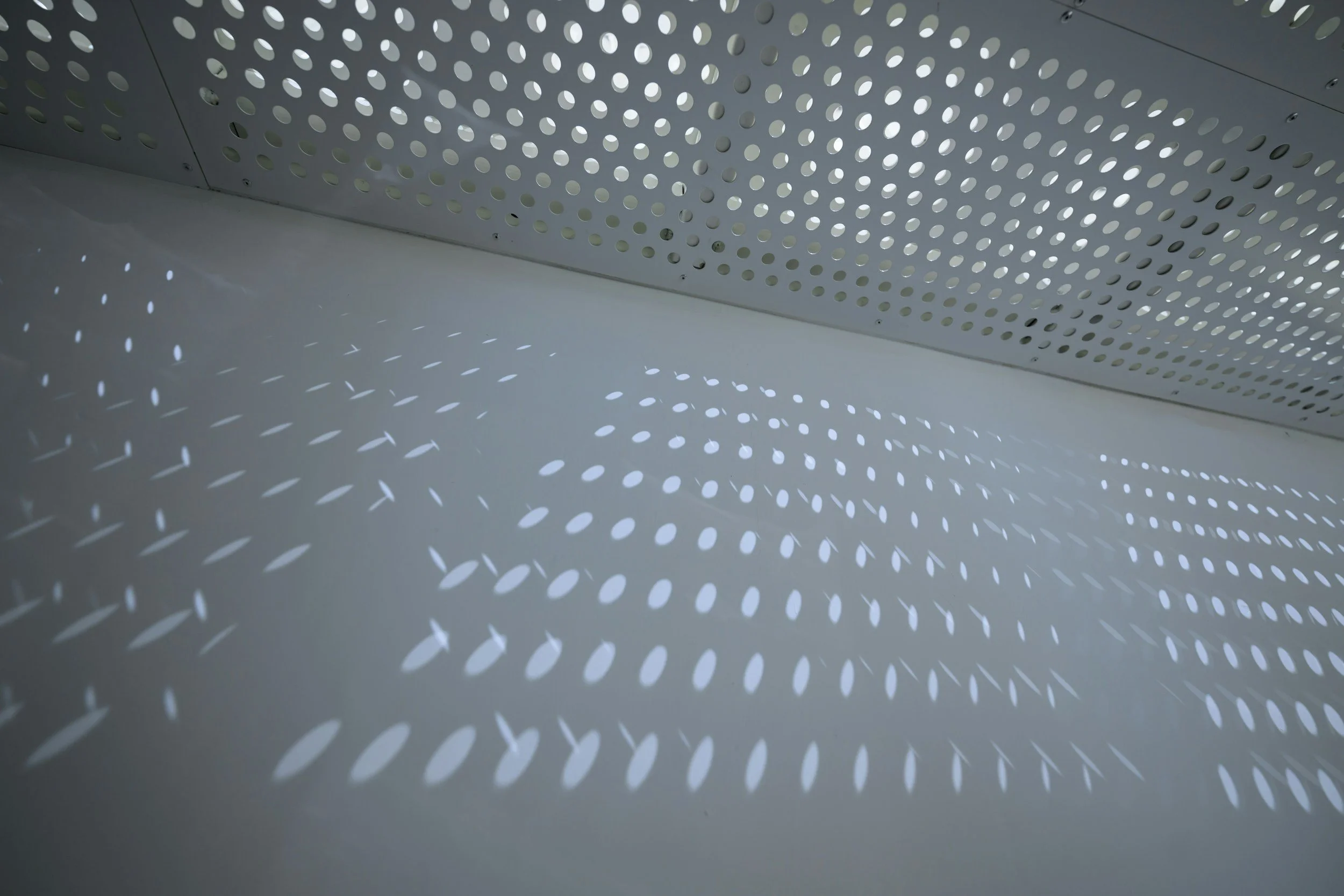
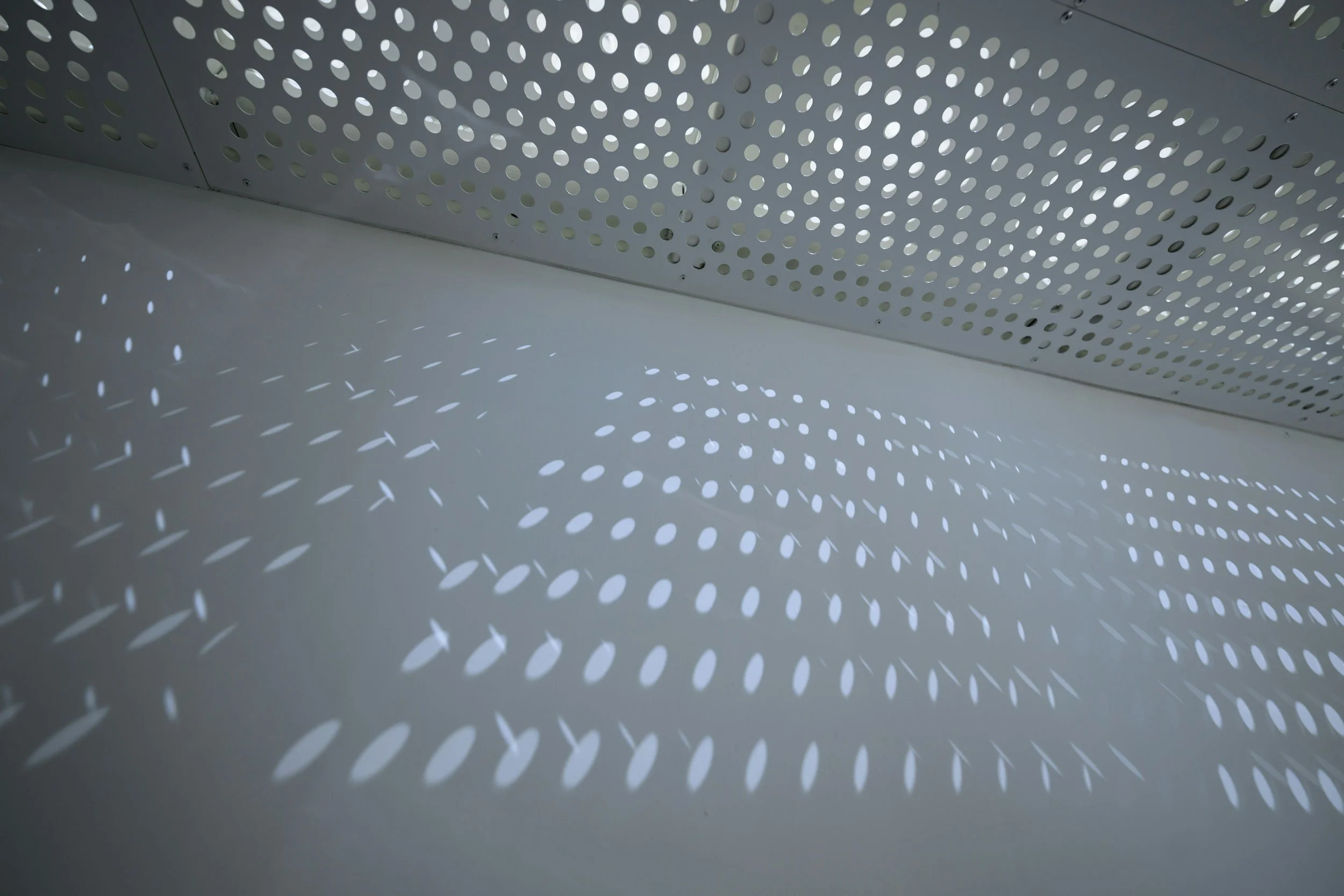
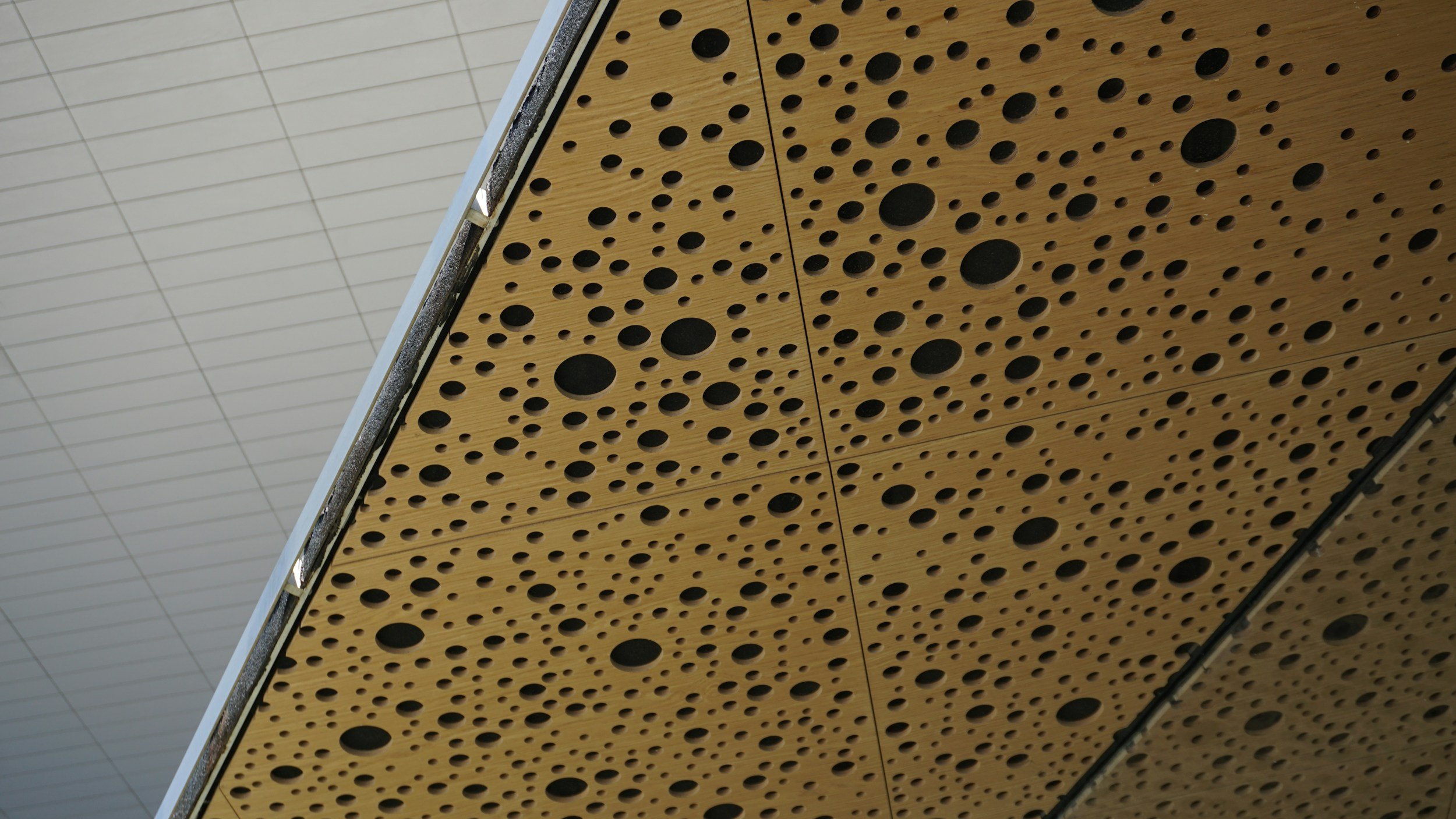
Perforated metal panels work differently. The panel face is not the absorber — the perforations allow sound to pass through to an absorptive backing layer, typically a mineral wool or glass wool batt, placed above the panel in the ceiling void. Three mechanisms operate simultaneously: porous absorption in the batt itself, resonance absorption from air vibrating within each perforation at a frequency determined by hole diameter and panel thickness, and membrane absorption from slight flexion of the metal panel under sound pressure. The combination of all three gives perforated metal ceiling systems a broader frequency absorption profile than mineral fibre tiles of equivalent thickness, and allows the system NRC to be tuned by adjusting open area percentage, backing density, and plenum depth.
The practical difference for specification is that mineral fibre tiles deliver their acoustic performance through the tile itself — the tile is the absorber. Perforated metal panels deliver their performance through the system — panel plus backing plus plenum — and the system parameters must be correctly specified to achieve the target NRC.
Head-to-Head Comparison
| Criterion | Perforated Metal Panel | Mineral Fibre Tile |
|---|---|---|
| Typical NRC range | 0.55–0.90 (system dependent) | 0.50–0.80 (tile dependent) |
| Acoustic tuning | Adjustable — open area %, backing density, plenum depth | Fixed by tile specification; limited to thickness and density |
| Humidity resistance | Excellent — aluminium unaffected by moisture | Standard tiles: poor. Humidity-rated tiles: acceptable at cost premium |
| Impact resistance | High — dents but does not crack or crumble | Low — chips and cracks under moderate impact |
| Cleanability | Good — can be wiped with degreasers and disinfectants | Limited — surface degrades with chemical cleaning |
| Above-ceiling M&E access | Good — lay-in panels lift out; clip-in requires release tool | Good — standard lay-in tiles lift out easily |
| Fire performance | Non-combustible (aluminium: Class 0 / A1) | Non-combustible (mineral fibre is inorganic) |
| Replacement frequency (SG) | Low — 20+ year lifespan in normal internal environments | Medium–high in humid or high-traffic environments |
| Aesthetic range | Wide — custom colours, patterns, linear and modular formats | Wide — custom colours, patterns, linear and modular formats |
| Best suited for | High-traffic, humid, F&B, healthcare, transport, Grade-A commercial | Standard office fit-outs, back-of-house, budget-constrained projects |
Where Mineral Fibre Tiles Remain the Right Choice
Mineral fibre tiles are a well-established, cost-effective ceiling solution for dry, moderate-traffic internal environments. In standard commercial office tenancies — air-conditioned, low humidity, infrequent M&E access, white ceiling as a neutral background — mineral fibre tiles at 600 × 600 mm module deliver adequate acoustic performance at the lowest installed cost.
Mineral fibre tiles are also easier to modify on-site — cutting to accommodate a new diffuser or light fitting requires only a utility knife, which makes them practical for fit-out projects with late-stage M&E changes.
Where Perforated Metal Is the Right Choice
The case for perforated metal acoustic ceiling panels is strongest where one or more of the following conditions apply: the environment is humid or subject to steam and grease; the ceiling surface will be cleaned regularly with commercial cleaning products; the project requires acoustic tuning to a specific NRC or RT60 target; or the ceiling is a visible design element where appearance and durability over a long building life are part of the brief.
For Singapore's food courts, hawker centre upgrades, hospital wards, school classrooms, MRT concourses, and Grade-A commercial offices, these conditions are present in combination. The higher upfront cost of perforated metal panels is offset over time by reduced replacement frequency, lower maintenance, and the ability to clean the ceiling without surface damage.
NRC Performance: What the Numbers Mean
Noise Reduction Coefficient (NRC) is the average of a material's sound absorption coefficient at 250 Hz, 500 Hz, 1,000 Hz, and 2,000 Hz, measured per ASTM C423. An NRC of 0.75 means 75% of incident sound energy at those frequencies is absorbed on average. For perforated metal ceiling systems, NRC is a system value — it depends on the panel open area, backing density and thickness, and plenum depth, not on the panel alone. The table below shows indicative NRC performance for standard perforated metal ceiling configurations and how they compare to mineral fibre tile options at equivalent acoustic targets.
| Target NRC | Perforated Metal Configuration | Mineral Fibre Equivalent | Typical Application |
|---|---|---|---|
| 0.55–0.65 | 15–20% open area, 50 mm mineral wool (40 kg/m³), 200 mm plenum | Standard 15 mm tile, 600 × 600 mm | Private offices, meeting rooms, corridors |
| 0.65–0.75 | 20–25% open area, 50 mm mineral wool (48 kg/m³), 200–300 mm plenum | 20 mm high-NRC tile or humidity-rated tile | Open-plan offices, classrooms, retail |
| 0.75–0.85 | 20–25% open area, 75 mm mineral wool (48–64 kg/m³), 300 mm plenum | 25 mm high-density tile at cost premium; NRC 0.80+ difficult to achieve reliably | Call centres, food courts, trading floors |
| 0.85–0.90 | 25–35% open area, 75–100 mm mineral wool (64 kg/m³), 400 mm+ plenum | Not readily achievable with standard mineral fibre tile systems | Auditoria, music rooms, MRT stations, libraries |
Both systems are capable of achieving NRC ≥ 0.70 — the threshold commonly specified for Singapore offices and classrooms. Above NRC 0.80, perforated metal systems with deeper plenum and denser backing have a practical advantage: mineral fibre tiles at equivalent NRC require greater thickness and density, which increases cost and reduces the advantage mineral fibre holds on installation price.
Specification Parameters for Perforated Metal Acoustic Ceiling Panels
Open Area and Hole Size
For acoustic ceiling applications, the standard hole diameter range is 1.5 mm to 3.0 mm at 15–25% open area. Below 15% open area, the panel acts increasingly as a reflector rather than a transmitter, and NRC drops significantly. Above 30%, the acoustic performance gain from increasing open area becomes marginal — the limiting factor shifts to backing density and plenum depth.
60° staggered round holes are the standard arrangement for acoustic ceilings, providing the highest open area at a given hole size and pitch. Straight-row arrangements produce lower open area at equivalent hole size and are used where the grid pattern is architecturally specified.
Panel Dimensions
Standard module sizes coordinate with the 600 mm ceiling grid common in Singapore commercial construction: 600 × 600 mm and 600 × 1,200 mm are the most common. Custom panel sizes are available to drawing. For large-format panels, confirm maximum sheet width at enquiry stage.
Backing Layer
The acoustic backing is installed above the perforated panel. Mineral wool batt at 40–64 kg/m³ density, 50–100 mm thick, is the standard specification for Singapore commercial acoustic ceilings. The backing must be fully supported and must not compress or sag over time — sagging backing reduces effective plenum depth and degrades NRC performance.
Material Grade
Aluminium is the most widely specified grade for acoustic ceiling panels in Singapore. It is lightweight — reducing dead load on the ceiling grid — corrosion-resistant in humid environments without painting, and available across a wide colour range via powder coat. GI panels are used in cost-sensitive industrial applications; SS304 and SS316 where hygiene standards require surfaces that can be cleaned with chlorine-based disinfectants without surface degradation.
For guidance on finish selection, refer to the Metal Finishes Explained Guide.
Applications in Singapore
Grade-A Commercial Offices
Open-plan offices in Grade-A developments across Raffles Place, Marina Bay, One-North, and Jurong Lake District commonly specify perforated metal acoustic ceilings where the interior brief requires a durable, cleanable system that integrates with linear lighting and VAV ACMV terminals.
Aluminium panels at 0.6–0.8 mm, white RAL9010 powder coat, 20–25% open area, with 50 mm mineral wool backing are the standard configuration. Standard office tenancy fit-outs on a constrained budget may specify mineral fibre tiles in the same grid, with perforated metal panels reserved for reception areas, meeting rooms, and client-facing spaces.
Schools and Educational Facilities
MOE schools, polytechnic campuses, and private educational institutions specify perforated metal acoustic ceilings in classrooms and lecture theatres where speech intelligibility is a primary design criterion. The target RT60 for a classroom in Singapore is typically 0.4–0.6 seconds. Achieving this in a standard 7 m × 9 m × 3 m classroom requires NRC ≥ 0.70 across the ceiling area — achievable with either system, but perforated metal is favoured in Singapore schools for its resistance to the impact damage common in classroom environments, and its ability to be cleaned without surface degradation during annual school maintenance shutdowns.
MRT Stations and Transport Facilities
LTA MRT station concourses and platform levels use perforated metal ceilings where the daily cleaning regime — mechanical scrubbers, high-pressure hose systems — rules out mineral fibre entirely. Large-format aluminium panels in linear plank format are standard at concourse level. Mineral fibre tiles are not specified in MRT stations.
Food Courts, Hawker Centre Upgrades, and F&B Spaces
NEA hawker centre upgrading works have progressively specified aluminium perforated acoustic ceiling panels in place of older mineral fibre tile systems. The key performance requirements are resistance to grease, steam, and humidity; ease of cleaning with commercial degreasers; and acoustic control in high-noise open-plan dining environments. Aluminium panels at 25–35% open area with foil-faced mineral wool backing are the standard configuration.
Hospitals and Healthcare Facilities
MOH-regulated clinical areas specify SS304 perforated metal acoustic ceiling panels where IPC (Infection Prevention and Control) protocols require surfaces compatible with chlorine-based disinfection. Aluminium panels are used in non-clinical areas — waiting rooms, corridors, administrative offices. Standard mineral fibre tiles are not specified in clinical areas because their surface cannot withstand regular chemical disinfection.
Retail and F&B Shopfronts
Perforated metal ceiling panels are specified in retail and F&B fit-outs where the ceiling is a visible finishes element — feature lighting integrated into the panel grid, custom RAL colour specified to match the brand scheme, or an exposed-metal aesthetic in a casual dining or retail concept.
Life Cycle Cost: A Practical Assessment
Upfront, mineral fibre tiles are cheaper. The installed cost of a standard mineral fibre ceiling is lower than a perforated metal system of equivalent module and suspension type — lower material cost and faster installation both contribute.
Over a ten-to-fifteen year building life, the gap narrows in environments that require regular tile replacement. In dry, moderate-traffic internal environments — standard air-conditioned offices with infrequent maintenance access — mineral fibre tiles can last ten years or more before requiring replacement, and the life cycle cost advantage of perforated metal is limited.
In humid, high-traffic, or F&B environments — where tiles may need partial replacement every two to four years due to staining, moisture damage, or physical impact — the higher durability of perforated metal panels reduces total replacement cost over the building life.
The relevant calculation for QS assessment is: (replacement tile cost × replacement frequency × number of replacement cycles) + (installation cost per cycle × number of cycles) versus the higher upfront cost of a perforated metal system with a single installation and minimal replacement. For projects with a fifteen-year or longer horizon in high-wear environments, perforated metal consistently returns a lower whole-life cost.
Frequently Asked Questions
-
20–25% open area is the standard range for open-plan Singapore offices, giving NRC in the range of 0.65–0.80.
Private offices and meeting rooms can use 15–20% open area with adequate backing.
Always confirm the target NRC and room RT60 with the project acoustic consultant before issuing the specification.
-
Yes, in a standard exposed T-grid system, perforated metal panels and mineral fibre tiles can occupy the same 600 mm grid. This approach is used in Singapore office fit-outs where perforated metal panels are specified in reception, boardrooms, and client-facing areas, with mineral fibre tiles in back-of-house and service zones.
Confirm panel thickness compatibility with the T-bar profile — most standard T-bar systems accommodate panels from 10 mm to 25 mm depth.
-
Aluminium is a non-combustible material rated Class 0 / A1 for fire performance. Mineral fibre is also non-combustible. Both materials satisfy SCDF's non-combustibility requirements for ceiling surfaces. The complete ceiling system — panel, backing, and suspension — must be assessed for fire resistance where a fire-rated ceiling is required. Mineral wool backing is non-combustible and is standard for fire-rated ceiling assemblies in Singapore.
-
Standard module panels in standard open area percentages are available with short fabrication lead times.
Custom panel sizes, non-standard hole patterns, or special RAL powder coat colours will require longer lead times — typically two to four weeks depending on volume and specification.
Contact Supply Bay at enquiry stage to confirm current lead times for your project.
Supply Bay Pte Ltd supplies perforated metal sheet and expanded metal mesh for acoustic ceiling, facade, and screening applications across Singapore construction and fit-out projects. Contact us at info@supplybaystore.com or +65 6524 3913.
Supply Bay is Singapore's leading supplier of architectural sheet metal — expanded mesh, perforated panels, laser-cut screens, and solid sheets in aluminum, stainless steel (SS304, SS316), mild steel, and galvanized steel.