Case Study: Aesop - Custom Metal Ornaments
Case Study: Laser-Cut Metal for Retail Installations - Aesop Singapore, Thailand
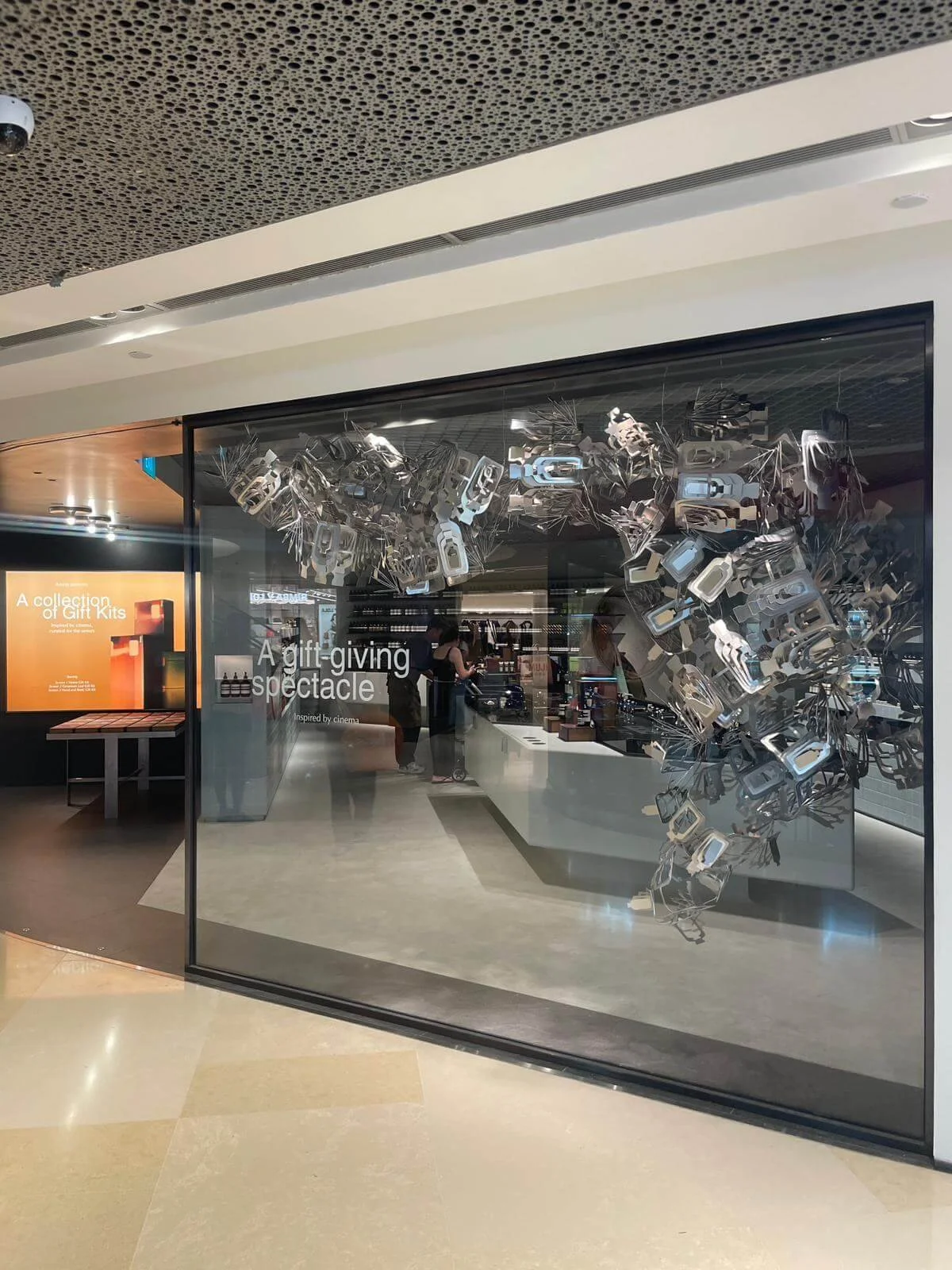
Aesop's festive campaign, A Gift-Giving Spectacle, brought a series of custom laser-cut metal ornaments and in-store installations to its retail locations across Singapore and Thailand. Supply Bay was engaged to fabricate and supply the precision components across all Singapore outlets — including ION Orchard and Marina Bay Sands — and Aesop's Bangkok stores. The project required tight fabrication tolerances, consistent repeatability across a multi-location rollout, and material quality aligned with Aesop's design-led retail identity.
Design Process and Multi-Location Deployment
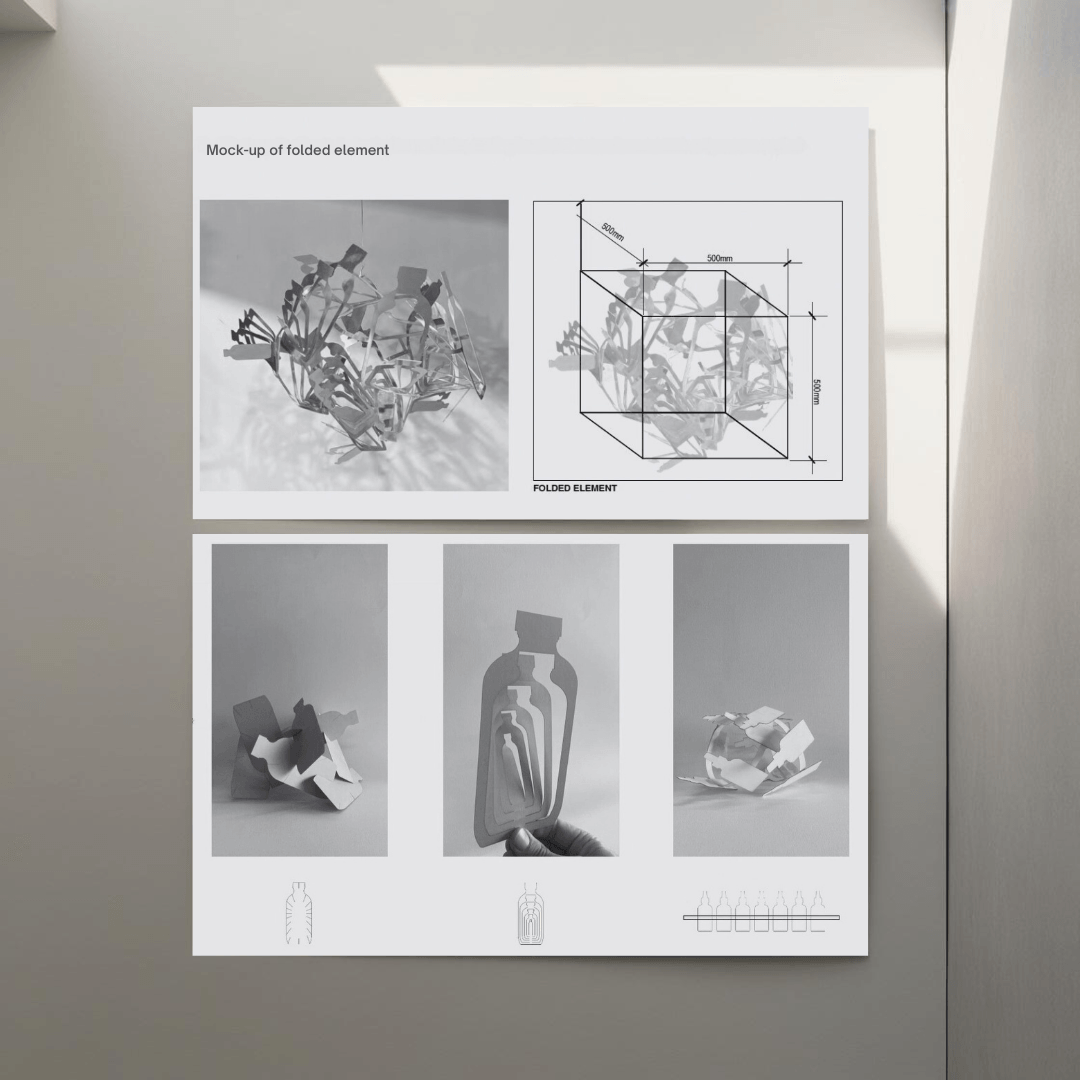
The campaign centred on a set of bespoke metal ornaments designed as part of Aesop's broader seasonal retail narrative. Each piece was conceived to function simultaneously as a decorative object and a spatial installation element — hanging displays, counter ornaments, and in-store fixtures that worked within Aesop's existing store environments without alteration to the underlying fitout.
The design was translated into production-ready CNC cut files, which Supply Bay used to fabricate components across the full batch. Using a single master file for all units meant dimensional consistency was guaranteed across every location — a critical requirement when the same installation needed to read identically in high-footfall retail environments as different as ION Orchard and Marina Bay Sands in Singapore, and Aesop's Bangkok outlets in Thailand.
Production was sequenced to meet campaign launch timing across both countries. Components were fabricated, finished, and delivered to each store in advance of the festive period, with each unit produced to the same specification so in-store teams could install without adjustment or rework.
Why Supply Bay Was Selected
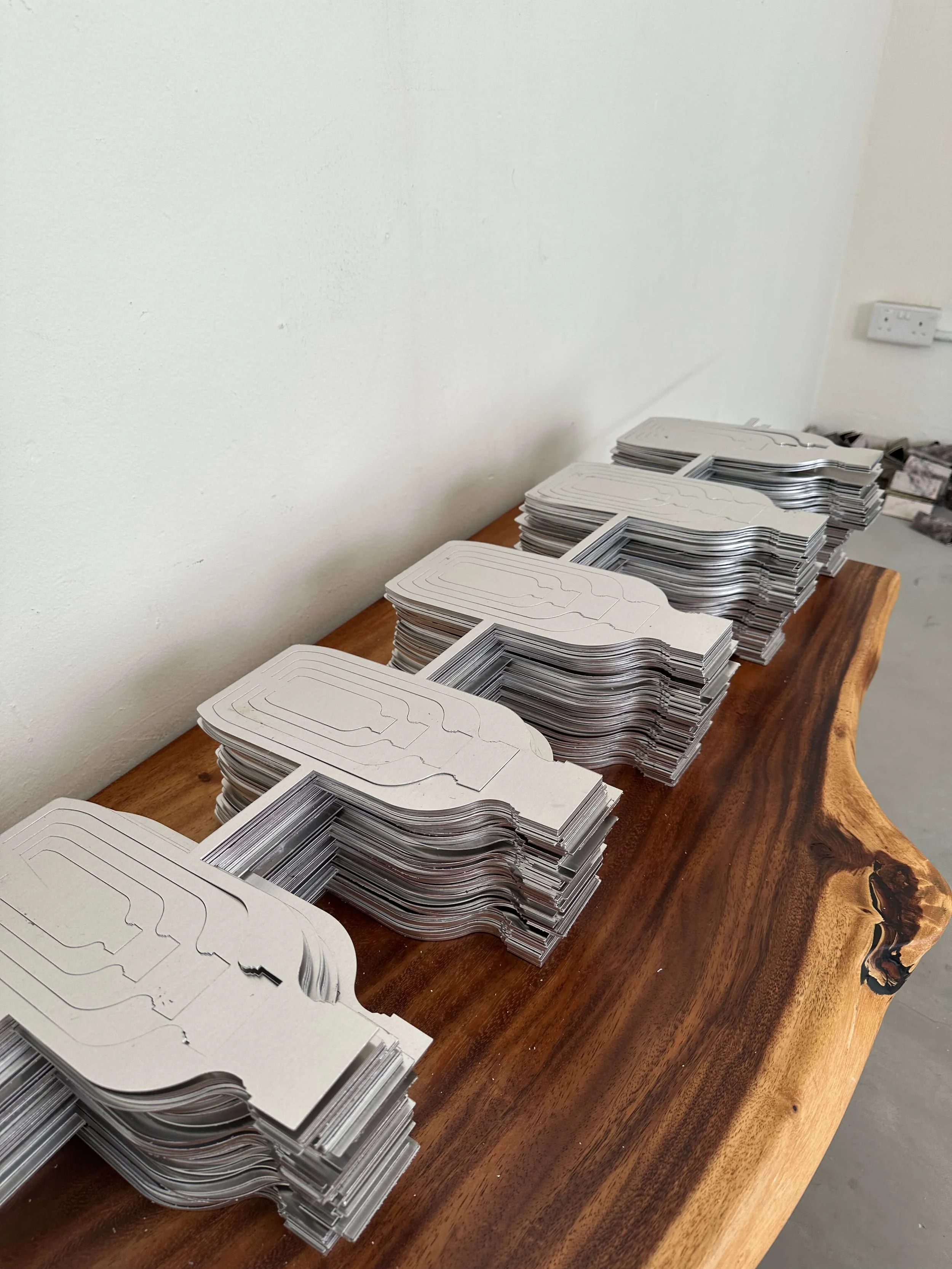
Aesop's approach to retail design places material quality and fabrication precision at the centre of its specification process. The campaign required a supplier with demonstrated capability in fine-geometry laser cutting — not general fabrication — and the capacity to deliver a consistent multi-unit batch within campaign timelines.
Supply Bay was selected on the basis of its precision laser cutting capability, operating CNC laser cutting equipment capable of holding positional tolerances of ±0.1 mm across sheet sizes up to 1500mm x 3000mm. For intricate ornamental components where edge quality and dimensional accuracy are visible in the finished object, this level of process control is the specification baseline.
Supply Bay's offering covers the full scope from material sourcing through to finished fabricated components: material grade selection, cut file review, laser cutting, post-processing (deburring, finishing), and delivery. For retail clients running time-sensitive campaign fabrication, this end-to-end capability reduces coordination overhead and keeps the production process under a single point of accountability.
Fabrication Approach
Pattern Complexity and Tolerances
Each ornament featured intricate cut geometries that required CNC laser cutting to achieve cleanly. Manual or mechanical cutting methods cannot hold the dimensional consistency required at this level of detail. Laser cutting maintains a positional tolerance of ±0.1 mm, which was critical for components intended to be installed as a coherent set across multiple store environments.
Specifier's tip: For decorative metal components that must match across multiple units or locations, laser cutting is the appropriate fabrication method. Plasma cutting introduces wider tolerances and rougher edges that require secondary grinding — not suitable for visible decorative work.
Repeatability Across Units
Producing identical components across a batch is a known challenge with bespoke decorative metalwork. For the Aesop campaign, each ornament was cut from the same CNC file, eliminating dimensional variation between units. This is a core advantage of laser fabrication over manual processes: the design file controls the output, not operator skill.
Edge Finish and Material Presentation
Laser-cut edges on mild steel or stainless steel produce a clean kerf with minimal slag when correctly set. For display-grade components like these, edge quality is a visible part of the finished object.
Application: Laser-Cut Metal in Retail Design
Retail installations present a specific set of fabrication requirements that differ from architectural or structural applications. Components are handled frequently, viewed at close range, and often installed in environments without secondary treatment to conceal fabrication quality.
Decorative Ornaments
Metal ornaments cut from flat sheet can be produced with geometric complexity that is not achievable through stamping or casting at equivalent unit costs. For limited-run campaigns, laser cutting is cost-effective because tooling is not required — the cut file is the tool.
In-Store Display Structures
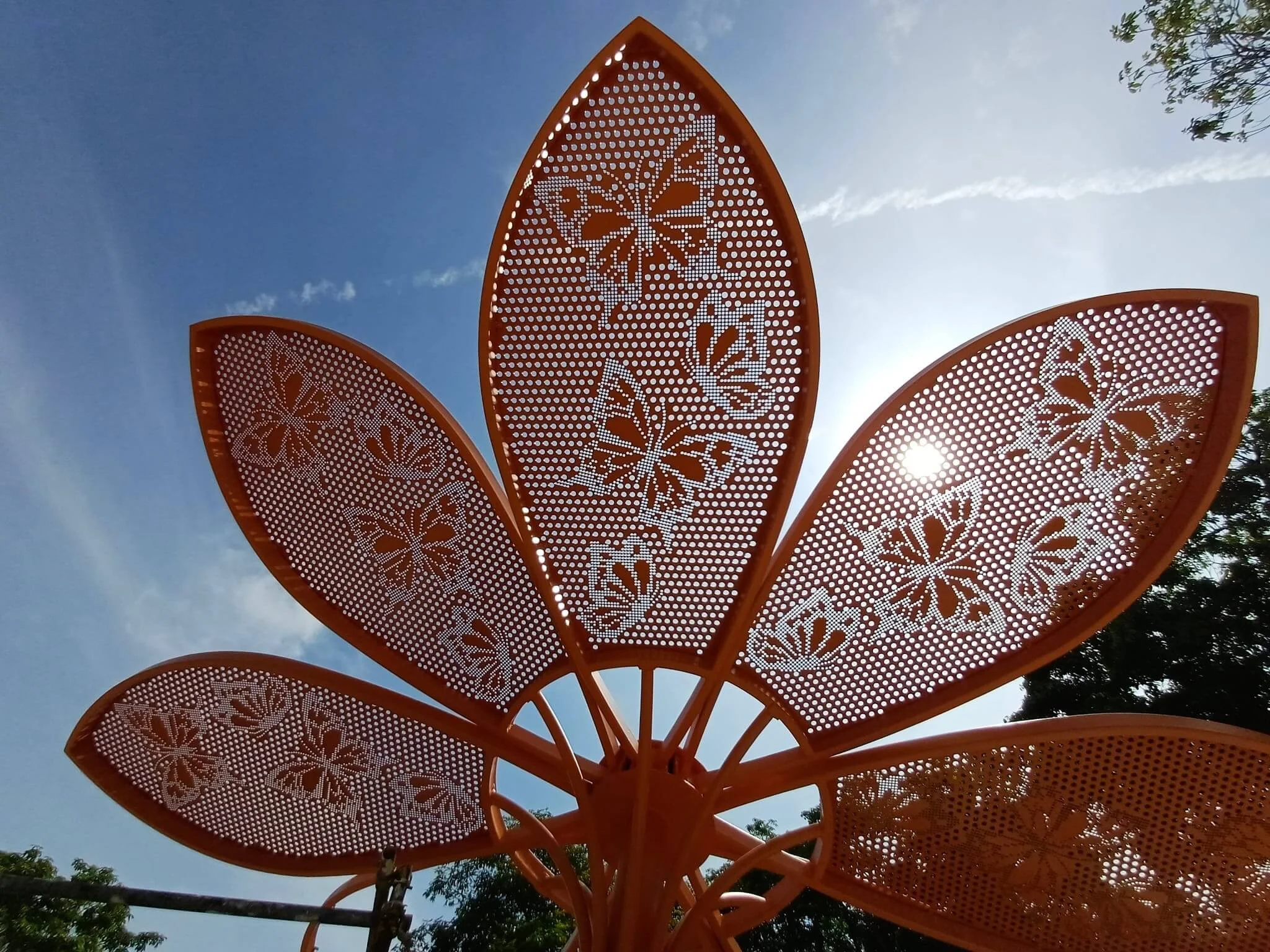
Display structures using laser-cut panels can incorporate cut-outs, apertures, and patterned elements that integrate branding, ventilation, and visual interest in a single fabricated component. The Aesop installations used metal elements as part of a spatial composition within the store, not simply as surface decoration.
Seasonal Campaign Fabrication
Campaign-based retail design typically involves short lead times, high unit counts, and strict design control. Laser cutting suits this model: no hard tooling, fast setup from file to cut, and consistent output across the production run. Material changes between campaigns — for example, switching from mild steel to stainless for a different colour temperature — do not require new tooling.
Frequently Asked Questions
-
Mild steel, stainless steel (SS304 and SS316), and aluminium are all suitable for laser cutting. Material selection depends on the required finish, handling durability, and whether the components will be used in interior or semi-exterior environments. For most indoor retail applications, mild steel with powder coating or SS304 with a brushed finish covers the majority of use cases.
-
Yes. Unlike stamping or casting, laser cutting does not require hard tooling. Small batch runs are cost-effective from a setup perspective. The main variable is per-unit cut time, which increases with pattern complexity. For campaign components at moderate volumes, laser cutting is typically the most practical fabrication method.
-
Raw laser-cut edges are functional but not always suitable for display use. Standard post-processing options include deburring, linishing (for stainless), and powder coating (for mild steel). Edge rounding is available for components where handling safety is a concern. Finish requirements should be specified at the enquiry stage.
-
Lead time depends on complexity, volume, and material availability. For standard components at moderate batch sizes, fabrication typically requires 3–7 working days from approved drawings. Complex patterns or large volumes may require longer lead times. Supply Bay can provide a project-specific timeline at the quotation stage.
Supply Bay Pte Ltd supplies expanded metal mesh for Singapore construction, architectural, and infrastructure projects. Contact us at info@supplybaystore.com or +65 6524 3913.
Supply Bay is Singapore's leading supplier of architectural sheet metal — expanded mesh, perforated panels, laser-cut screens, and solid sheets in aluminum, stainless steel (SS304, SS316), mild steel, and galvanized steel.