Metal Ceiling Systems Singapore: Specifier's Guide for Architects and Contractors
Metal ceiling systems — expanded mesh, perforated panels, and laser-cut decorative panels — are specified across retail, F&B, hospitality, corporate, and institutional projects in Singapore. This guide covers the three main system types, their material and specification options, acoustic performance considerations, and the key decisions contractors and interior designers need to make at the specification stage.
What Is a Metal Ceiling System?
A metal ceiling system is a suspended ceiling constructed from metal sheet or mesh panels, supported on a grid framework hung from the structural soffit above. Unlike gypsum board or mineral fibre tiles, metal ceilings do not absorb moisture and do not deform or sag in Singapore's humid, air-conditioned environment. Panels can be removed and reinstated for MEP maintenance access without damage.
Three products form the core of Supply Bay's metal ceiling range: expanded metal mesh, perforated metal sheet, and laser-cut panels. Each has a distinct visual character, structural behaviour, and performance profile. Selecting between them depends on the acoustic requirement, the degree of service concealment needed, and whether the ceiling is a background element or a visible design feature.
Metal Ceiling System Types: Comparison
| System Type | Visual Character | Open Area | Acoustic Performance | Typical Application |
|---|---|---|---|---|
| Expanded metal mesh | Semi-transparent, directional diamond texture | 30–55% | Moderate (with backing) | Retail, hospitality, feature zones |
| Perforated metal panel | Flat face with regular hole pattern | 20–65% | High (with acoustic backing) | Offices, conference rooms, F&B, education |
| Laser-cut decorative panel | Custom pattern, precision geometry | Variable | Variable by design | Feature ceilings, design-led fitouts |
Tip
The three system types are not mutually exclusive. Laser-cut panels are often used as feature zones within a broader perforated or solid ceiling plane. Expanded mesh and perforated panel systems are sometimes combined in the same ceiling where different zones require different acoustic or visual treatments.
Expanded Metal Ceiling Mesh
Expanded metal mesh produces a semi-transparent ceiling surface by suspending continuous or panelised mesh sheets from a grid.
Fine expanded mesh, with small diamond-shaped openings and narrow strands, is the standard specification for retail and hospitality ceiling applications where surface refinement at close range matters.
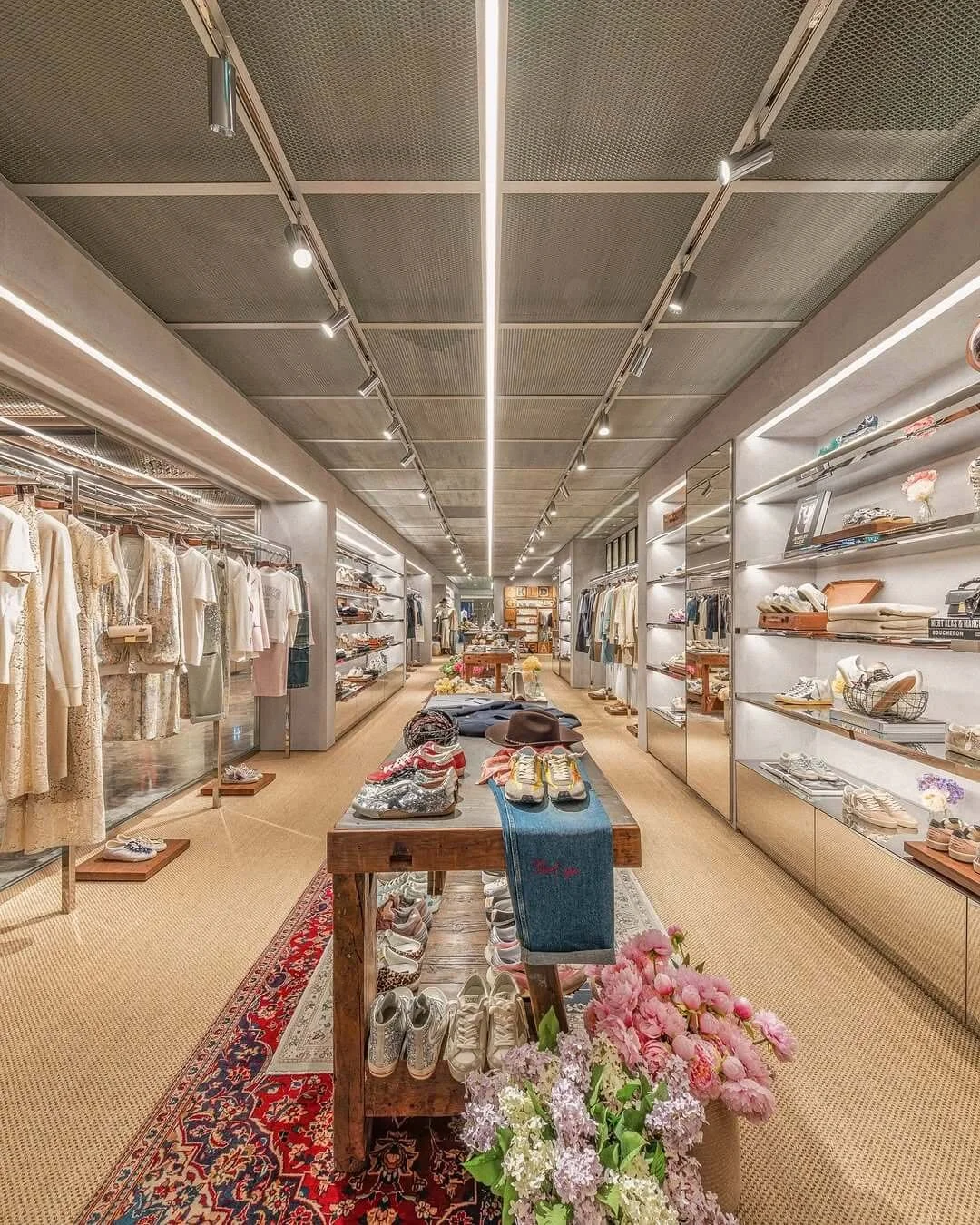
Supply Bay supplied fine expanded metal ceiling mesh for the Golden Goose flagship store at Paragon Shopping Centre, Orchard Road — a specification chosen for its lightweight structure, ease of suspension, and clean architectural finish.
Expanded mesh panels are lightweight relative to perforated sheet of equivalent span, reducing structural loading on the suspended ceiling grid.
Aluminium is the standard material for maximum weight reduction and natural corrosion resistance.
Hot Dip Galvanised is the go-to material for industrial looking ceilings.
Stainless steel is available for applications where a premium surface finish is specified.
Perforated Metal Ceiling Panels
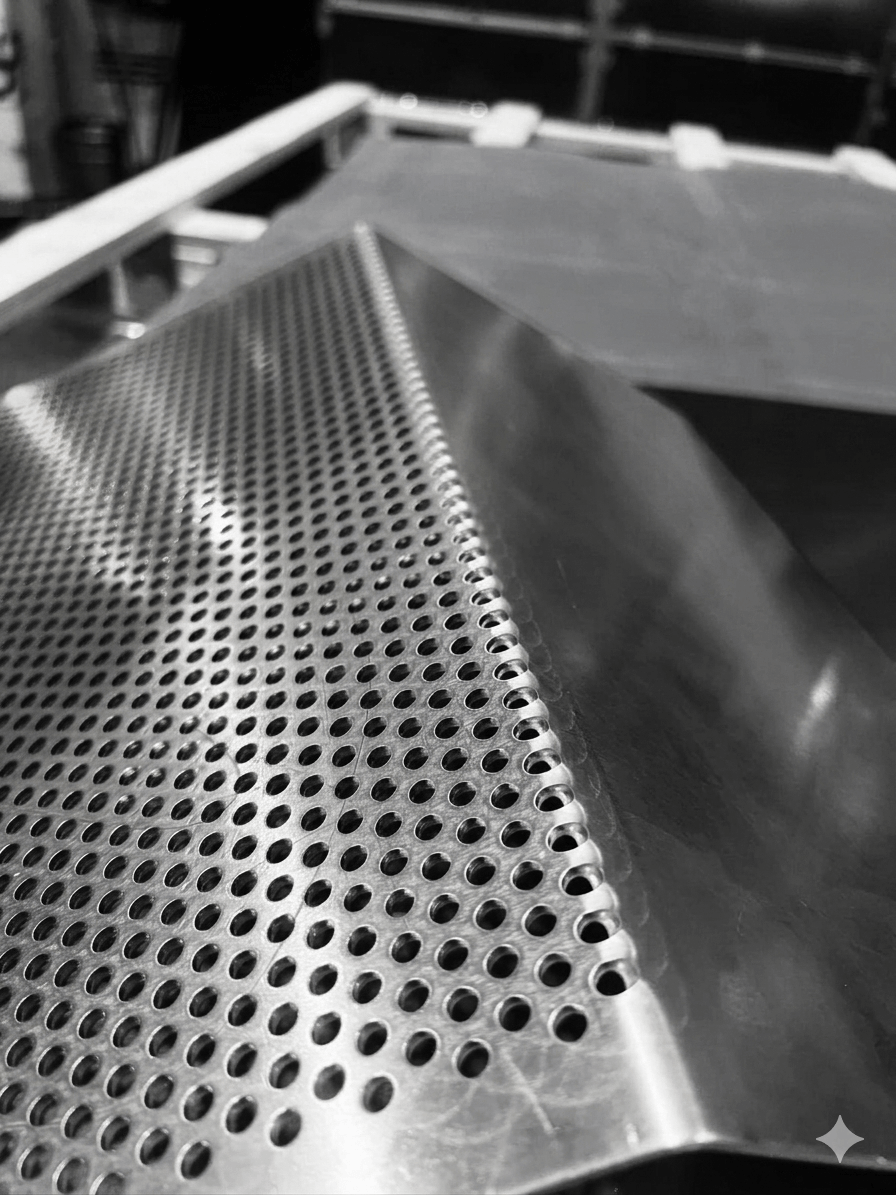
Perforated metal ceiling panels use a flat sheet with punched holes. The open area percentage — determined by hole diameter and pitch — controls visual transparency, airflow, and acoustic performance. Perforated metal is the standard ceiling specification for applications where acoustic absorption is a design requirement.
When installed with a mineral wool or glass wool acoustic backing above the panel, the perforated surface acts as a facing layer that allows sound energy to pass through to the absorbent material behind, reducing reverberation time in the space. This makes perforated metal the preferred ceiling specification for offices, conference rooms, educational facilities, and F&B environments where speech intelligibility and ambient noise control are objectives.
Perforation Patterns
Standard perforation patterns include round holes on square or staggered pitch, elongated slots, and square holes. Custom patterns can be laser-cut to specification for design-led projects. Open area percentages for acoustic applications are typically in the 20–35% range. Higher open areas (40–65%) reduce visual weight and increase airflow but require finer pitch to maintain panel structural integrity.
Browse perforated metal panels →
Tip
For acoustic ceiling applications, open area of 20–25% is the recommended minimum to achieve meaningful acoustic absorption. Below 15% open area, the panel face becomes acoustically reflective regardless of backing material.
Laser-Cut Decorative Ceiling Panels
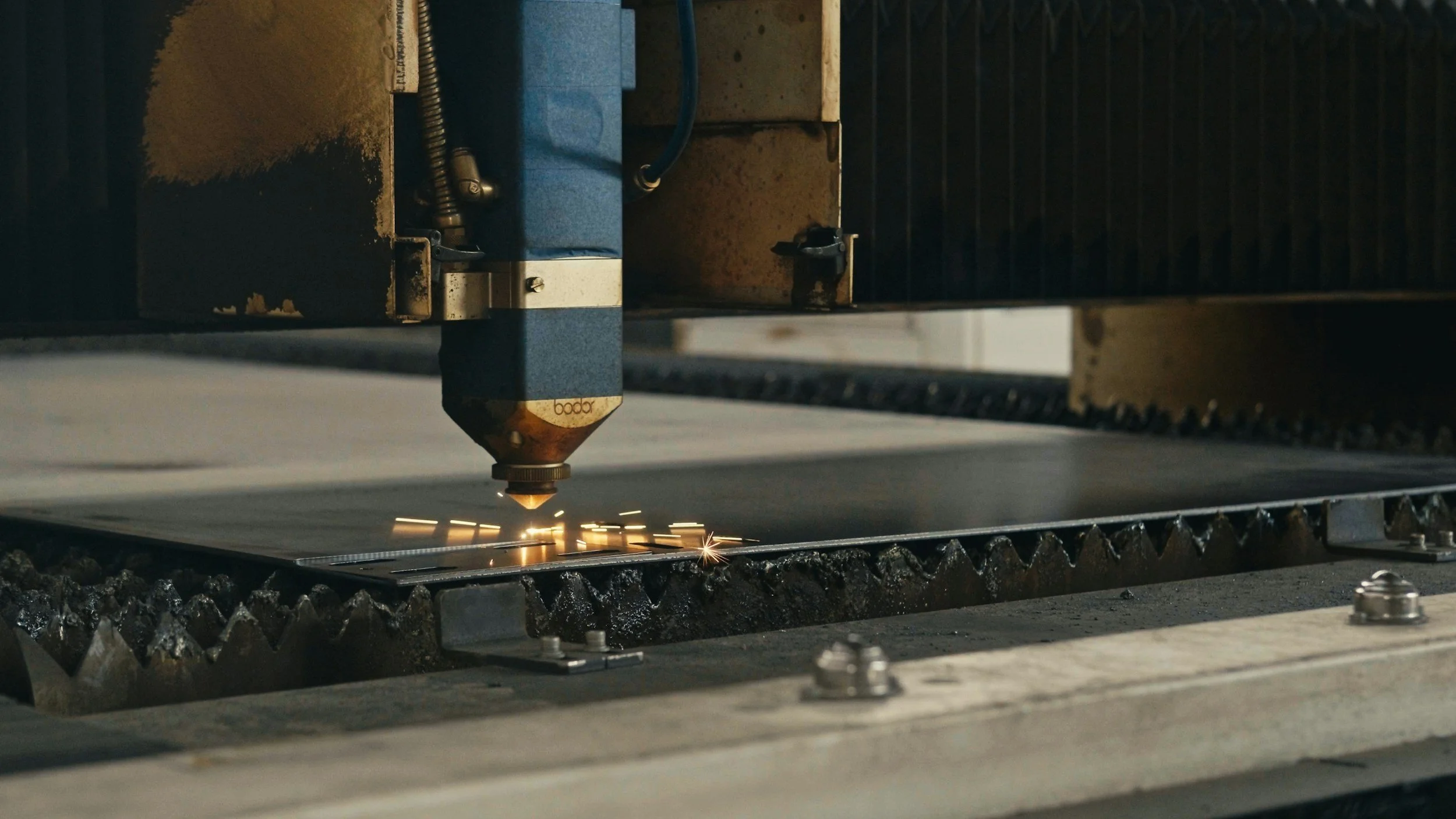
For design-led fitout projects where a custom ceiling pattern is part of the design intent, laser-cut metal panels are specified as ceiling feature elements. Any geometry that can be expressed in a vector file can be cut to ±0.1 mm tolerance, producing bespoke ceiling patterns not achievable with standard punch-die perforations.
Supply Bay's laser cutting service handles sheets up to 3000 mm × 1500 mm, enabling large-format ceiling panels with consistent pattern registration across adjacent sheets. Laser-cut panels are most commonly specified in aluminium for lightweight suspension, or mild steel with powder coat for cost-effective coverage of larger ceiling areas.
Material Grades for Metal Ceiling Systems Singapore
| Material | Corrosion Resistance | Weight | Cost | Recommended Use |
|---|---|---|---|---|
| Aluminium (Mill Finish) | High (natural oxide layer) | Low | Medium | All internal ceiling applications; semi-external |
| Mild steel | Low–medium | Medium | Low | Dry, air-conditioned internal spaces |
| SS304 | High | Medium–high | High | Transitional and semi-exposed spaces |
| SS316 | Very high | Medium–high | Higher | Coastal, high-humidity, or corrosive environments |
For a full overview of finishes, refer to the Metal Finishes Explained guide.
Common Applications in Singapore
Retail Store Ceilings
Expanded metal mesh and laser-cut decorative panels are the most common specifications for Singapore's Orchard Road, VivoCity, Jewel Changi, and integrated resort retail environments. These spaces require ceiling systems that are visually refined at close range, compatible with track lighting integrated into the suspension grid, and maintainable without panel damage. Fine expanded mesh allows partial service concealment without requiring a fully closed ceiling plane.
F&B and Restaurant Interiors
Perforated metal ceiling panels with acoustic backing are frequently specified in Singapore's F&B environments to control ambient noise and improve speech intelligibility in compact dining spaces. Aluminium with powder coat is the standard material for this application, given the humidity cycling associated with kitchen ventilation and frequent door openings.
Corporate Office Ceilings
Perforated metal ceiling panels — typically aluminium at 600 × 600 mm or 600 × 1200 mm modules — are specified in Grade-A commercial office fitouts where acoustic performance, BCA Green Mark compliance, and compatibility with the building's mechanical and electrical services are all requirements. Open area in the 20–30% range with mineral wool backing is the standard acoustic configuration.
Hotel and Serviced Apartment Lobbies
Laser-cut decorative ceiling panels and fine expanded mesh are specified for hotel lobby ceiling features in Singapore's hospitality sector — both the central business district hotels and the integrated resort properties at Marina Bay and Sentosa. Custom pattern laser-cut panels allow designers to introduce brand-specific geometry into the ceiling plane without bespoke fabrication complexity.
Institutional and Educational Buildings
Perforated metal ceiling systems are specified in Singapore's institutional buildings — schools, polytechnics, and public facilities — where durability, acoustic performance, and BCA compliance are the primary drivers. Mild steel panels with powder coat are cost-effective for this application type; aluminium is specified where weight reduction or corrosion resistance takes priority.
-
Standard expanded mesh and perforated metal in stock specifications are available within 1–2 working days. Custom cut-to-size panels, non-standard perforation patterns, or powder-coated finishes are typically ready within 1–2 weeks.
-
Yes. Any vector geometry can be laser-cut to ±0.1 mm tolerance on sheets up to 3000 mm × 1500 mm. This allows custom ceiling patterns to be produced consistently across multiple panels without the tooling cost associated with custom punch dies.
-
For internal air-conditioned retail environments, aluminium mill finish or polyester powder coat is the standard specification.
For semi-external retail applications — covered walkways, alfresco areas, or transitional retail frontages — aluminium is preferred for colour stability under Singapore's UV conditions.
-
Yes. Panels can be powder coated to any RAL or custom colour specification.
-
Perforated metal ceiling panels with acoustic backing can contribute to Green Mark credits for indoor environmental quality, specifically acoustic performance in offices and educational buildings. Metal ceilings can also support thermal performance by allowing airflow through the ceiling plenum, reducing localised heat build-up. Confirm specific credit applicability with your Green Mark assessor.
Supply Bay Pte Ltd supplies expanded metal mesh, perforated metal sheet, and laser-cut panels for metal ceiling systems across Singapore construction and architectural projects. Contact us at info@supplybaystore.com or +65 6524 3913.
Supply Bay is Singapore's leading supplier of architectural sheet metal — expanded mesh, perforated panels, laser-cut screens, and solid sheets in aluminum, stainless steel (SS304, SS316), mild steel, and galvanized steel.