Expanded Metal Facade Panels Singapore: Specifier's Guide for Architects and Contractors
Expanded metal mesh is one of the most practical facade materials available for Singapore projects. It's structural without being heavy, open without sacrificing rigidity, and available in aluminium, stainless steel, and galvanised steel grades suited to both coastal and inland conditions. This guide covers material selection, open area specification, surface finishes, and key installation considerations for facade and cladding applications.
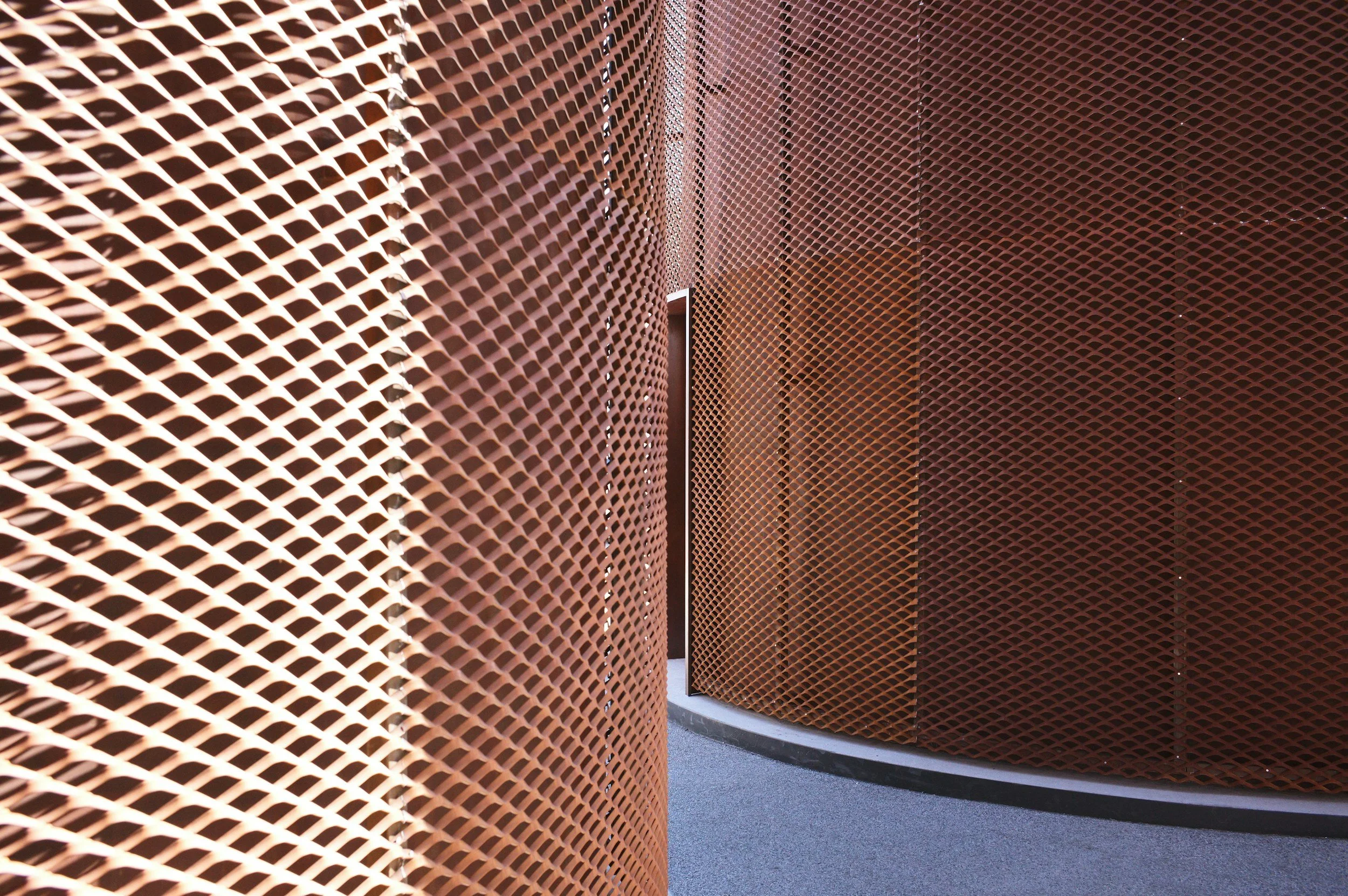
What Is Expanded Metal Mesh?
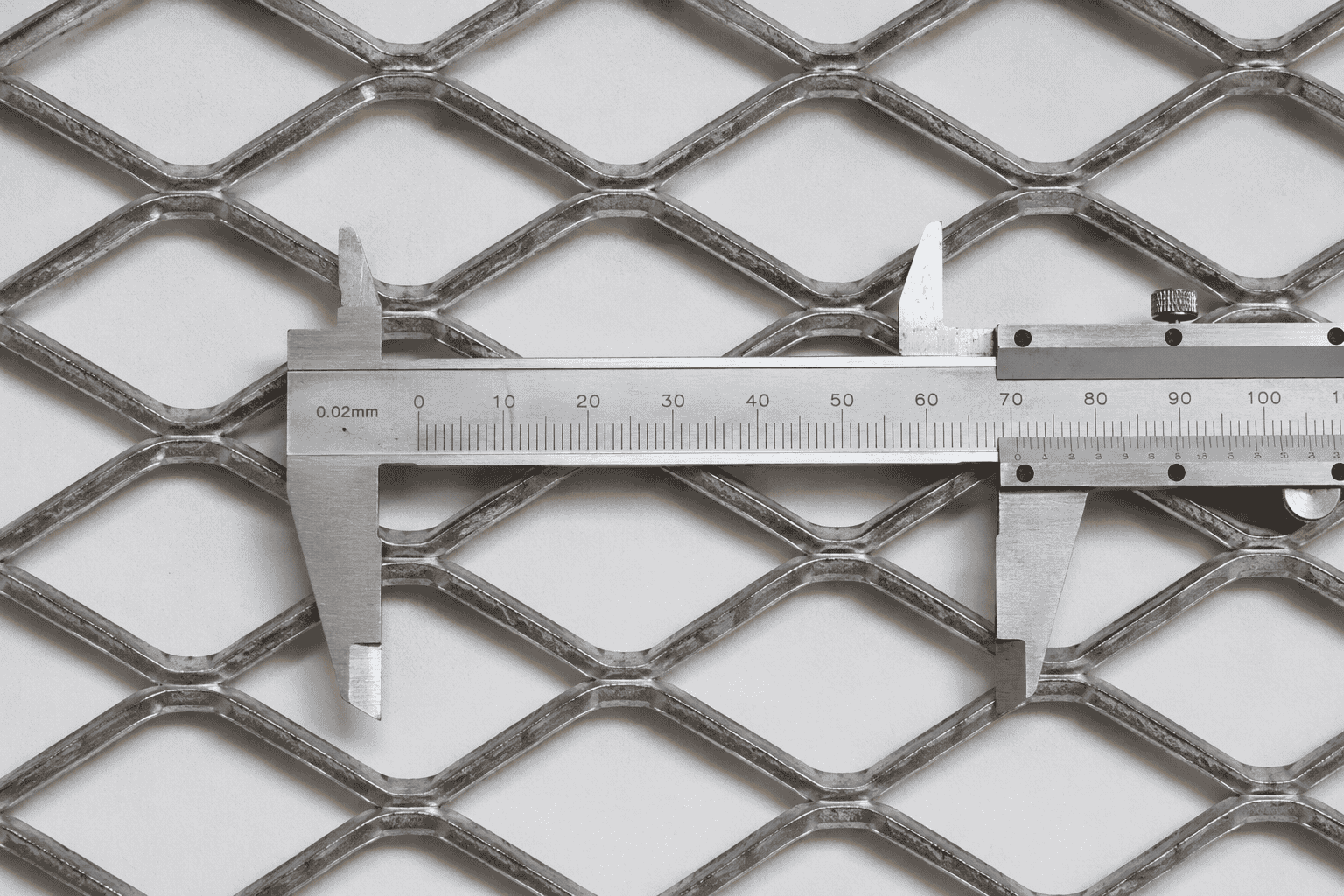
Expanded metal mesh is produced by simultaneously slitting and stretching a solid metal sheet, forming a continuous interlocked diamond-strand structure without any welded joins or loose ends. Because the strand is continuous, the mesh retains high structural rigidity relative to its weight — a property that makes it well-suited to facade panels that must span between fixings without excessive deflection.
For facade use, this matters. Panels span between fixing points without intermediate support. The same structural property that makes expanded metal useful for walkway grating makes it reliable as a facade screen — it holds its form under wind load, thermal cycling, and the cleaning cycles typical in Singapore's maintenance-intensive environment.
Expanded Metal Mesh vs Alternative Facade Products
Architects typically evaluate expanded metal mesh against perforated metal sheet, woven wire mesh, and louvre panels. Each has a different structural logic, cost profile, and visual character. For projects where budget, lead time, and structural self-sufficiency are priorities, expanded metal mesh consistently outperforms woven alternatives at equivalent open area and panel size.
| Material | Open Area | Structural Rigidity | Best For | Limitation |
|---|---|---|---|---|
| Expanded metal mesh | 25–50% | High: Single-piece construction | Facade screens, rain screens, cladding, sunshades | Not flat; relief depth requires framing clearance |
| Perforated metal sheet | 15–65% | High: Solid base sheet | Acoustic panels, facade cladding with higher open area | Heavier than expanded; no stretch-formed structural benefit |
| Wire mesh (welded) | 40–70% | Lower: Weld-point dependent | Security fencing, infill panels | Weld points are corrosion and failure risk in coastal conditions |
| Laser-cut panel | Custom | High: Solid sheet | Decorative feature screens, bespoke facade panels | Higher cost; longer lead time; not suited to large open-area screens |
| Louvre blades | Variable | Medium — frame-dependent | Ventilated facades, car park screens, plant room cladding | Limited aesthetic variation; higher fabrication complexity |
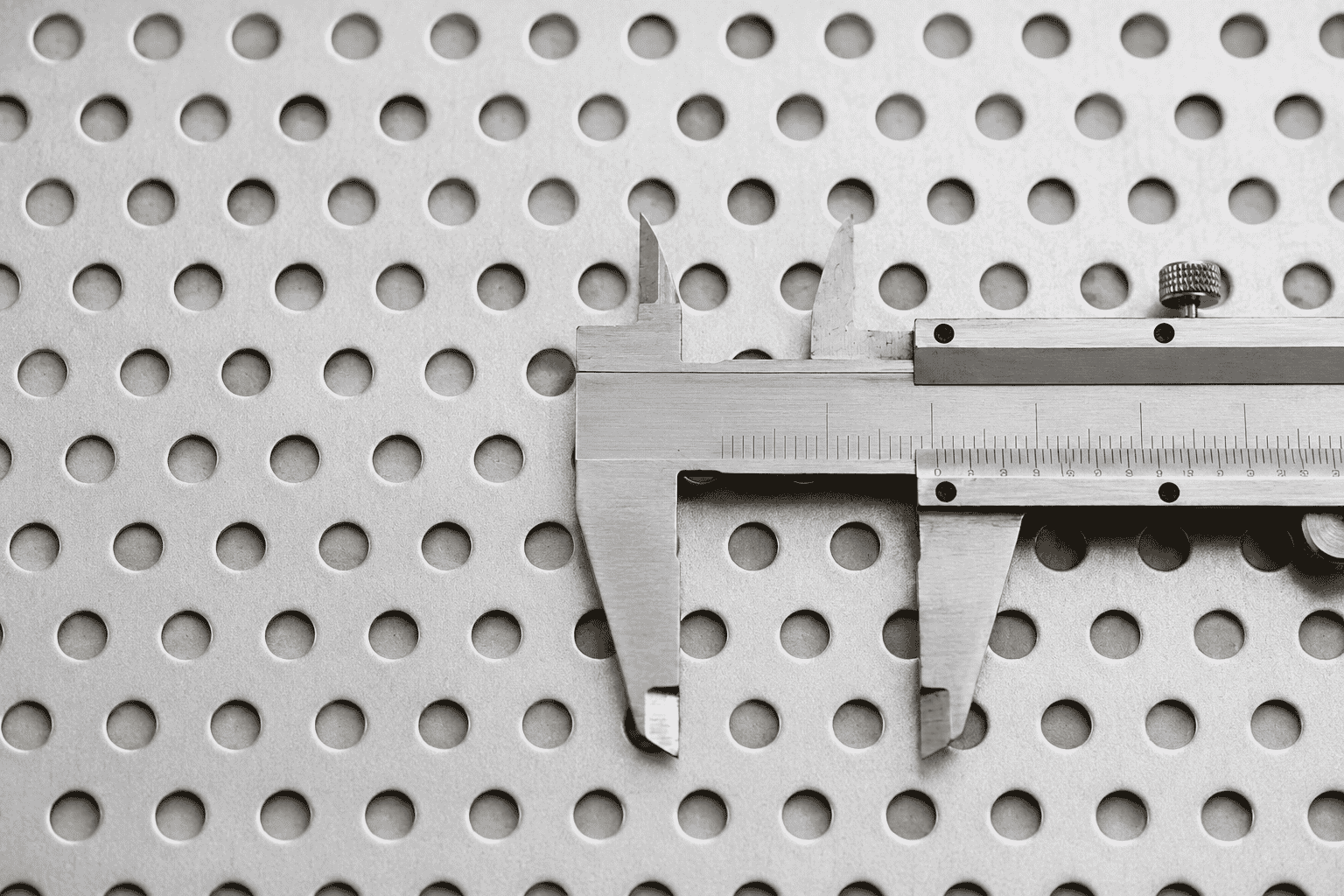
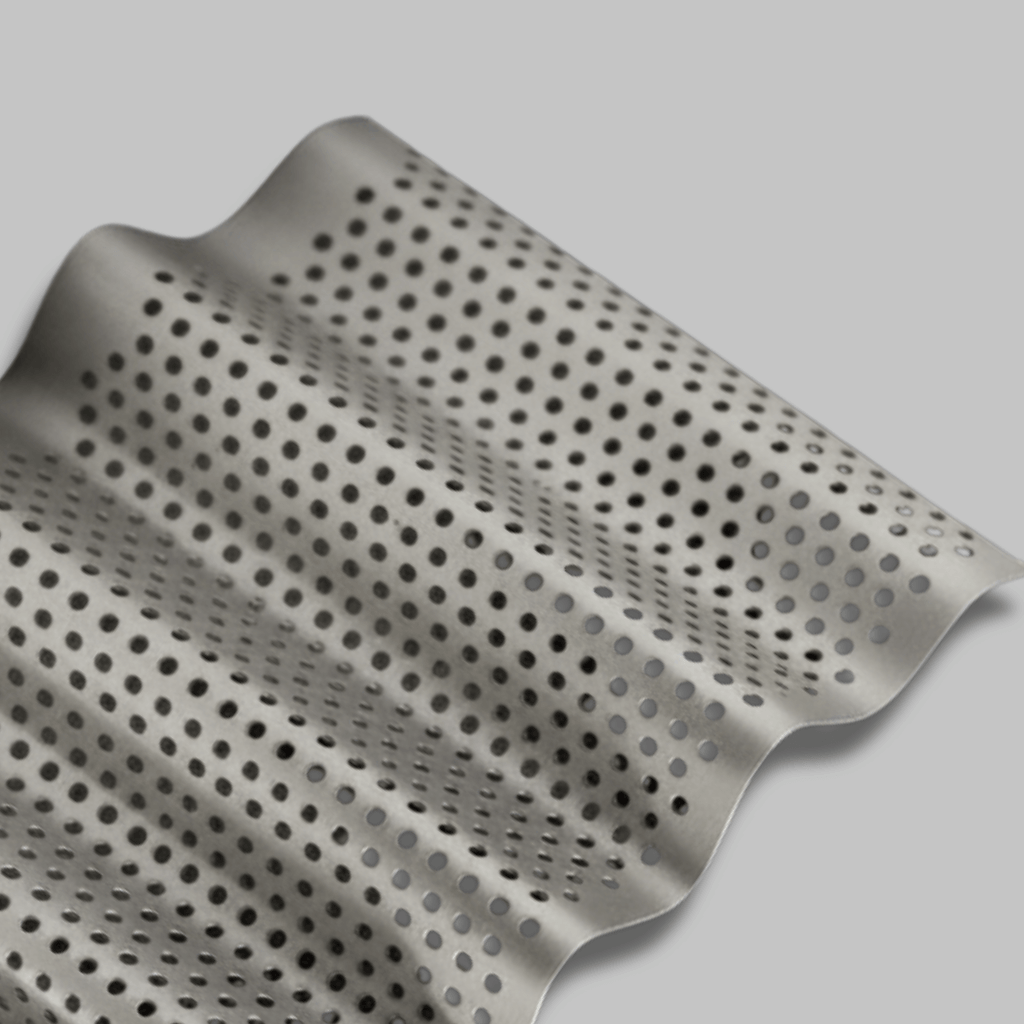
For projects where the facade requires a specific pattern or tight open area control, perforated metal sheets give more flexibility in hole size, shape, and layout. For custom decorative screens, laser-cut panelsare the more appropriate specification.
Expanded metal sits between these: structurally superior to perforated for large-span applications, and significantly cheaper than laser-cut for standard facade screens.
Product Range and Specifications
The two key factors for facade-grade expanded metal are strand width (SWM) and long way of mesh (LWM). SWM controls the visual density of the mesh from a distance; LWM determines the diamond aperture size and the percentage of open area.
| Profile | SWM (mm) | LWM (mm) | Open Area (%) | Typical Facade Application |
|---|---|---|---|---|
| Fine mesh | 1.0 – 2.0 | 4 – 10 | 25 – 35% | Infill screens, close-view feature panels, interior facades |
| Medium mesh | 2.0 – 4.0 | 10 – 25 | 35 – 45% | External facade screens, car park cladding, rain screens |
| Louvre mesh | 3.0 – 5.0 | 20 – 40 | 40 – 50% | Ventilated facades, M&E plant room screens, louvre systems |
| Walkway / heavy mesh | 4.0 – 8.0 | 25 – 50 | 45 – 55% | Structural facade panels, external screens with wind load requirements |
Specifier's tip: For facades with a ETTV (Envelope Thermal Transfer Value) constraint under BCA's Green Mark criteria, open area directly affects solar heat gain. A facade screen with 40%+ open area will contribute differently to ETTV calculations than one at 25%. Check with your M&E consultant before fixing the mesh spec if Green Mark applies.
Material Grades
| Material | Grade | Corrosion Resistance | Recommended For | Notes |
|---|---|---|---|---|
| Aluminium | 1100 / 5052 | Good — natural oxide layer | Most Singapore facade applications; lightweight panels | 5052 preferred for coastal sites; requires isolation from steel fixings |
| Stainless steel | SS304 | Good — suitable for inland sites | Commercial and institutional facades, interior-facing screens | Not recommended within 500m of coast or sea-facing facades |
| Stainless steel | SS316 | Excellent — molybdenum-enhanced | Coastal facades, Sentosa, Jurong Island, waterfront developments | Specify SS316 for any project within direct marine exposure |
| Galvanised steel (GI) | Hot-dip galvanised | Moderate — zinc coating | Industrial facades, plant room screens, site hoardings | Suitable for non-architectural use; powder coat over GI for better durability |
| Mild steel | — | Low — requires coating | Temporary or interior applications only | Must be powder coated or galvanised for any exterior use in Singapore |
Surface Finishings
| Finish | Suitable Materials | Durability | Use Case |
|---|---|---|---|
| Mill finish (plain) | Aluminium, SS304, SS316 | Good (aluminium/SS self-protect) | Unexposed or interior applications; base for further treatment |
| Powder coating | Aluminium, Mild Steel, GI | Good — 5–10 years typical in Singapore | Colour-matched facade panels; exterior screens; RAL colour matching |
| PVDF coating | Aluminium | Excellent — 15–20+ years | Grade-A commercial facades, long-life exterior cladding, Green Mark projects |
| Hot-dip galvanised | Mild Steel | Good for industrial/non-architectural use | Industrial screens, plant room cladding, site hoarding |
| Anodised | Aluminium | Very good — electrochemical oxide layer | Architectural facades requiring consistent metallic finish; Class 1 (25 micron) for exterior |
Common Applications in Singapore
Rain Screens and Ventilated Facade Systems
Expanded metal mesh is commonly used as the outer skin in rain screen facade systems. The open area allows air circulation in the cavity between the mesh screen and the primary weatherproofing layer, reducing pressure differentials and managing moisture. Medium and louvre mesh profiles are the standard specification for this application — enough open area for ventilation, sufficient strand coverage to deflect driven rain.
Car Park Facade Cladding
Multi-storey car parks are one of the most common applications for expanded metal mesh in Singapore. JTC, HDB, and private developments specify expanded metal screens on car park facades to meet ventilation requirements, reduce solar gain on exposed decks, and provide a consistent architectural finish. Aluminium medium mesh or louvre mesh with powder coating or PVDF is the typical specification.
Commercial and Grade-A Office Facades
Expanded metal mesh is used on commercial facades as a secondary screen layer — typically mounted in front of a glazed or solid primary facade to reduce solar heat gain, control glare, and add visual depth to the elevation.
Institutional and Public Sector Buildings
Schools, polytechnics, and government buildings increasingly specify expanded metal for facade screens and sun-shading systems. Singapore Polytechnic, JTC facilities, and several NParks projects have used expanded metal mesh for external screening where ventilation, maintenance access, and cost are all significant constraints. The single-piece structural form reduces the number of fixings required compared to perforated panels of equivalent open area.
Residential Screens and Privacy Panels
For private residential and condominium projects, expanded metal mesh is used for pool screens, yard enclosures, service area screening, and privacy panels on balconies and terraces. Fine mesh profiles in aluminium with powder coating are the standard residential specification. The open area provides airflow while maintaining visual privacy at typical viewing distances.
Frequently Asked Questions
-
For external facade panels subject to wind load and regular maintenance, 1.5 mm sheet thickness is the practical minimum. For panels larger than 1000 mm × 1000 mm, 2.0 mm is recommended to control mid-panel deflection under design wind pressure.
-
Yes. Expanded metal mesh screens reduce direct solar gain at the wall envelope and contribute to ETTV compliance. The shading coefficient needs to be calculated based on the mesh open area, panel angle, and facade orientation. Your M&E or facade engineer should model this in the ETTV calculation submission to BCA.
-
Expanded metal mesh in stainless steel or aluminium does not contribute to fire load and is classified as a non-combustible material under SS CP 13:2003. It does not carry an independent fire-resistance rating (FRR). Where the facade assembly must achieve a rated FRR, the mesh is typically used as an outer decorative/screening layer with a rated substrate behind.
Supply Bay Pte Ltd supplies expanded facade mesh, perforated metal sheet, laser-cut panels, corrugated sheets, and solid sheet metal for Singapore construction and architectural projects. Contact us at info@supplybaystore.com or +65 6524 3913.
Supply Bay is Singapore's leading supplier of architectural sheet metal — expanded mesh, perforated panels, laser-cut screens, and solid sheets in aluminum, stainless steel (SS304, SS316), mild steel, and galvanized steel.