
Perforated Metal Sheet in Singapore: A Buyer's Guide
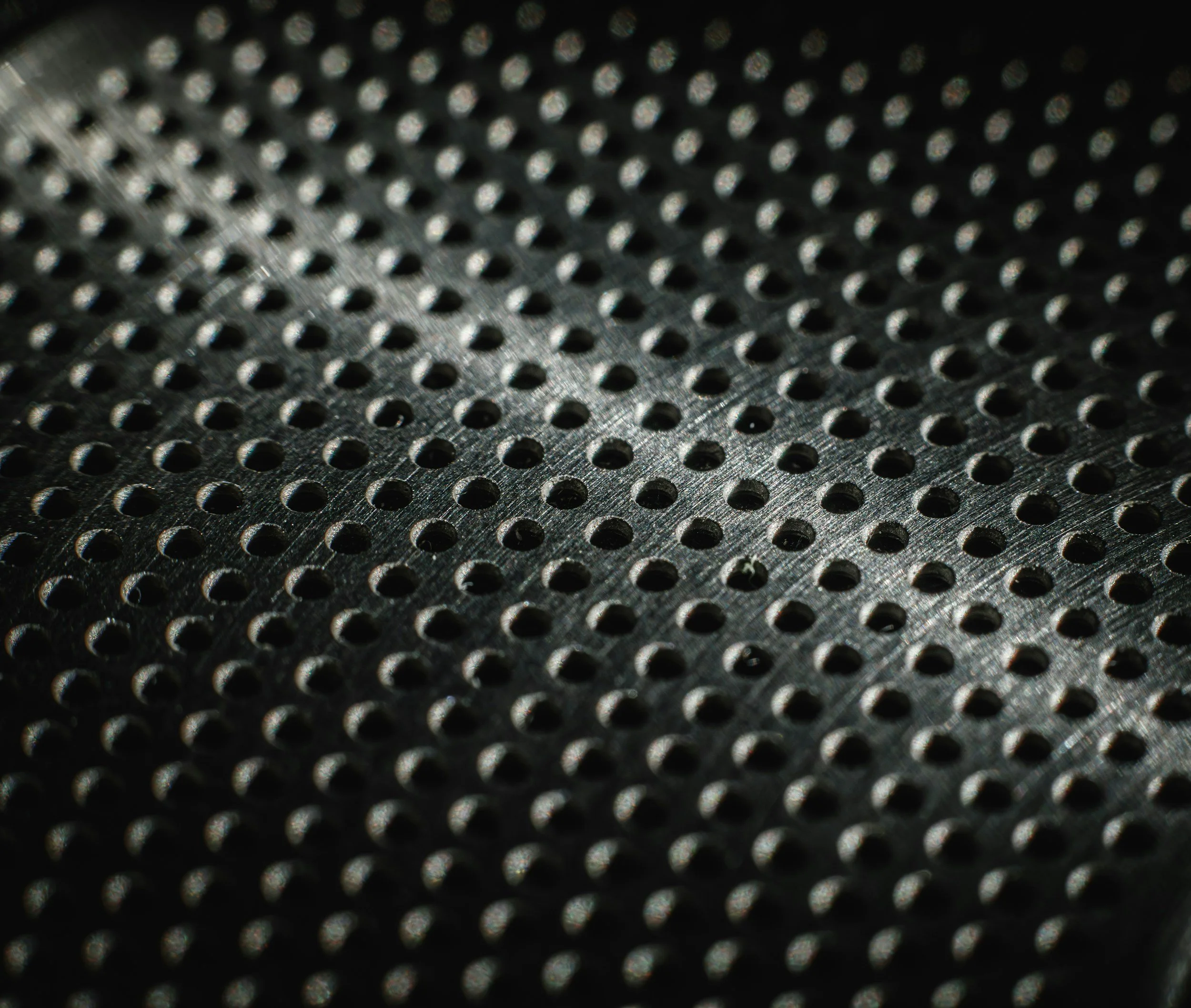
Supply Bay - trusted local perforated metal supplier
Perforated metal sheet is one of the most widely specified architectural and industrial materials in Singapore. It is used across facades, ceilings, screens, railings, acoustic panels, drainage covers, and fitout elements, in projects ranging from Grade-A commercial towers to HDB estate upgrading works.
This guide covers what you need to know before specifying or ordering perforated metal sheet in Singapore: hole patterns, open area, material grades, finishes, and standard vs custom supply.
What Is Perforated Metal Sheet?
Perforated metal is produced by punching a regular pattern of holes through a flat metal sheet using a punch press and die. The result is a flat panel with a consistent, repeating open area across its surface.
Unlike expanded metal, which is slit and stretched to form a three-dimensional diamond mesh, perforated sheet remains flat after processing and offers precise control over hole geometry, size, pitch, and open area percentage.
Hole Patterns
The hole pattern determines the visual character of the panel and its functional open area. The most commonly specified patterns in Singapore are:
Round holes on staggered pitch: The standard specification for most architectural and acoustic applications. Staggered rows maximise open area for a given hole size and produce an even visual texture.
Round holes on 90 degree arrangement pitch: Lower open area than staggered for the same hole size. Used where a more ordered, grid-aligned visual is required.
Square holes: A more geometric, rectilinear pattern. Common in contemporary commercial and retail interiors. See our square hole designs here →
Slotted holes: Elongated apertures in horizontal, vertical, or staggered arrangements. Used for directional screening, louvre-effect panels, and applications where drainage in a specific direction is needed. Supply Bay supplied horizontal staggered slotted perforated metal at JTC CleanTech 3 for green wall substrate and facade screening applications.
Custom and laser-cut patterns: Any geometry can be produced via CNC laser cutting. Used for design-led facade panels, decorative screens, retail fitout elements, and bespoke ceiling panels. See our laser cutting service →
Open Area Percentage
Open area — the percentage of the panel surface that is perforated — is one of the most important specification parameters. It governs:
Ventilation and airflow through the panel
Acoustic performance when used with a backing layer
Visual transparency and light transmission
Structural integrity — higher open area reduces the panel's residual section
As a general guide for common applications:
Acoustic ceilings require 20 – 35% open area
Facade screening and solar shading require 30 – 50% open area
Ventilation panels and bin centre enclosures require 40 – 60% open area
Decorative interior screens require 25 – 45% open area
Drain covers and grating require 40 – 55% open area
Green wall substrate require 40 – 50% open area
Higher open area reduces structural rigidity. For panels spanning between fixings without continuous support, confirm residual section with your structural engineer or contact Supply Bay for a recommendation.
Material Grades
Mild steel: Most cost-effective. Requires galvanising or powder coating for any Singapore outdoor or humid application. Suitable for sheltered interior and industrial uses in natural finish.
Galvanised steel (GI): Mild steel with a factory-applied zinc coating. Standard for outdoor industrial and infrastructure applications in Singapore where aesthetics are secondary to performance.
Aluminium: Lightweight, naturally corrosion-resistant, accepts powder coat and PVDF coating well. The preferred specification for facade panels, ceiling systems, and applications where weight loading is a constraint.
SS304 stainless steel: Standard architectural grade for most Singapore interior and semi-sheltered exterior applications. Inherent corrosion resistance without additional coating for most environments.
SS316 stainless steel: Specified for coastal locations, waterfront developments, food processing environments, and any application with regular exposure to cleaning chemicals or salt air. The molybdenum content provides significantly improved chloride pitting resistance over SS304.
Surface Finishes
Mill finish (natural): Suitable for interior applications in stainless steel and aluminium. Not appropriate for outdoor mild steel in Singapore.
Powder coat: Standard finish for architectural perforated metal in Singapore. Available in any RAL or custom colour.
PVDF coating: High-performance fluoropolymer system for aluminium facade panels with long maintenance intervals or high UV exposure.
Hot-dip galvanised: For mild steel in structural or infrastructure applications. Can be powder coated over for colour.
Brushed / No. 4 finish — standard decorative finish for stainless steel interior applications.
For a full breakdown of finish options, see: Metal Finishes Explained →
Standard Sheet Sizes and Custom Supply
Supply Bay supplies perforated metal sheet in standard 4ft × 8ft (1.22m × 2.44m) sheets and custom cut-to-size panels.
For project supply, panels can be cut to your specified dimensions prior to delivery — reducing site cutting labour and minimising exposed cut edges on galvanised material that require on-site touch-up treatment.
Common Applications in Singapore
Architectural facades and cladding: Rain screens, secondary facade layers, solar shading panels on commercial and mixed-use buildings. Perforated metal facade panels contribute to ETTV compliance under BCA's Code for Environmental Sustainability by reducing solar heat gain through the building envelope.
Ceiling systems: Perforated metal acoustic ceilings with mineral wool or glass wool backing are the standard specification for offices, conference rooms, F&B spaces, and institutional buildings requiring reverberation control.
HDB upgrading and estate works: Covered linkway screens, void deck enclosures, bin centre ventilation panels, lift lobby feature panels, and precinct boundary screens across NRP, ROH, and HIP projects. See our HDB upgrading guide →
Privacy and balcony screens: Perforated panels for residential gates, balcony infills, pool surrounds, and staircase infill panels in landed and condominium projects.
Industrial and infrastructure screening: Plant room enclosures, substation screens, mechanical equipment guards, drain covers, and cable tray covers.
Green wall substrates: Perforated backing panels for planted wall systems, providing drainage, airflow, and consistent fixing points for planting modules.
Retail and F&B fitout: Decorative wall panels, counter cladding, ceiling feature elements, and display fixtures.
Frequently Asked Questions
-
Round holes on staggered pitch is the most widely specified and stocked pattern in Singapore. It maximises open area for a given hole size, produces an even visual texture, and is available in a wide range of hole diameters and pitches across all material grades.
-
Yes. Supply Bay supplies non-standard perforated patterns including slotted, square, hexagonal, and custom geometries. For fully bespoke patterns, CNC laser cutting is the appropriate process — there is no additional tooling cost.
-
A minimum of 20% open area is required for perforated metal acoustic ceiling panels with mineral wool or glass wool backing to allow adequate sound energy transmission to the absorbent material behind. 25–35% is the standard range for most commercial acoustic ceiling applications.
-
Standard perforated metal in stock specifications is available within 1–2 working days. Custom cut-to-size panels, powder coating, or non-standard hole patterns are typically ready within 1–2 weeks. Contact Supply Bay early for programme-critical orders.
Source Perforated Metal Sheet for Your Singapore Project
Supply Bay supplies perforated metal sheet in round, square, slotted, and custom patterns across aluminium, stainless steel, mild steel, and galvanised steel for architectural, commercial, industrial, and residential projects across Singapore. Contact us for a quote.