
Heavy-Duty Expanded Walkway Mesh for Industrial Walkways and Platforms in Singapore
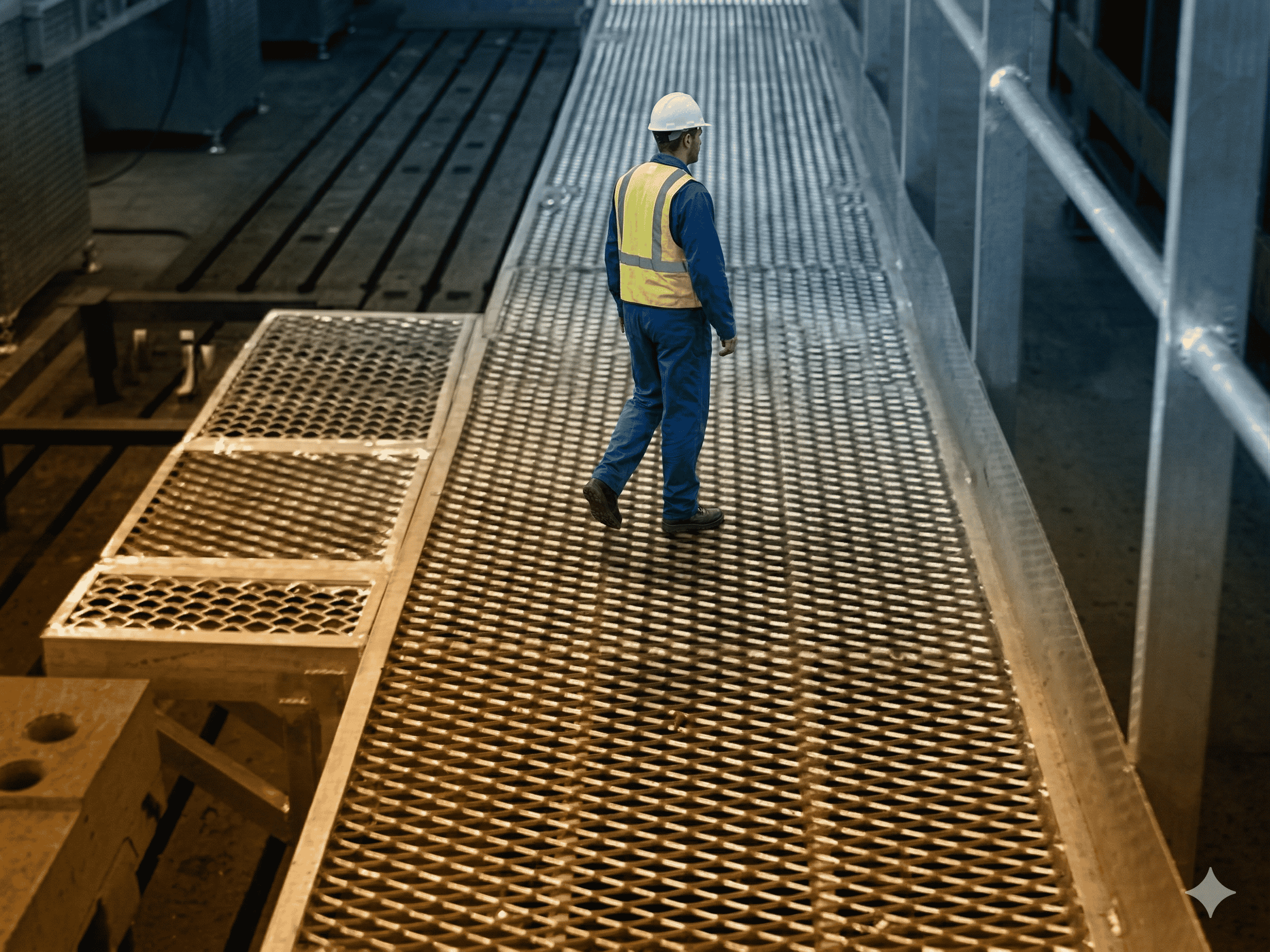
Heavy Duty Expanded Walkway Mesh
In industrial projects across Singapore, from Jurong Island petrochemical plants and Tuas manufacturing complexes to cleantech parks, logistics warehouses, and public infrastructure, raised walkways and elevated platforms are a daily safety-critical reality. Workers cross them carrying equipment. Machinery vibrates beneath them. Liquids, debris, and grime accumulate on them continuously.
Heavy-duty expanded metal mesh is one of the most widely used materials for this application in Singapore. This article covers what makes it the right choice, how to specify it correctly, and what to watch for in Singapore's specific industrial environment.
What Is Heavy-Duty Expanded Metal Mesh?
Expanded metal is produced by simultaneously slitting and stretching a solid metal sheet, creating a rigid, diamond-pattern mesh without removing any material. Unlike welded wire mesh or bar gratings, which are assembled from separate elements, expanded metal is a single continuous piece of metal with no welds, no joints, and no points of potential mechanical failure.
Heavy-duty expanded metal refers specifically to the thicker-gauge, larger-strand configurations used for load-bearing floor and platform applications, as distinct from the lighter architectural grades used for facade screening or decorative panels. The key differentiators are:
Sheet thickness (base material): heavier gauges provide greater load-bearing capacity and resistance to deflection
Strand width: wider strands distribute load across a larger cross-section
Hole Opening size: larger apertures allow better drainage and debris clearance; smaller apertures provide a finer walking surface
Mesh profile: standard (raised strand) vs flattened — relevant for walking comfort and slip resistance
For industrial walkway and platform applications in Singapore, the sheet thickness and strand width are the primary specification decisions, and they need to be matched to the actual load conditions of the installation.
Why Expanded Metal Outperforms the Alternatives for Industrial Flooring
Expanded metal vs bar grating
Bar grating — parallel load bars welded to cross bars — is the most common alternative to expanded metal for industrial flooring. It offers high load capacity in the primary span direction, but has well-documented limitations: the welded joints are points of potential corrosion initiation, the open bar profile creates a walking surface that is uncomfortable for extended periods, and the directional load path means it needs to be correctly oriented relative to the span or its load capacity is significantly reduced.
Expanded metal distributes load omnidirectionally across its continuous strand network. There are no welds to corrode, no directional orientation requirement, and the raised strand surface provides natural grip in multiple directions rather than parallel ridges that offer limited lateral traction.
Expanded metal vs chequer plate
Chequer plate is a solid steel sheet with a raised diamond pattern embossed on the surface. It is strong, provides reasonable anti-slip performance when clean, and has a familiar industrial aesthetic. Its limitations for walkway applications are drainage and maintenance: it is a solid surface, so liquids pool on it, debris accumulates and is not easily cleaned, and in Singapore's humid environment pooled water accelerates corrosion at any surface imperfection.
Expanded metal's open area allows liquids, fine debris, and particles to fall through the walking surface continuously — keeping the surface cleaner and drier in active industrial environments, and eliminating the pooling that drives corrosion on solid surfaces.
Expanded metal vs welded wire mesh
Welded wire mesh uses individual wires welded at intersections to form a grid. The welds are the weakest points in the structure — under vibration and heavy load cycling, weld failures in low-quality mesh are a documented failure mode. Expanded metal, being a single uninterrupted piece of metal, has no welds and no equivalent failure point. For platforms subject to machinery vibration or heavy intermittent loading, this is a meaningful structural advantage.
Supply Bay Walkway Mesh: Product Recommendations for Industrial Applications
Supply Bay's walkway mesh range is engineered specifically for heavy-duty load-bearing applications — industrial platforms, stair treads, drain gratings, mezzanine floors, and rooftop plant access areas. All three products in the walkway range share a 5mm-class base thickness and high tensile strength rating, and are available in mild steel with galvanised or powder-coated finish options.
Browse the full walkway mesh range →
W50-075 — Best for Maximum Load Capacity and Structural Platforms
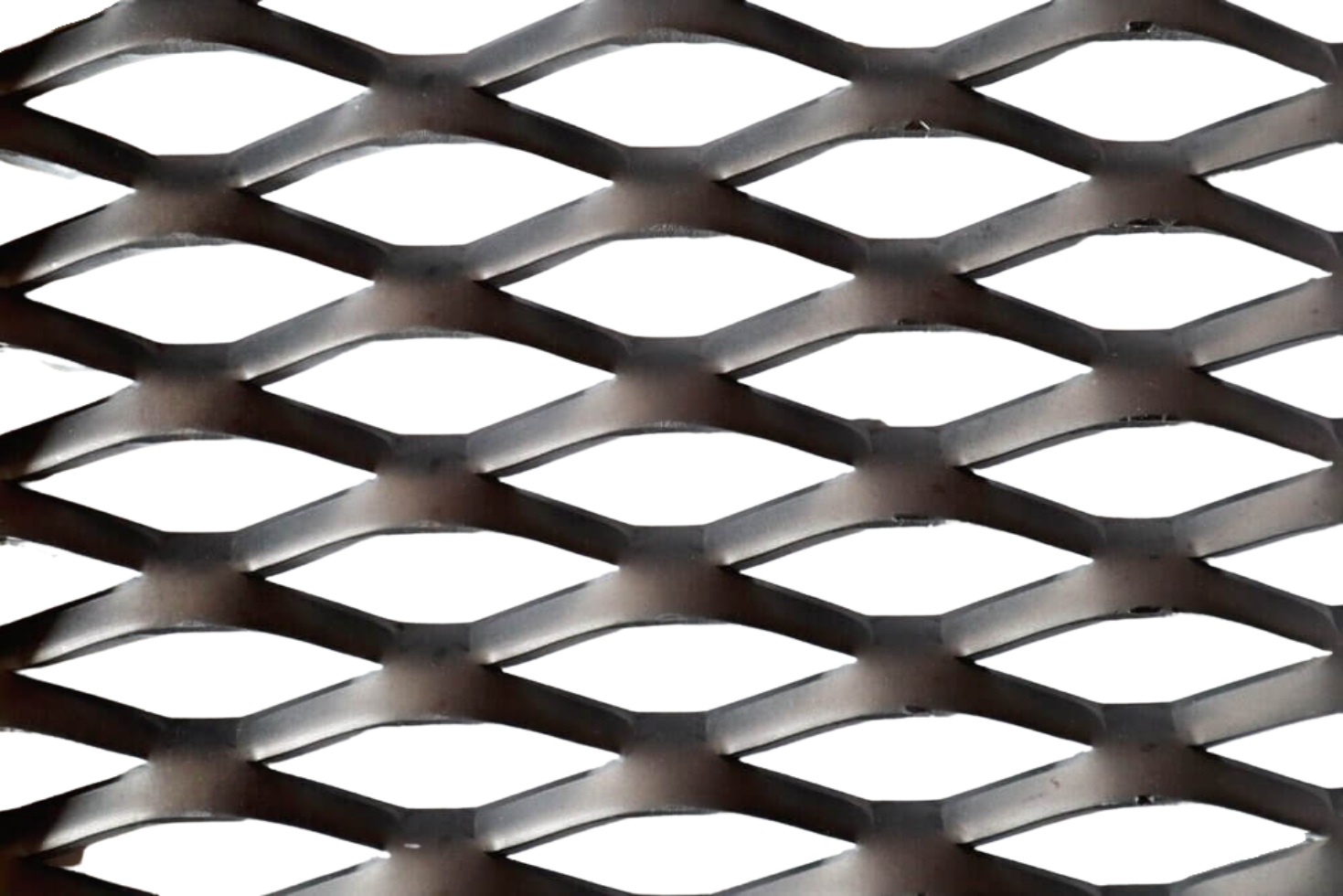
Supply Bay Expanded Walkway Mesh 50-075
Mesh opening: 30mm × 75mm (SWM × LWM) Thickness: 5mm Weight: 23 kg/m² Tensile strength: High
The W50-075 is the heaviest-duty specification in Supply Bay's walkway mesh range, with a small hole opening size and a weight of 23 kg/m². The smaller 30mm SWM opening means more metal per square metre, translating directly into higher load-bearing capacity and greater resistance to deflection under concentrated point loads.
This is the specification for platforms that see the most demanding conditions: equipment movement on trolleys or pallet jacks, concentrated point loads from machinery, elevated platforms that need to handle both sustained dead loads and significant live loads simultaneously. The smaller aperture also makes it appropriate for applications where fine debris, granular material, or small components are present at platform level — preventing items from falling through to lower levels.
Recommended for: heavy industrial platforms, equipment access decking, machine maintenance platforms, rooftop plant access areas with heavy HVAC or mechanical equipment, and any application where maximum load capacity and minimum hole opening size are the priority.
W50-080 — Best for Primary Industrial Walkways and Drain Gratings

Supply Bay Expanded Walkway Mesh 50-080
Mesh opening: 42mm × 135mm (SWM × LWM) Thickness: 5mm Weight: 14.05 kg/m² Tensile strength: High
The W50-080 is Supply Bay's most popular walkway mesh specification for primary access routes and drain grating applications. Its 42mm short-way mesh (SWM) opening strikes the right balance between a substantial walking surface and sufficient open area for drainage — the aperture is large enough to allow water and fine debris to pass through freely, but small enough to provide a comfortable, stable footing for workers in safety footwear.
At 5mm thickness and 14.05 kg/m², the W50-080 delivers the structural rigidity needed for continuous foot traffic and moderate equipment loads without excessive dead weight — an important consideration for platforms with weight constraints on their supporting structure.
Recommended for: primary industrial walkways, factory floor access corridors, drain gratings, staircase treads, mezzanine platform flooring, and any application requiring a balance of drainage performance and walking comfort.
W50-110 — Best for Ventilated Platforms
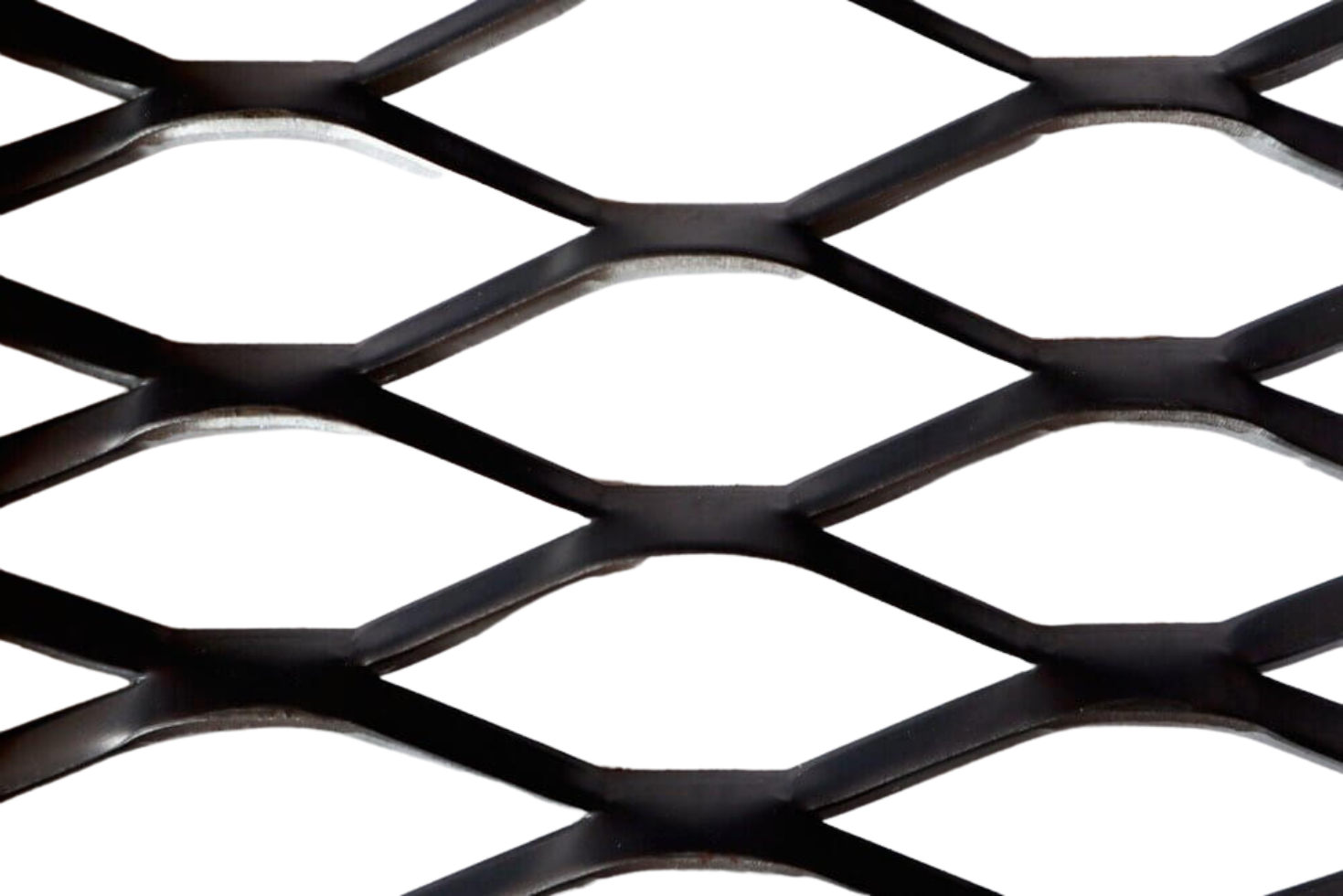
Supply Bay Expanded Walkway Mesh 50-110
Mesh opening: 45mm × 135mm (SWM × LWM) Thickness: 4.7mm Weight: 19 kg/m² Tensile strength: High
The W50-110 offers the largest hole opening size in the walkway mesh range (45mm) combined with a 4.7mm base thickness and 19 kg/m² weight. The wider opening gives a higher open area percentage than the W50-080, making it the preferred specification where ventilation, airflow, or light transmission through the platform is a design requirement alongside load-bearing performance.
In Singapore's industrial context, this makes the W50-110 particularly well-suited to raised platforms over electrical or mechanical equipment where heat dissipation through the floor is beneficial, rooftop access walkways where both weight reduction and airflow matter, and air-conditioning ledge gratings where drainage and ventilation are primary considerations alongside structural adequacy.
Recommended for: ventilated equipment platforms, rooftop access walkways, air-conditioning ledge gratings, secondary access areas with regular but lighter foot traffic, and any application where maximising open area and airflow is a priority alongside structural performance.
All three products are available in mild steel with galvanised top coat protection as an add-on. Powder coating in Signal Black, Hammered Bronze, or other RAL colours is available on request.
Choosing the Right Material Grade for Singapore's Industrial Environment
Getting the material grade right before ordering saves cost, rework, and safety liability.
Mild steel (hot-dip galvanised) is the standard specification for most industrial walkway applications in Singapore. The galvanised zinc coating provides corrosion protection suited to Singapore's high humidity, and the sacrificial zinc chemistry means that minor surface damage — scratches, cut edges, abrasion from boots and equipment — does not immediately create a rust initiation point. For general manufacturing, logistics, and light industrial environments, galvanised mild steel expanded mesh is the cost-effective and durable baseline specification.
SS304 stainless steel is appropriate for industrial environments with regular liquid exposure, chemical splash risk, or hygiene requirements — food processing facilities, pharmaceutical plants, and any environment where regular washdown with cleaning agents is standard practice. The inherent corrosion resistance of SS304 eliminates the maintenance liability that galvanised mild steel would accumulate in these conditions.
SS316 stainless steel is the correct specification for offshore, marine-adjacent, or heavily chemical-exposed environments. On Jurong Island and in waterfront industrial facilities, where salt-laden air and chemical exposure combine, SS316's molybdenum content provides the chloride pitting resistance that SS304 cannot guarantee.
Aluminium is occasionally specified for lightweight access platforms where structural self-weight is a constraint — elevated rooftop plant access, for example, where the supporting structure has limited load capacity. Aluminium expanded mesh provides useful corrosion resistance and low weight, though it offers lower absolute load capacity than steel at equivalent thickness.
Anti-Slip Performance of Expanded Metal Walkway Mesh
Slip resistance is the most immediate safety concern for industrial flooring. The raised strand profile of standard expanded metal mesh provides natural anti-slip performance by creating a textured surface that interrupts the water film that causes slipping on smooth surfaces. The diamond aperture geometry also means that drainage occurs in multiple directions simultaneously, removing surface liquid faster than a unidirectional profile would.
For environments with significant oil or chemical splash — engine rooms, workshops, food processing lines — expanded metal mesh should be specified with an appropriate surface treatment or coating that maintains grip when contaminated. Standard galvanised or bare stainless steel will become slippery under oil in the same way any metal surface does.
Singapore's Workplace Safety and Health Act (WSH Act) and the associated MOM guidelines set requirements for walkway and platform safety in industrial workplaces. The flooring specification, including slip resistance, forms part of the employer's general duty to maintain a safe working environment.
Installation Methods for Industrial Platforms
Panel sizing and support spacing
Expanded metal walkway panels need to be correctly sized relative to their support structure. Maximum unsupported span is a function of the mesh thickness, strand width, and the load being applied. As a general principle, heavier loads require closer support centres or heavier mesh specification — or both.
For most industrial walkway applications, panels are supplied in standard sheet sizes cut to suit the bay dimensions of the platform structure.
Fixing and retention
Industrial walkway panels should be positively fixed to their support structure. In environments with vibration, the mesh will walk across its supports over time if not retained, creating gaps at panel edges that are a trip hazard. Standard fixing methods include welding at corners and midpoints, or bolted clamp fixings where demountable access panels are required.
For access panels over maintenance hatches or equipment requiring regular service, specify bolt-down or quick-release clamp fixings rather than welded retention, the ability to lift individual panels without cutting is essential for maintainability.
Source Heavy-Duty Walkway Mesh for Your Singapore Project
Supply Bay supplies heavy-duty expanded metal walkway mesh for industrial platforms, mezzanine flooring, drain gratings, staircase treads, and infrastructure applications across Singapore and the wider Asia Pacific region.