
Expanded Metal vs Perforated Metal vs Laser-Cut Panels: Which Should You Use for Architectural Projects in Singapore?
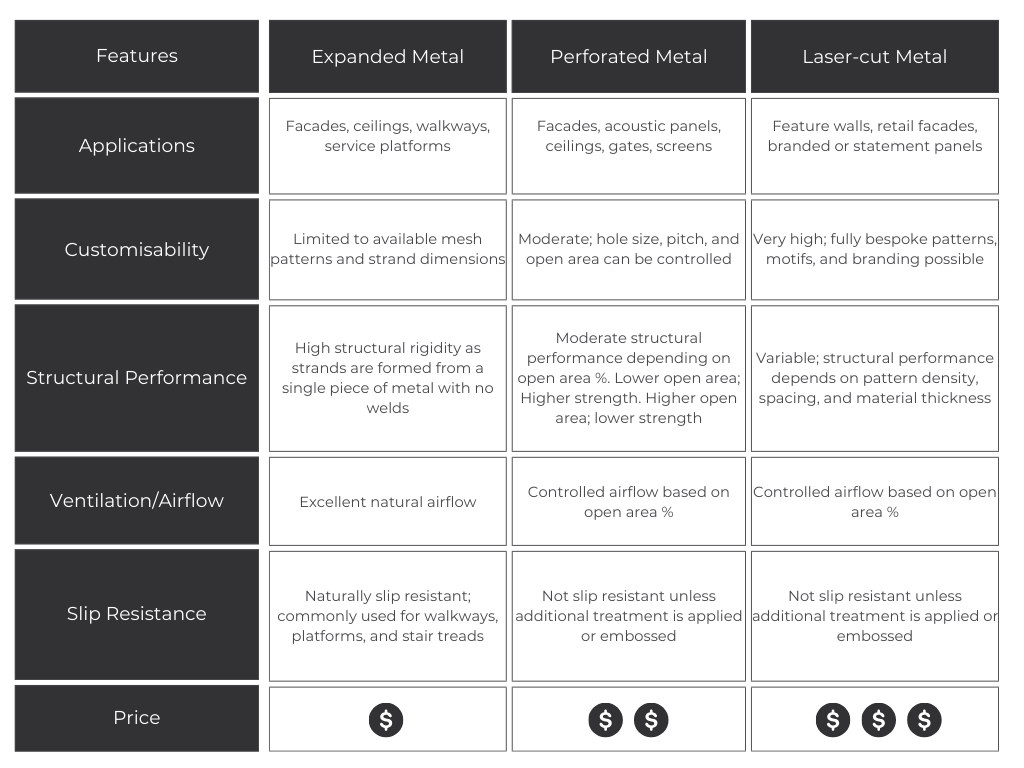
Comparison table of expanded metal vs perforated metal vs laser cut metal
Choosing between expanded metal, perforated metal, and laser-cut panels can be more complicated than it seems. At first glance, they may look similar — but once you factor in structural performance, fabrication methods, and local site conditions, the differences become significant. That’s why we’ve put this guide together to make the comparison clearer and help you choose with confidence.
Architectural metal screens are widely used across Singapore, from car parks and commercial facades to walkways, railings, and interior feature elements. While these three systems are often considered interchangeable at the early design stage, they behave very differently in practice.
In Singapore’s tropical climate, where ventilation, durability, ease of maintenance, and safety are key considerations, selecting the right metal material can directly affect both performance and overall project cost. This article compares expanded metal, perforated metal, and laser-cut panels in simple terms, so architects, designers, and contractors can decide which solution best suits their application.
Expanded Metal: Strength, Ventilation, and Cost Efficiency
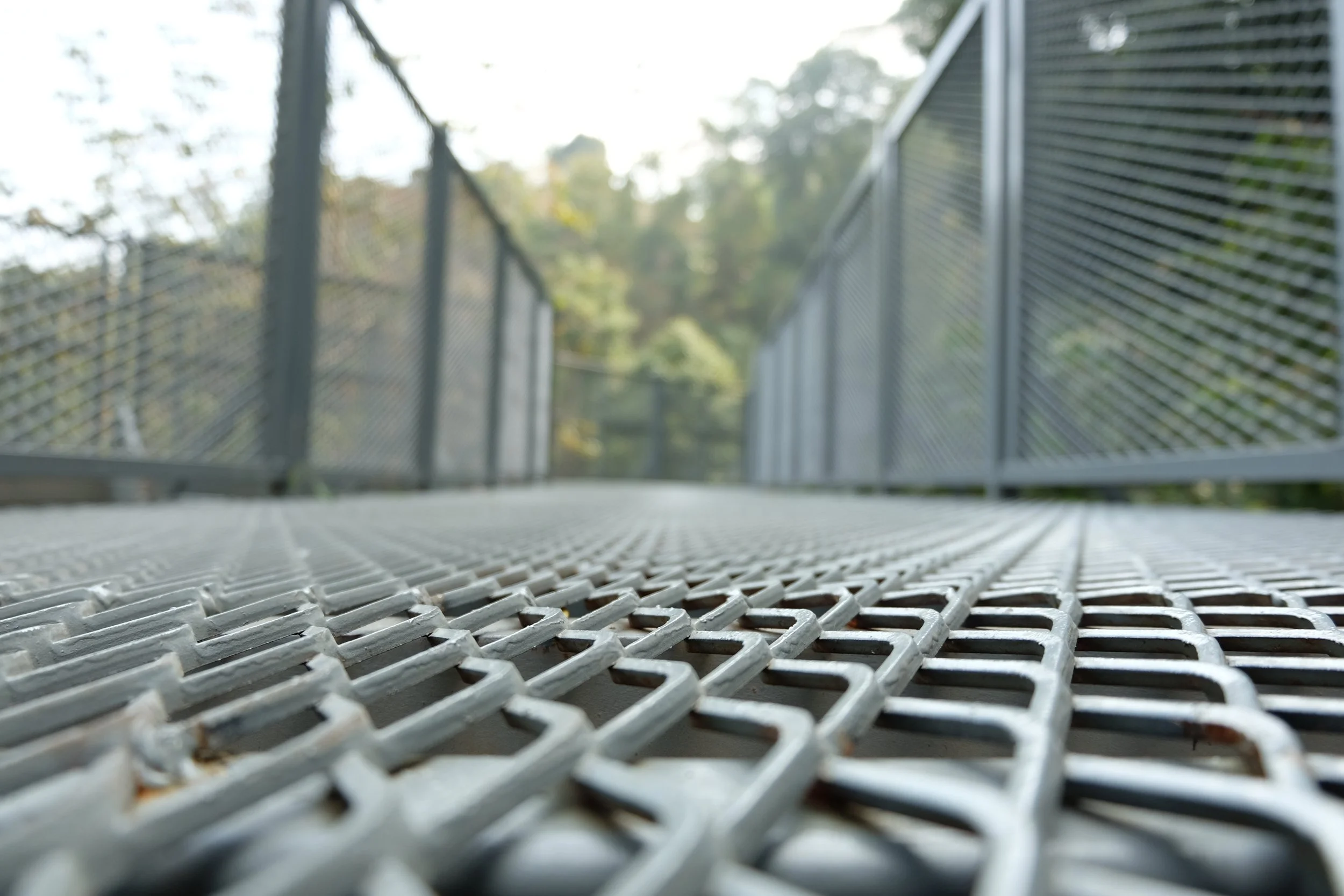
Expanded metal walkway
Expanded metal is manufactured by slitting and stretching a solid metal sheet, creating a mesh pattern without removing any material. Because the sheet remains continuous, expanded metal offers high structural integrity and can often span larger areas with fewer secondary supports. This makes it particularly suitable for large façade screens, car park cladding, and sun-shading systems commonly used in Singapore.
In tropical conditions, expanded metal is a functional choice. The open mesh allows air movement while reducing solar glare, making it a popular choice for naturally ventilated car parks and building envelopes designed to minimise heat gain. Its inherent slip resistance also makes expanded metal suitable for walkways, platforms, and service access areas where safety is a concern.
From a cost perspective, expanded metal is typically the most economical option for large surface areas. Where strength, airflow, durability, and budget control are priorities, expanded metal is often the most practical solution.
Perforated Metal: Control, Consistency, and Acoustic Performance
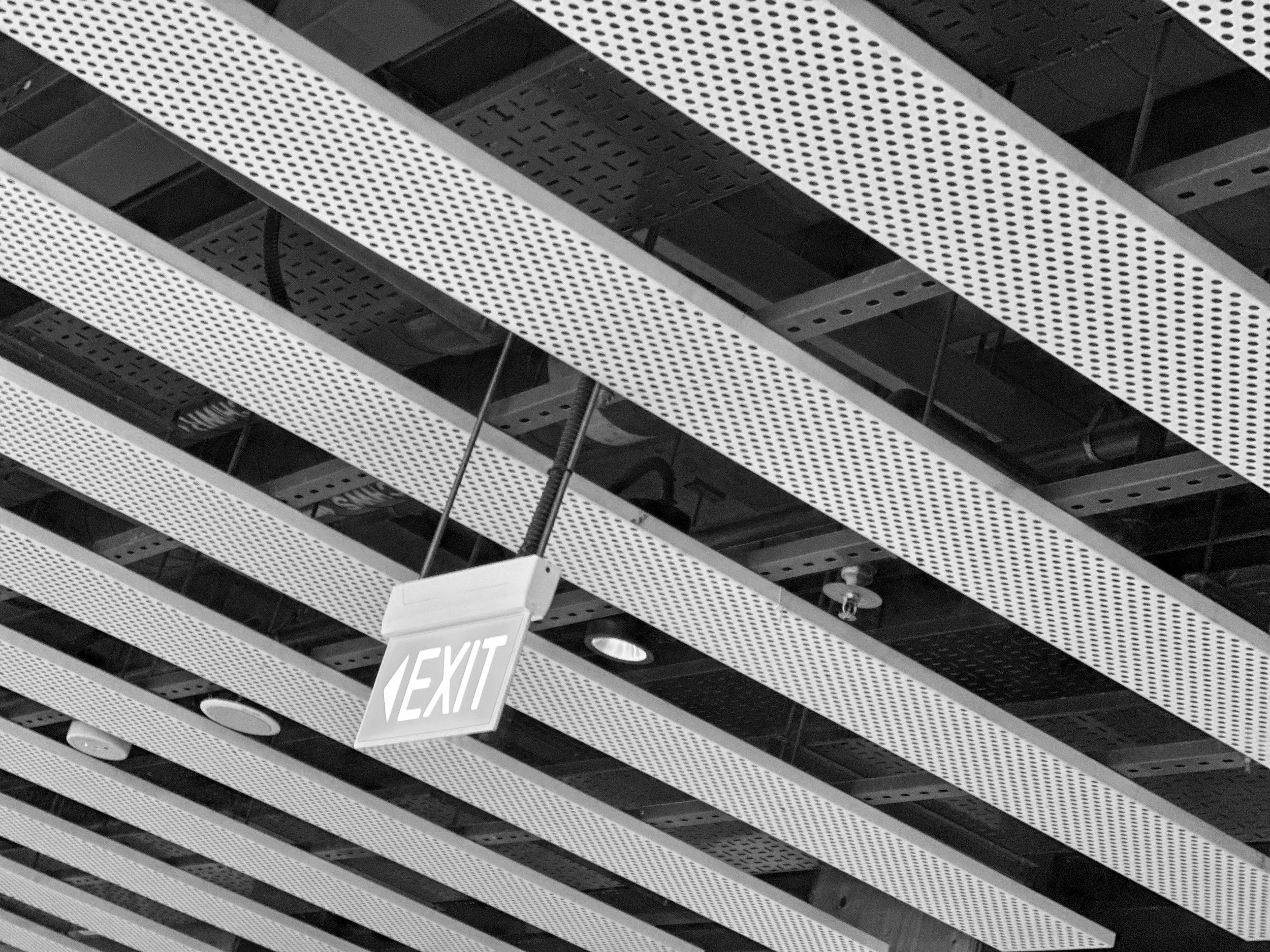
Perforated metal ceiling
Perforated metal is produced by punching or cutting holes into a flat metal sheet. In Singapore, perforated metal is commonly specified for commercial facades, railings, privacy screens, and acoustic wall or ceiling panels in offices, schools, and transport facilities. By adjusting the open area percentage and backing material, perforated metal panels can contribute to sound absorption while still maintaining airflow.
One of the key advantages of perforated metal is the variety of different patterns we have to cater to your requirements - with over 100 designs available, hole size, spacing, and open area can be adjusted to achieve specific visual, privacy, or airflow requirements.
Perforated metal is also widely used in acoustic applications. When combined with appropriate backing materials, it can help reduce noise while still allowing ventilation, making it suitable for indoor and semi-outdoor spaces.
Compared to laser-cut panels, perforated metal generally offers shorter lead times, more predictable pricing, and easier replacement if panels are damaged.
Structurally, perforated metal is less rigid than expanded metal because material is removed during fabrication. Strength depends on sheet thickness and open area, and higher open areas may require closer framing or thicker material. These factors should be considered early during design development.
Laser-Cut Panels: Design Freedom and Feature Applications
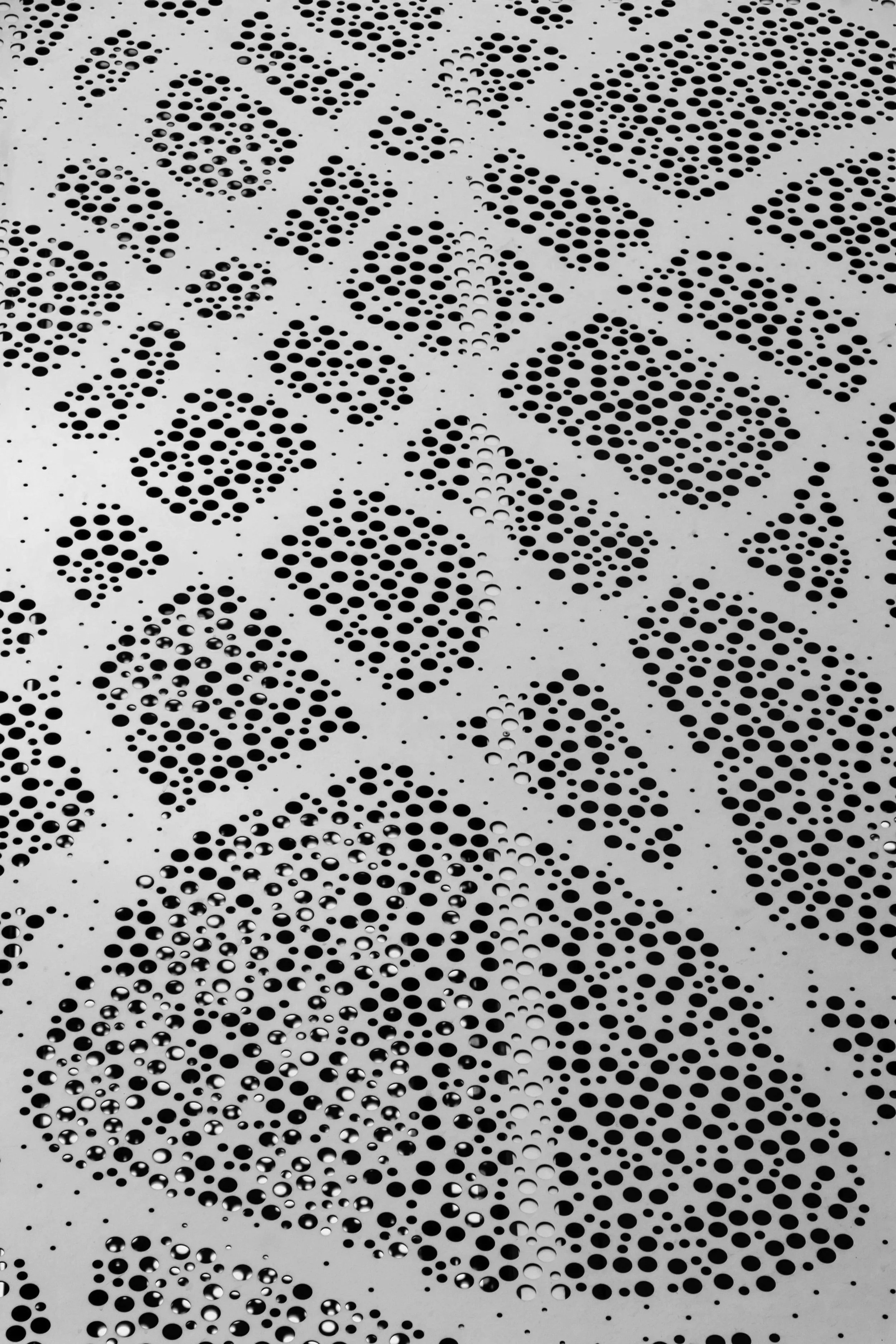
Laser cut panel (custom design)
Laser-cut metal panels are created using CNC laser technology to cut fully custom patterns into a metal sheet. Unlike perforated metal, laser-cut designs are not limited to standard tooling, allowing architects complete freedom to incorporate branding, motifs, or bespoke patterns into a project.
In Singapore, laser-cut panels are commonly seen in retail storefronts, hospitality projects, feature walls, and statement facades where visual impact is a key design driver.
However, laser cutting is more expensive than punching, and thin sheets can be prone to warping if patterns are too dense or poorly spaced. Structural performance depends heavily on the final design, which means early coordination on minimum hole sizes, spacing, and material thickness is essential to avoid fabrication issues later.
Final Thoughts
Expanded metal, perforated metal, and laser-cut panels each serve a distinct role in architectural design. There is no single best option — only the most appropriate material for the application, environment, and performance requirements.
In many Singapore projects, these systems are used together: expanded metal for outdoor facades or external screening, perforated metal for railings or acoustic ceiling panels, and laser-cut panels for feature elements.
If you’re still unsure which option works best for your project, we’re here to help. At Supply Bay, we work closely with architects, contractors, and QS teams to recommend the most suitable metal solution based on application, performance requirements, and budget.